

Exclusive Interview: Sarah D’Ambrosio on AI, Emotional Authenticity, and ‘Good Vibes Only’
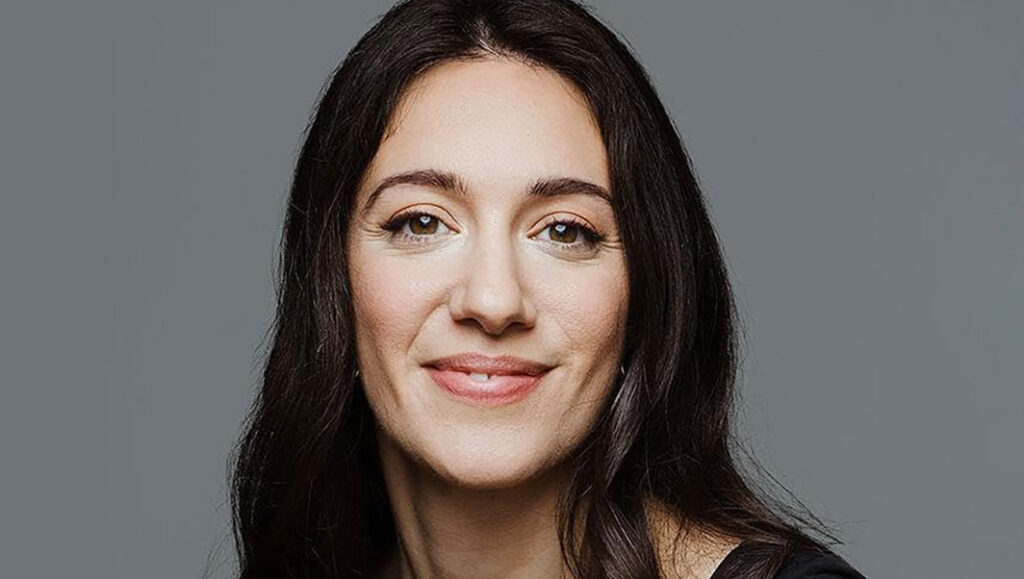
There’s a disquieting familiarity to the future Sarah D’Ambrosio imagines in Good Vibes Only. In her directorial debut, the writer-director takes an impulse we already recognize, the urge to smooth over an uncomfortable moment, and imagines a world where AI can do it for us. Beneath the short’s polished surface is a question about what happens to intimacy when we lose the language to tell each other how we really feel.
Hannah Emily Anderson stars as Eva, a young woman trying to come to terms with a painful breakup. In a world where AI steers every interaction toward a sunnier outcome, even heartbreak is treated as something to be corrected. As her AI companion urges her to look on the bright side, Eva finds herself fighting for room to grieve.
Pop Culturalist spoke with Sarah about the everyday habits that inspired Good Vibes Only, the new meaning the film has taken on as AI has become part of daily life, and how she worked with Hannah and her team to give Eva’s struggle a voice in a world that prizes composure.
PC: You’ve said social media was an early inspiration for the film, particularly how we turn to it when we’re uncomfortable. How did you translate something so familiar into a world that feels unsettling while still allowing audiences to recognize themselves in it?
Sarah: That’s so kind! I’m really fascinated by our modern discomfort with silences and awkwardness, and the way we turn to our phones to fill those gaps. For me, this film was really about exploring the effects of that behavior. What room do we leave for ourselves if we’re not letting ourselves sit in our own feelings on such a micro level?
In terms of translating that sense to the screen, I felt so fortunate to have such an incredible team on this. One of the things I love so much about film is how it’s layered with different creatives’ perspectives through performances, design, camera choices and so on. Our team spent a lot of time thinking about how to make a relationship with a phone visually interesting. I think so much of that is realized through Hannah and Maddy Foley’s performances and the team’s choices in camera perspective, design, sound and coloring, creating an aesthetically beautiful, perfect but cold, homogenous world.
PC: You wrote this before AI became what it is today, and there’s something fascinating about watching the world catch up to the questions and themes you explore in the film. Is there a scene or idea that carries a different weight for you now than it did when you first wrote it?
Sarah: Oh gosh, I think it all does somehow. On the surface, the characters in this are speaking out loud to AI, but it doesn’t feel much different from our everyday lives now, with the way we’re in constant dialogue with it and consulting it for so many everyday thoughts.
I think the idea and scene that reads most differently now is really the heart of the film for me, and it’s Eva’s question to Amy: “Do you ever feel like crying?” That no longer feels like it just reflects Eva’s frustration, lack of tools, and fear about her inability to express herself in that moment; it has a different weight to it now. With any change, I think there’s always a sense of grief and loss. The future looks wildly different now than it did when I wrote it, and much different from anything comparable in our past human experience. So for Eva, that question now almost also holds the weight of loss and collective grief about inheriting an unknown future. What does her expression of self look like, and how does she relate to community in this new world?
PC: AI is often sold to us as a way to make our lives easier and remove our flaws, but so much of human connection comes from those imperfections, from being vulnerable and not always knowing what to say. How did you collaborate with Hannah to bring that humanity to Eva and take audiences on her emotional journey?
Sarah: Hannah is such a brilliant performer. It was my first time working with actors as a director, so I was very cognizant of wanting to create a space that would allow the actors to go where they needed to as comfortably as possible. I’m generally in awe of the work that actors do and the emotional places they go with characters, and they can best tell you what their character needs. So, I had early conversations with the cast to get a sense of how best to structure scenes for their individual processes. For example, we structured the final scene between Eva and Margaret much like a closed set, with most of the crew behind a wall, out of Hannah and Maddy’s sight, so that the performers could lock into the moment with each other. Our DP, Alice [Stephens], followed Hannah’s movements through it. It all felt so organic and like a real cathartic scream for the cast and crew.
PC: You surrounded yourself with collaborators you admired and wanted to learn from. As a first-time director, what was the biggest lesson you took away from those relationships, and how did it shape your approach behind the camera?
Sarah: I love our team! The film was female-led throughout production, and it was such an inspiring process to be immersed in a truly celebratory, encouraging environment. My biggest takeaway as a director was that so much of this role is about facilitating the process, you know, helping set and support the conditions for everyone to do what they do best. And just creating the best spaces you can for all these artists to come together and really collaborate.
PC: AI is guiding not only what people say but how they say it, and we see that reflected in Hannah’s character until her words begin to carry a different emotional weight. How did you use that contrast in the dialogue to explore the power of words?
Sarah: I really wanted to explore an extreme form of what it might look and sound like if all of our language and culture were derived from an algorithm. It feels so entirely inorganic and unnatural, but the more that language and manner of speech are derived from the same place, the less character-specific and defining they seem to become. So much of the dialogue between characters almost mirrors itself until it starts to boil over in its meaninglessness. For Eva, much of the language she’s using feels empty, and you can see her struggling to believe in the words she’s using and feeling that they don’t reflect her. A lot of that comes through in Hannah’s performance choices. Hannah so brilliantly showed her dissociation from that language, and it’s only when she finds her footing in her own words that her true emotional state is able to come through.
PC: There’s so much intentionality in the film’s visual language, from the colors and the spacing between characters to the lack of physical interaction. How did you collaborate with your team to incorporate those nuances and communicate so much within the limited runtime of a short? Is there a detail you’re particularly proud of that audiences might not have picked up on?
Sarah: It’s cool to hear what comes through! Our team is so brilliant and talented, and with every department, we discussed how best to make the world feel aesthetically beautiful and inviting, kind of perfect and editorial-like, yet simultaneously cold and characterless. Shauna Eve, our production designer, and I really explored how to use cool tones in the design of the spaces in a way that felt calming and welcoming, but also cold. Likewise, with Alice Stephens, our DP, we talked about ways to heighten the physical distance between the characters through camera angles and static interactions. Their perspectives really elevated those elements.
To keep up with Sarah, follow her on Instagram.

Discussion about this post