

Exclusive Interview: Filmmakers Eric Foss and Brandon Pickering on ‘Sell Your House,’ the Cost of Indie Filmmaking, and How Distribution Works
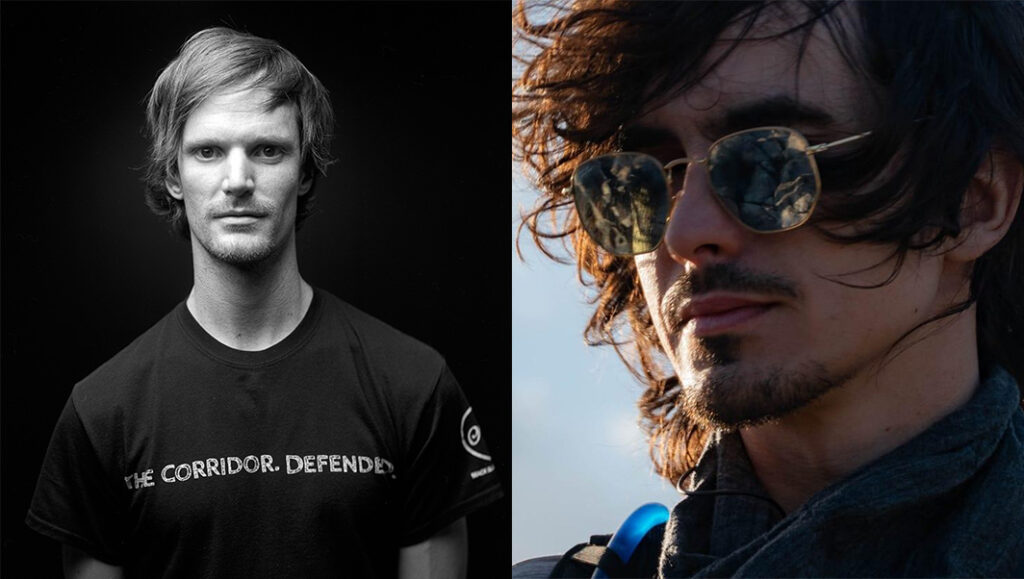
James Claeys sold his house to help his best friend, Francis Galluppi, make The Last Stop in Yuma County. Yes, you read that right. That leap of faith sets Sell Your House in motion, a must-see documentary in which Eric Foss and Brandon Pickering capture the humor that comes naturally among friends and the intensity of making an independent film together. As the pressure shifts from getting the movie made to getting it distributed, the stakes become as personal as they are financial.
What begins as a behind-the-scenes look at a first feature becomes a portrait of how much has to go right for an independent film to reach an audience. Eric and Brandon give the shoot a sense of immediacy, capturing the nerve it takes to make decisions on set when there’s little room to second-guess them. That urgency carries into the search for a distributor, where the same offer can mean a breakthrough for Francis and something closer to a way back home for James.
Pop Culturalist spoke with Eric and Brandon about the trust involved in filming friends, how they shaped the documentary’s blend of humor and intensity, and what following The Last Stop in Yuma County from production through distribution revealed about independent filmmaking.
PC: In the film, James shares what drove him to make The Last Stop in Yuma County. What drew each of you to document his journey in Sell Your House, and how did that experience connect with what drives you as storytellers?
Eric: Initially, I was just trying to help out my friend Francis. He wanted as many friends working with him on set as possible, and since I’m a pretty terrible grip, shooting some BTS seemed like the best way for me to contribute. As I started banking interviews with James and Francis and some really great moments magically manifested on set, I thought maybe this could be something bigger. Then Richard Brake, who plays the villain in The Last Stop in Yuma County, sat next to me at lunch one day on set and told me to make it a feature doc. Richard played the Night King in Game of Thrones. I wasn’t about to say no to the Night King. Once I opened up to the idea, the story started blossoming in all sorts of unexpected and exciting directions. I just didn’t expect to keep filming for three years.
Brandon: When I started on this film, I was finishing another documentary called Stolen Kingdom (or at least that’s what I thought. Turns out it took another three years to finish. Documentaries are hard). I’ve always been eager to go down the rabbit hole of how movies get made, so when Eric pitched me the idea for this film, I was probably a bit too eager. I had no clue what it would turn into, which is the exciting part of working in nonfiction. But it also makes you wonder, “When does it finally end?” In three years, I guess.
PC: Eric, with Naked and Afraid, there’s a point when filming ends and you can step away from the experience. With Sell Your House, you were documenting your friends, and you’ve said you were initially hesitant. What made you feel ready to commit to the project, and how did those friendships shape what you were able to capture and how you navigated being both a friend and a filmmaker?
Eric: That’s a really good question. Francis and I were already friends before we started filming, and James and I built a friendship along the way. The first time I met James was during our very first interview. On Naked and Afraid, I talk to the cast members every day, but I keep them at arm’s length. As a documentarian, it can be useful to keep some distance. As you pointed out, I didn’t have that luxury here.
When you’re documenting somebody, you’re holding a mirror up to them and forcing them to look deep inside themselves for a long time. That’s really uncomfortable. For example, before they started shooting, I asked Francis repeatedly if he was nervous. I knew the answer was yes, but he didn’t want to admit it. He couldn’t. He needed to show up on set feeling confident on day one. Because I asked him that question, he went into the first day of shooting a little more anxious than he would have otherwise. I was just trying to get the story, but even asking a question can affect someone. It’s a really complicated dance.
It got even more complicated with James at the end. He was going through the hardest moments of his life, and I was making him talk about them. Then they both had to watch the whole ordeal all over again when I showed them the finished documentary. I would never want to be in that position, and I sympathize with both of them.
At the end of the day, our friendships mattered most. To preserve them, I showed James and Francis cuts along the way and gave them veto power. All three of us won some battles. Some scenes were cut. I have to give James and Francis credit for putting the quality of the story ahead of their insecurities most of the time. They both agreed to keep things in the final cut that made them uncomfortable but were necessary to tell the story.
PC: Brandon, you and Eric shaped this footage into a film that moves between vulnerability and levity while offering a candid look at the realities of independent filmmaking. How did your collaboration help you find that tonal balance and decide when to lean into the humor and when to give the more emotional moments room to breathe?
Brandon: I was working on a different coast from Eric, Francis, James, and our producers. When I wasn’t flying out to shoot with them, I was in my own bubble, which was quite lonely. So I really just wanted to find ways to make myself laugh or to make Eric and the folks watching rough cuts laugh. It was a way to combat that loneliness. It helped that everyone we were filming with was very funny.
But when things got more emotional, it didn’t feel genuine to shy away from them. Foss and I both wanted to let the silences stretch and cut as little as possible to keep the viewer in the room with these people. Let them feel it. It was important to us to stay as close as possible to what actually happened in the scene.
PC: There’s a line in the documentary about whether you should make films with your friends. Looking back on your collaboration on Sell Your House, what did you each bring out in the other creatively, and how did working together make you stronger filmmakers?
Eric: I think Brandon is a genius. I feel lucky to be working with him. From the beginning, Brandon and I established a writers’ room mentality. Bad ideas have the potential to spark good ones, so the idea was to say whatever came to mind. You wouldn’t be judged. That gave both of us the freedom to throw out ideas.
Brandon is really good at the details. He’ll come up with a unique idea, send me the skeleton of it, and I can usually see the vision. Then I’ll add to it or we’ll polish it together. It helps that we share a very similar sense of humor. I think I tend to focus more on the big picture. I think in story arcs, and I’m always looking for a beginning, middle, and end for every scene. That sounds really elementary, but it’s harder than it sounds, especially when you have several competing storylines that overlap.
Brandon: Brandon is not a genius. But I am particularly good at coming up with bad ideas. So when Foss encouraged me to come up with as many bad ideas as I wanted, I rose to the challenge. I’m very grateful to him for that. He created a creative playground pretty quickly. The hard part was knowing when to stop.
PC: Eric, you’ve talked about your love of improvisation, and documentary filmmaking seems to lend itself to that openness to the unexpected. Was there a moment in the final cut that became richer or more revealing because you trusted your instincts while filming?
Eric: Yes. Pretty much all of it. This story is told in the present tense. Most of it was captured instinctively. It was all happening in front of me, and I had no control over it. That’s how Naked and Afraid is shot, so I felt comfortable working this way.
To prepare, I write down every storyline I’m following, usually four or five, and make a list of questions for everyone I’m following. That’s my guide, and I refer to it whenever I feel lost. If I know the storyline and have an idea of where it could go, I feel prepared to improvise the rest. Every shot is invented in the moment. Every interaction is genuine. Every question I ask is being asked for the first time. For me, that’s part of the conceit of the whole thing, and it’s what I love most about the process. It’s exciting and very engaging.
For example, things went really well on set the first day. Francis was nervous going into it, but by the time we wrapped, he’d proved to himself that he could do it. At the end of the day, he declared, “The next twenty days are going to go great!” So now our story is that Francis is overconfident. He’s just had a lot of successes in a row. How is he going to respond when something goes wrong?
On day two, a storm blasted through the diner, knocking over lights and shutting down the set for a couple of hours. I was there for that moment because I knew Francis’s luck was bound to run out eventually. I followed up with him at the end of the day, but he wouldn’t talk to me, so I followed him to his Airbnb and interviewed him there.
PC: As we watch the challenges of getting The Last Stop in Yuma County made, Eric, you’re constantly deciding when to observe and when to step in. How did you make those calls, especially when your instincts as a friend and a filmmaker pulled you in different directions?
Eric: On set, I was a fly on the wall. I was determined to be as invisible as possible, both to capture honest moments and to stay out of their way. My biggest fear was slowing down their production. If I felt there was an opening, I’d ask a question about what was happening. I pushed really hard for in-the-moment interviews first thing in the morning, when they broke for lunch, and after they wrapped for the day. I’d often get waved off, which could be frustrating, but I understood that they had a job to do and didn’t always have the bandwidth to reflect on what was happening.
You most need your subjects to talk about how they’re feeling when things are going really wrong. That’s when they least want to talk to a camera. So you have to feel it out and trust your instincts. My technique is to point the camera at the person who’s having a bad time and make sure they know I’m filming. After about ten minutes, they’ll interact with me in some way. Often, they’ll tell me how they’re feeling without my asking. Sometimes they’ll just look at me, and that’s when I’ll ask a question. Maybe they say, “Stop filming me.” That says everything. It’s going in the movie.
PC: Brandon, you came to the footage without the shared history Eric had with the people on screen. How did your perspective complement his, and what did it help you see about what the story needed?
Brandon: I think one of my biggest contributions to the film from the start was putting Eric in it (kicking and screaming, I should add). Foss never wanted to be in the movie. He kept asking me to leave him out. Every time I cut him into the movie, he’d cut himself back out. But he’s in the movie.
It was important to have an audience surrogate. From a storytelling standpoint, it’s often quicker and easier to have Foss ask a question on camera than to have the subjects set it up themselves. But the bigger reason had to do with whose point of view we experience those events from. I wasn’t on the set of The Last Stop in Yuma County, so I was curious to see how it all played out. I found that the moments between the big moments were more interesting and made me feel much more like I was there. You feel more connected to these people when you’re on the ground with them, inhaling dust and fake blood and fuel truck fumes.
That became even more important in the second half, when the film became more about the relationship between James and Francis. Having Foss there with them invites viewers into the room.
PC: You both show what it takes to bring an independent film to the screen, from the creative ambition behind it to the sacrifices along the way. What do you hope audiences come away understanding about that process? And aside from The Last Stop in Yuma County, what’s an underrated indie gem you think audiences shouldn’t sleep on?
Eric: I think most people today understand how movies are made. A lot of people have made movies about movies, both scripted and unscripted. The thing that usually gets left out of behind-the-scenes docs, at least as far as I know, is the business side of filmmaking, especially distribution.
What’s wild to me is that film schools don’t teach you how distribution works. If I wanted to start any other business, I’d need to know how to sell what I’m making before I make it. For some reason, in indie filmmaking, we often go in without knowing where to sell a film or how distribution even works. Before I started making this documentary, I thought I knew what a distributor was. I really had no idea. So I hope aspiring filmmakers who see Sell Your House come away with a better understanding of the business side of filmmaking.
I keep telling people to watch Listers. It’s my favorite documentary of the year. It’s about a couple of stoner kids who devote a year to becoming birdwatchers. I haven’t laughed that much at a movie in a while. We need more comedic docs like that.
Brandon: I hope people come away with an understanding of the sacrifices that go into truly independent filmmaking. I think most people assume that movies, even independent movies, are funded by some wildly wealthy studio. But what James did, putting everything on the line himself to make something he believed in, is unfortunately how truly independent films get made right now. And that’s sort of insane.
Over the last two years, as I’ve traveled around the festival circuit, I’ve seen a lot of really incredible films. The ones that immediately come to mind are Nick Beaulieu’s My Omaha, Mike Lobel’s Don’t Come Upstairs, and Troy Vetri’s Pigeon Religion. And finally, there’s a very solid little thriller called The Last Stop in Yuma County by Francis Galluppi and James Claeys that you should check out. Faizon Love is a standout.
Make sure to follow Eric (Instagram) and Brandon (Instagram).

Discussion about this post