

Exclusive Interview: Rhys Sherlock on ‘Drifter,’ Indie Filmmaking, and Creating Space for Interpretation
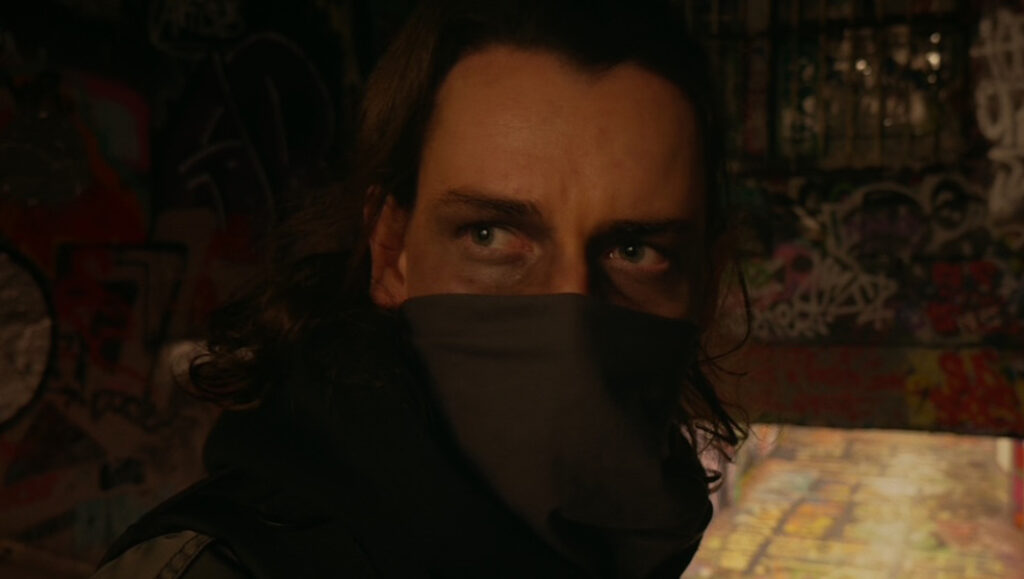
Emerging as a compelling new voice, Rhys Sherlock brings a striking level of control and emotional precision to Drifter. Only a few years into his career, he delivers an award-winning performance defined by subtlety and internal depth, allowing the film’s deeper currents to surface organically. The result is a piece of storytelling that avoids easy interpretation—inviting audiences to engage with it on their own terms.
Set against a stark, nocturnal cityscape, Drifter follows a man plagued by growing paranoia, isolating himself from the world in an attempt to disconnect from reality. Written by and starring Rhys and directed by Kieton Beilby, the short examines self-imposed isolation through a deliberately pared-back lens. Anchored by fleeting connections and fractured moments of memory, the film leans on visual language and presence to convey its emotional core.
Shot on an iPhone yet expansive in its ambition, Drifter stands as a testament to what can be achieved through intention and collaboration. Stripped of excess, the film builds a distinct visual and emotional language through its precision and focus. We caught up with Rhys to discuss the making of Drifter, his approach to performance, and the philosophy behind creating space for interpretation.
PC: You’ve mentioned Robert Pattinson’s Batman as an influence for Drifter. You can feel the DNA of this character, but what you’ve created is something that also feels distinctly your own. How did you find that intersection between that influence and making this character fully your own?
Rhys: Wow. It was important from the start to establish that we wanted to take inspiration, but we didn’t want to tread too closely to it. Looks aside, I wanted to put my own realistic spin on it as a Batman fan. Everyone loves Batman, especially for the grounded, human qualities he brings.
For Drifter, I wanted to go down the route of changing up his origin. He’s not a rich kid—he’s from the slums, carrying a lot of anger and grief. We wanted to take a different direction with that while still recognizing the inspiration it came from.
PC: You definitely accomplished that. There’s so much nuance in this story with what’s said, what isn’t, what’s real versus what’s perception, and how easily those lines can shift. It makes the film not only engaging, but something that really invites interpretation. I know that you’ve had people reach out to you about what they took away from this project, which speaks to the beauty of filmmaking. From a writing, acting, and producing standpoint, how did you explore those ideas from each of those different lenses?
Rhys: Honestly, it came out of the blue for me as a first-time writer. I was only in my second year when we first made a little concept for Drifter. When we did our 90-second scene with no dialogue, I had a few people message me after watching it and take completely different things from it. That was the first moment where I thought, “Wow, I have an interpretation of what I’m writing, and I’ve completely neglected the idea that people are going to take different things from this based on their own personal experiences.”
As an actor, it was important to deliver the character I was trying to achieve. The writing came down to what is topical and universal, particularly for young men. That’s really where it stemmed from—being in this big, wide world as a young man trying to navigate it, where sometimes emotions can become a bit out of control and direction can be lost. I wanted to explore that while combining it with what that looks like for this character—his past relationships and his interactions with the people around him. There were a few lenses we wanted to take. Unfortunately, with short films, you’re trying to cram it all into one. But you can still get that message through the script and small character interactions. You set that general premise there. It was a hard task to balance all three, though. [laughs]
PC: The film drops you immediately into this story, but it never feels like we don’t understand this character. He’s somebody you instantly connect with. What were those discussions like about how much context was needed to create that emotional tether, and bringing in Tessa, who serves such a distinct purpose in the film?
Rhys: As you said, we had limited time with the short film to establish the world. We leaned into a nighttime, lonely, gritty city aesthetic—which, I guess, is cheating a little bit, because with the black eyeliner and makeup, a lot of people draw comparisons to Robert Pattinson’s Batman, so we embraced that to a degree. But setting up the world in those first few shots was really important, because you judge anything you watch within the first ten seconds or ten minutes.
To establish him as isolated—walking, with voicemails from this female character we don’t yet know playing in the background—we wanted to show what’s going on in his head without explicitly saying anything about him. We really wanted to land that right away and present this dark, lonely character without over-explaining who he is.
It was hugely important—everything from the environment to those first few scenes and his look. We had to find a way to communicate all of that without going into too much detail or dialogue.
PC: To your point, within the first couple of scenes, you automatically know who this character is, and it feels very familiar—someone you want to go on this journey with. Throughout the short, there’s such an introspective quality to him, with a real sense of restraint and limited dialogue, which feels like a trademark of the other shorts you’ve done. It’s a smart technique, but it also puts a lot on you as an actor to express those inner thoughts. Can you talk a bit about how you created that space for yourself to explore those complexities and fully drop into those moments?
Rhys: Absolutely. As soon as I started acting, I felt like I was drawing from a lot of the films I really loved growing up. It’s unfortunate that, in this day and age, we often feel the need to over-explain everything just to keep the average viewer’s attention. But I’m a big believer in stories that let the audience decide. If a character’s wearing a mask, you get to interpret what they’re feeling underneath. Dialogue doesn’t need to explain every single thing that’s happening. You watch shows and movies sometimes and think, “All right, I knew what they were feeling—you didn’t have to spell it out through dialogue.”
With Drifter, it was about what we could portray when he’s in situations where he’s not saying much, if anything at all. We talked a lot about how much emotion lives in the eyes—in the smallest shifts of your facial muscles and body language—and what we could do with that. How do we show him in different moments of anger, or feeling lost and empty?
It was really important to me, and I was passionate about making Drifter in a way that allows people to watch it and put themselves in his shoes, instead of him having to stand there and say, “I’m angry” or “I’m upset.” Let the audience feel that for themselves and interpret what he’s going through. That was a huge part of the approach I wanted to take, based on my love for films that don’t go over the top in explaining everything.
PC: There’s also so much trust involved in filmmaking, and you’re working with a director who’s also an acclaimed actor. How different was that collaboration—working with someone who knows what it’s like to be in front of the camera? How did that shape your performance? Was there a scene that really embodies that collaboration?
Rhys: We had one scene where myself and April Rose Desalegn, who plays Tessa, come together for the first time in a long time. That’s where the initial tension between them really comes through. When going through the script, I interpreted Drifter seeing her for the first time as she’s sitting there bandaging his arm, and he’s angry. He’s been trying to get away from her, and she keeps trying to find him. He’s avoiding eye contact.
We had dialogue in the scene that I initially saw as a moment where Drifter is annoyed that she’s trying to get back into his life, questioning why she’s returned. Kieton Beilby, our director—who, as you said, is also an actor—wanted to try two different approaches. One was a more aggressive route, where I say the line, “Did you want to know where I was, or did you want to know it’s not your fault?” I delivered that with a lot of anger for the first few takes.
Then Kieton said, “I really want you to change the way you approach this one. I want it to come from a place where you’re almost swallowing the sadness—like you’re choking on the words.” He also said, “I don’t want to direct you too much. I just want you to feel it. I want both of you to feel that moment, instead of being on edge.” It completely shifted everything. By the third take, there was this utter silence in the room, and I could physically feel that tightness in my throat as I delivered the line—that’s the take we ended up using. Once Kieton yelled “Cut,” he was jumping up and down.
I was so certain, going through the script, that I knew what that moment looked like—until I had someone behind the camera show me that maybe it could mean something else. When we leaned into that sense of despair and deeper sadness, it just felt different.
For me, as an actor who’s only a few years in, that was huge. It was so important to have a director who can guide you like that. You need that kind of feedback.
PC: It’s also incredible to hear that you’re only three years into this because you feel like a seasoned pro at filmmaking and acting. There’s something incredibly exciting about what you’ve all pulled off with an iPhone—yet it feels so expansive, immersive, and larger in scale. It’s a true celebration of indie filmmaking. Can you talk a bit more about collaborating with your team to elevate those visuals and use the score in a way that makes this world feel so much bigger?
Rhys: 100%. As I was saying, I was quite naive when I first came into acting. I had a few people early on tell me, “In this industry, it’s hard to make friends. It’s competitive.” But I’ve had such a different experience. Once I moved cities and met our team, we ended up making Drifter with people I’d never met before—but I’ve never been surrounded by so much passion, or by people who genuinely wanted to get the best out of something like this.
As soon as it came up that we were going to shoot it on an iPhone, I was like, “Why? What? Why?” [laughs] I can barely get a good picture on my phone. But coming out the other side of this project—shooting on an iPhone with no budget, just eight of us in total, none of us getting paid—it became something else entirely. I remember one night in the middle of the city at midnight, freezing, about to call “action.” I looked around at everyone who had shown up just to be part of this, and I thought, “Wow, this is surreal.” I don’t care what project pays more or is on a larger scale—this is the coolest thing I’ve experienced.
It’s such an important part of filmmaking, and it’s becoming more recognized, but I’ll tell you—it’s incredible. It proves that you can make something out of anything. You can have all the best cameras, gear, and crew, but that doesn’t guarantee a great result. You can create something meaningful with passion—even if it’s shot on an iPhone.
It’s been one of the most magical experiences, and something I’d encourage anyone to try. If you’re feeling stuck, just pick up your phone and start creating.
PC: The film had its world premiere back in January and it’s been incredibly well received. What was it like getting to experience the film with an audience for the first time?
Rhys: Standing at the Sydney Opera House, which is such a staple of Australian film and art, was surreal. If you had told me three years ago that I’d be there with a group of people I’d only met a year and a half earlier—celebrating a project we shot on an iPhone with zero budget—I would have laughed.
At the end of the day, it reminded me why I’m still doing this. I went into filmmaking and acting thinking it might be a bit of a lonely journey until you found your people and built a community. But there are so many passionate people out there. Everyone involved took time off work and away from their families to help bring this film to life, without knowing what would come of it.
Being there together, celebrating it, that’s what it’s all about. At its core, that sense of community is the strongest part of filmmaking—and something I’ve really come to understand over the past few years. So yeah, I’m incredibly grateful.
PC: One of my favorite parts about the festival circuit is the post-screening Q&As. What did you take away from this experience that you’ll bring to future projects? And what was it like hearing from audiences what they took away?
Rhys: A lot of the feedback centered on the extra level of detail we put into the score and the post-production sound. Those were things I was aware of, but I was also surrounded by people who really understood that if you want to go the extra mile, it comes down to how much attention to detail you’re willing to invest. I wasn’t necessarily expecting that when I first met people in the industry. We could’ve easily just filmed it, done a basic color grade and sound mix, and sent it off.
Hearing that kind of feedback made me realize just how important those elements are. Sound is important. Everyone behind the camera is important. No matter how strong the performances are, you need all of those pieces working together. That’s what elevates a project and keeps that collaborative cycle going—so you can keep creating and building with the same people.
We met audiences of all ages at the festival, and everyone was there for the same reason. It gave me a lot of reassurance that there are still so many people who genuinely love this and will continue to show up for it.
To keep up with Rhys, follow him on Instagram.

Discussion about this post