

‘The Traitors: New Blood’ Exit Interview: Clyde Moser on Ringing the Alarm and Leading with Heart
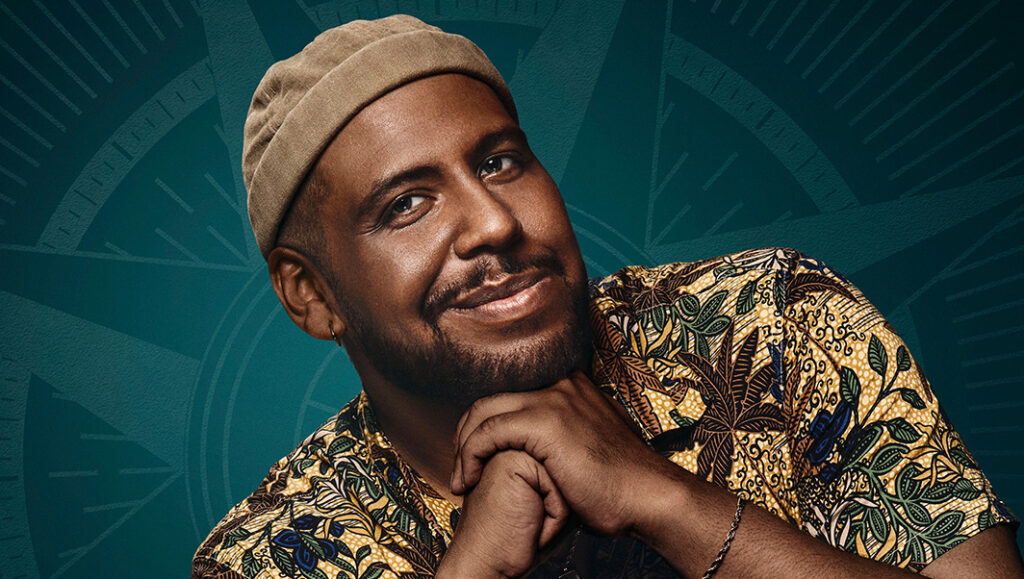
From his iconic cartwheels to being the only Faithful to clock all four Traitors, Clyde Moser made an impressive mark on The Traitors: New Blood. The actor and educator played with heart, logic, and sharp instincts, building genuine relationships while never receiving a single vote at the roundtable.
As the game entered its final stretch, Clyde began ringing the alarm about Katie Fites and Shane Beatty. His instincts were once again correct, but his ability to see through their games ultimately made him too dangerous to keep. Becoming the season’s final murder may have ended his journey just before the Fire of Truth, but it also proved what a formidable Faithful he had become.
Pop Culturalist spoke with Clyde about leading with his heart, the clues that exposed Katie and Shane, and why the Faithfuls failed to put more weight behind his suspicions. He also shared the strategy he planned to use at the Fire of Truth and the relationships that meant more to him than the game.
PC: You studied The Traitors before stepping into the castle, and that showed in the way you were able to find that balance. You were an active voice at the roundtable and never received a vote, but by the end, you seemed like the most Faithful of Faithfuls, which made you a target for murder. What was your strategy for managing how the other players perceived you? Looking back, do you wish you had given them more reason to doubt you?
Clyde: No. When I wasn’t selected to be a Traitor, because I really wanted to be a Traitor, I was like, “Well, I’m going to play as Faithfully as I can,” because I just didn’t want to be a sitting duck.
I knew that line you were talking about. If you’re able to play it the right way, people will keep you around because you have enough social capital. I just wanted to make sure that I had poured into every single person in that castle so they thought, “Wow, when the time comes, I know that I can count on Clyde.” The problem is that I think I was just too vocal by the end. I was like, “Maybe if we ring the alarms, we can change something.” Unfortunately, that led to my downfall because they had found a couple of other people they needed for the Fire of Truth. But at the end of the day, I would have rather been murdered for being right than…
PC: You called it. You identified the final two Traitors. There are so many different facets to your talent. As an actor, you’re used to tapping into such a wide range of emotions, but throughout the game, you were so calm, cool, and collected. What was the emotional high point of the season for you? What was the hardest moment?
Clyde: If you look at those two roundtables where we banished Joe [Vanella] and Tomica [Adams], you’ll see a wide range of emotions. [Laughs]
PC: [Laughs] That’s such a good answer. As an educator, you’re used to sharing what you’ve learned with the next generation. You were also the only person to clock both Katie and Shane, and you called them out at the roundtable before you were murdered. What did you pick up on with Shane that the other Faithfuls missed? Why do you think they didn’t put more weight on your suspicions after you were murdered?
Clyde: Number one, Shane was playing such a good Faithful game up until he was recruited. He also had such great social capital, especially with the little boys’ club of him, Victor [Vollbrechthausen], Wyatt [Gillespie], Mark [Zgoda], when Mark was there, and Joe. Those were the bros. They would bro out. Near the end, I looked around the table and was like, “Who am I close with? I’m close with Abbey [Benjamin]. I’m kind of close with Kriste [Lewis], but everybody thinks Kriste is a Traitor.” I was like, “Okay, by deductive reasoning, that means I’m out.”
Even though Shane and I had a good relationship, he was just so close with those boys. Once you’re at that stage of the game, you’re not thinking about who is going to get murdered or banished. You’re thinking about how the Fire of Truth will play out. They knew they had those votes locked in, which allowed them to get as far as they did. I knew they were going to choose the people they were closest with over someone like me.
That’s another reason I was trying to sound the alarm. I was like, “Wait, if I point them out, maybe they won’t murder me.” But then I was like, “If I vote for them too…” It’s one of those things.
But for me, that puzzle challenge exposed Shane. He was right next to me. I could feel the floorboard. I remember the blocks falling over. When the challenge was over, I was like, “There’s no way someone could have knocked that down and gotten back to their stand if they weren’t right there.” So I noticed those things.
PC: You also used logical reasoning. You were like, “Katie can’t put that puzzle together. The Traitors can’t put the puzzle together.”
Clyde: Yeah. Also, believe it or not, when Tomica [Adams] was like, “You take the shield. I don’t need the shield,” and then told everybody that I had the shield, I was like, “Okay.” But then again, I thought, “You can’t say anything about Tomica because she trusts you 100% right now, and she’s not going to murder you.” It was a roller coaster. I lived many lives.
PC: There was also a point when the Dolls began to suspect that a Traitor might be among you. Once you started to suspect Michael [Foote], did you feel like you had to take a shot because the Faithful numbers were dwindling? Or did you consider keeping him around, knowing that he might protect you in the turret?
Clyde: That’s the thing. Michael had relationships outside of the Dolls. Yes, we had the Dolls alliance, but Michael had relationships with everyone, and he was continuously forming new alliances with other people, which is something I’m discovering from watching these exit interviews. I’m like, “Oh, so he came up to you too? Cool.” We weren’t just perceiving it a certain way.
I remember Ben [McDonnell] and I talking beforehand, and we had also spoken to Michael before the roundtable. We were like, “I suspect you of being a Traitor. Here’s the deal.”
Even Victor [Vollbrechthausen] was like, “I think it’s Joe, Tomica, and Michael.” Ben and I were like, “We think it’s Michael too.” It just so happened that, at the time, we thought the case against him was stronger than Fruitgate. Is this conversation helpful so far?
PC: I wish you had taken the lead at your final roundtable because I feel like you could have cleared a path toward a Faithful win. That was the last roundtable where you were going to learn the banished player’s identity.
Clyde: I was screaming that! I know!
PC: I feel like voting off Jay Vinnedge served no purpose.
Clyde: I was saying that. Victor, who had led the charge against two Traitors, wanted everyone to vote for Jay in that moment. I remember thinking that even pushing back against it was going to be my downfall. Looking back, the writing was on the wall. I don’t see how I could have made it through that. Even though I was banging my fist, it was whatever.
PC: I was also screaming at my TV because Jay was either a really bad Faithful or a really good Traitor. Either way, his identity mattered less than someone like Katie or Shane’s. You touched on this already, but murdering you might have been Shane’s best move because you had correctly read him, and you were the only person who did. Theoretically, if you had made it to the Fire of Truth, who would you have wanted to end the game with? What was your strategy for convincing everyone else that Shane had fooled them?
Clyde: It would have been Abbey B. and Wyatt, 100%. Had the final four been me, Abbey B., Wyatt, and Shane, I would have gone straight at Shane because I don’t think he would have been able to handle me being as confrontational as I would have been. Even with Katie, when I challenged her on the puzzle, she knew that I knew she was a Traitor. All you have to do is call someone out, and you can see how they try to work their way out of it. I was ready, but I was also probably going to cut Wyatt, unfortunately. Abbey and I would have walked away with it.
PC: I was thinking the same thing when it came down to Abbey B., Wyatt, and Shane. I was like, “You’re better off taking the 50/50 chance. Otherwise, you’re only giving yourself more opportunities to be wrong…”
Clyde: Hello!
PC: If only you had made it to the end.
Clyde: I know, but I feel great about my showing. Throughout the entire game, I stayed true to myself. I really played the role of a Faithful. To be the final murder? Super iconic. I’ll take it, especially when you’re right.
PC: You were visibly emotional after Tomica’s banishment. At the time, I wondered if that might make you look suspicious. We saw other Faithfuls come under scrutiny for showing emotion, but that didn’t seem to happen to you. That’s a testament to your game and the social capital you built. Why do you think your reaction was read so differently? How much do you credit that to the relationships you built with the other players?
Clyde: I wanted to lead with my heart from the very beginning. I had so many real moments with everyone that you wouldn’t normally see because we were all in this high-pressure environment. I also don’t think there’s anything wrong with showing emotion. I just wanted to be consistent.
Even though we didn’t see the entire roundtable because there’s only so much they can show, I was like, “I love you so much. That’s never going to change, but we have to get smart. The job of a Faithful is to get out a Traitor.”
When I saw that everyone was voting for Tomica, I thought, “I have to vote with them because I need to look like a team player.” It became more about being that missing puzzle piece that would finally help us get a Traitor after so long. My reaction, along with the closeness everyone saw between me, Tomica, and Niyyah [Bilal Hayes], felt genuine. You can’t fake that. If anything, I walked away with real, genuine relationships that will last beyond the show, and I think that’s amazing.
To keep up with Clyde, follow him on Instagram. Stream The Traitors: New Blood on Peacock today.

Discussion about this post