

Exclusive Interview: Spencer King and Hunter Doohan on Turning Lived Experience Into Art That Heals in ‘The Wilderness’
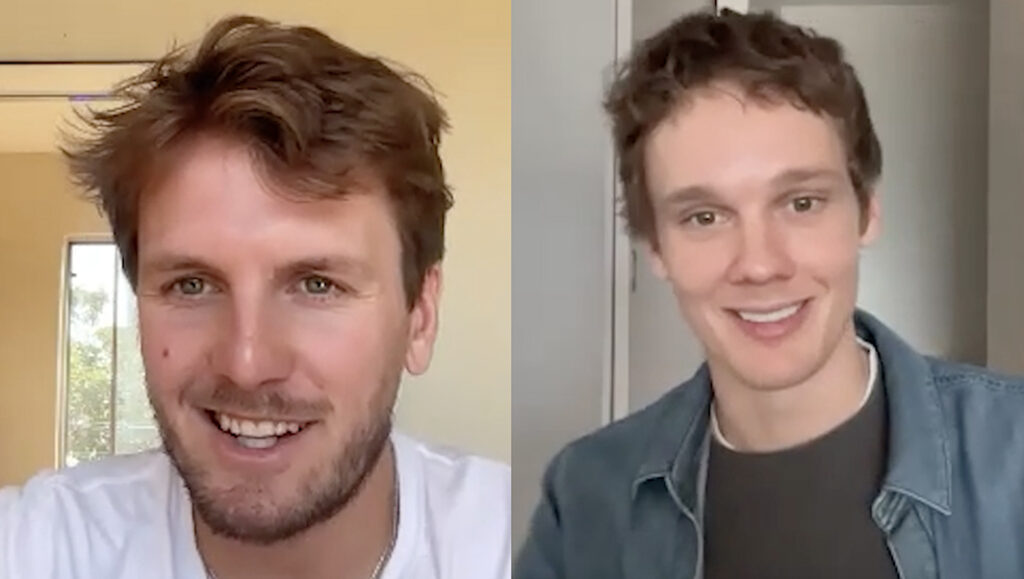
They say to write what you know—but few take that advice as courageously or as cinematically as writer-director Spencer King. Drawing inspiration from real experiences, Spencer transforms deeply personal truths into something universal in The Wilderness. It’s a film that walks the fine line between authenticity and artistry, grounded by a creative partnership that extends beyond the screen. Alongside actor-producer Hunter Doohan, the duo built an environment defined by trust, empathy, and collaboration, resulting in a story that feels as lived-in as it does visually striking.
Set against the stark beauty and isolation of the Utah desert, The Wilderness follows a group of teenage boys taken from their homes and thrust into a secretive “wilderness therapy” program. Cut off from the outside world and forced to earn the approval of an enigmatic director whose intentions are far from therapeutic, the boys must navigate an increasingly blurred line between rehabilitation and manipulation—and decide whether survival means obedience or escape.
Pop Culturalist caught up with Spencer King and Hunter Doohan to discuss the creative journey behind The Wilderness, the delicate balance between truth and storytelling, and how shared experiences of loss and vulnerability helped shape one of the most emotionally resonant films of the year.
PC: Spencer, this film is part fiction, part inspired by your own life, and told through a cinematic lens. How did you find that balance between honoring your truth while also creating space for storytelling?
Spencer: The concept of wilderness therapy—for people who aren’t familiar with it—is cinematic enough on its own. It’s harrowing. There’s nothing extra that has to be done; it already contains elements that are shocking on their own. We just focused on making the film as authentic and grounded as we could.
PC: Hunter, not only did you bring this character to life on screen, but you also helped shape the project behind the scenes as a producer. How did your creative connection to the film evolve between those two roles?
Hunter: It was all part of the storytelling process as a whole. When it came to the acting side, it didn’t really change how I approached the role or what I was doing on the day. But it was really fun to be part of the story, the casting, and the edit. Now, any chance I get, I’m involved in figuring out how we’re going to get it out there. I love having a say in that part of it for the first time.
PC: Spencer, speaking of that duality, your mother is a documentarian and your father is a musician. In what ways did they shape and influence your work as a writer and director?
Spencer: So much. Watching my mom as a documentarian, I saw someone operate at such a high level—getting a film made from start to finish is a miracle in itself. My dad was a true storyteller; he was a songwriter. I think I’m a combination of both of them from a creative standpoint.
PC: Hunter, you and Spencer connected over your shared experiences of loss, which gave you a meaningful foundation for this collaboration. How did that understanding between you two translate into such a lived-in and emotionally grounded performance?
Hunter: We connected on that right away. We were able to have such open conversations, which I think is rare. In society, we tend to avoid those topics—and even in filmmaking, it’s not always something you dive into. Most of the time, a director doesn’t know your personal experiences or what you’re pulling from. For Spencer to share his story and for us to talk about mine, then connect that to what Ed was going through, really grounded my performance. On the day, it made it easier to go there emotionally and to have that level of trust with Spencer.
PC: Spencer, you filmed on location and spent months scouting the area. How did immersing yourself in that landscape shape not only the tone and visual language of the film, but also the narrative itself?
Spencer: The idea was to go on a location scout and see all these different places, but I really fell in love with one particular part of southern Utah, near a town called Boulder, which sits between Torrey and Escalante. The topography there changes so quickly—it goes from red rock to aspen trees. You’d think we relocated the crew multiple times, but everything was actually within an hour of that town. I just fell in love with that area. Every day you’d find something even more beautiful than the day before.
It was both a gift and a challenge because we kept asking ourselves, “How are we going to capture all of this?” Of course, we couldn’t capture everything, but I think we did a pretty good job of showcasing the incredible variety of the landscape.
PC: Visually, it’s breathtaking to watch—and when you pair that with these emotionally grounded performances, it’s a fantastic film. Hunter, you’re someone who’s worked on projects of all sizes. What is it about independent filmmaking that fuels your creative soul?
Hunter: It’s getting the opportunity to tell these really personal stories and help get projects off the ground. It’s not that I specifically say, “I just did that, now I want to do this.” They’re all interconnected because without shows like Your Honor and Wednesday, I wouldn’t have had the opportunity to take on this role. But at the end of the day, it really comes down to the people you get to work with and the script itself. This project had everything I didn’t even know I was looking for. The moment I read it, I knew I had to be involved.
PC: It’s those projects that call to you. Spencer, audiences are always searching to see themselves reflected in the art they consume, and this feels like a project that transcends entertainment. What has it been like witnessing how deeply it’s already connecting with audiences ahead of its theatrical premiere? And in what ways has telling this story influenced the kinds of stories you want to tell in the future?
Spencer: There’s a big community of people who care deeply about this subject. I knew some would be skeptical—and understandably so. There have been projects in the past that have sensationalized or exploited true experiences, and that’s a heavy weight to carry. This isn’t something to take lightly. There aren’t just millions of kids who have gone through these programs; there are hundreds of thousands still out there right now. There are kids living this life as we speak who don’t even know this film exists yet. My hope is that when they eventually see it, they’ll feel that their experiences were portrayed in a way that’s authentic and respectful.
PC: And also hopefully heal them as well. Hunter, in addition to the work you’ve done on screen, you also write and direct. What did you learn from working with Spencer that you’ll bring to that aspect of your craft?
Hunter: Oh my gosh, so much. He’s the most collaborative director I’ve ever worked with. The script was already so beautiful, but I’ve never met anyone more open to saying, “Wait, that idea—let’s explore that.” He did that with every actor on set and every crew member, too. I loved watching how he and Sean [Mouton], our DP, worked together and trusted each other. He brought all these people on board because he admired their work, and then he trusted them to bring their own ideas to the table. That level of trust is really beautiful—and honestly, it’s not how it usually works. That’s definitely something I’ll carry with me when I direct my own project.
Make sure to follow Spencer (Instagram) and Hunter (Instagram). The Wilderness is in select theaters now.

Discussion about this post