

Chris Hartwell and Harry Shum Jr. on ‘Do No Harm’ and the Stories That Deserve to Be Heard
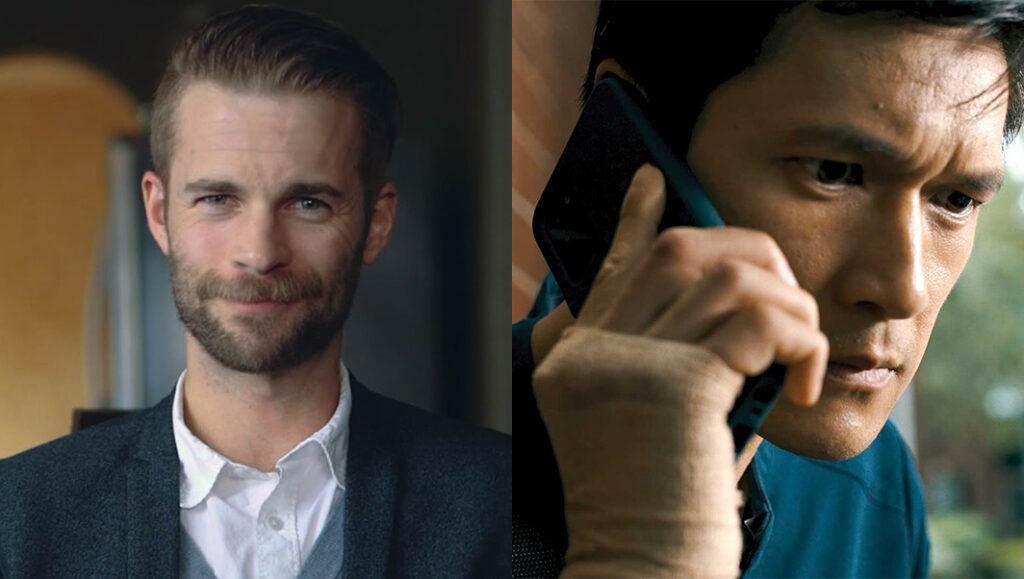
Few things capture the spirit of the festival circuit like discovering a filmmaker at the beginning of their rise—someone whose work is both personal and cinematic, raw yet precise. Do No Harm, the debut feature from Chris Hartwell, is exactly that: a searing, viscerally immersive drama opening this year’s Dances With Films. What elevates the film even further is the rare synergy between filmmaker and cast, led by a quietly devastating performance from Harry Shum Jr. Their collaboration is a testament to what independent cinema can achieve when vision and vulnerability meet.
At the center of Do No Harm is Sam Yeong, a home health nurse on the verge of collapse—played with haunting restraint by Harry. As Sam spirals in the aftermath of a tragic mistake, the film explores the impossible expectations placed on those who care for others and the psychological toll of maintaining the illusion of control. It’s a character study as much as it is a reflection of a fractured system—one that holds up a mirror to the quiet unraveling hidden beneath professional composure.
Pop Culturalist caught up with Chris Hartwell and Harry Shum Jr. to explore the real-life inspirations behind the film, the responsibility they felt in telling these overlooked stories, and how their creative partnership became the heartbeat of Do No Harm.
PC: Chris, Do No Harm is such a powerful reminder of the emotional depth that comes from writing what you know. When stories are grounded in personal experience, they resonate that much more. With your father and wife both in the health care industry, how did their perspectives not only help shape this narrative but also deepen its authenticity?
Chris: That’s a great question. My entire life, I’ve been surrounded by the health care profession. As you mentioned, my dad is a doctor and my wife is a home health nurse. They’ve brought home so many stories—not just about patient interactions, but also about the personal struggles they face in maintaining their own well-being under the stress and anxiety of the job. After unconsciously collecting those stories over the years, when I sat down to write this, it just poured out of me.
The amazing thing about having my dad and my wife around is that I could constantly check in with them—not only to make sure the medical details were accurate, like what medication you would administer, how much you’d give, or what you’d do if you walked in on a patient in a certain condition—but also to ensure that the emotional truth behind the nurse character Harry plays, his desire, and his intention in those patient interactions, felt real and grounded.
They were such guiding lights throughout the process. I could always turn to them for insight. My wife especially is my first reader—she’s a nurse, and her responses are always emotional: Does it move me? Does it make me sad? Does it scare me? Having her by my side through it all was invaluable.
PC: This is definitely a film that will move people. Speaking of that character—Harry, there’s so much complexity in this role and in your performance. As a society, we often place healthcare workers on an unrealistic pedestal, but in reality, they’re human just like us. They make mistakes, they struggle, they carry the weight of impossible choices. As an actor, it’s about finding the truth in that character. How did you find Sam’s truth? How did you unpack that emotional weight and bring such nuance to his journey?
Harry: When I first read the script and saw that Chris was not only the writer but also directing, I knew the vision would carry through without getting lost in translation—and that’s rare and really special. What I immediately connected to was the pressure of being perfect. We’re all trying to figure things out in life—wondering, “Am I doing this right? Am I doing this wrong?” And when someone tells you something is “perfect,” what does that even mean? Is it perfect by their standards, or perfect for me?
Now layer that pressure onto healthcare workers—where lives are at stake, and you can make or break someone’s day depending on the pain or injury they’re experiencing—and that pursuit of perfection becomes even more complicated. What you study in medical books doesn’t always apply to the unique situation of an individual patient. How do you define perfection in that context, especially when you don’t have the resources, support, or even compassion from others? When you’re overworked, overwhelmed, and still expected to be flawless, that’s a lot to carry. And that’s what I wanted to amplify.
As an actor, I always try to amplify what I’ve experienced in my own life, but this time, I had to do it through the lens of a nurse. That’s not a perspective we see often—especially not male nurses—in film or television. That’s part of what drew me to Chris’s story: the way he captured those visual layers and the sound design in such an intentional, emotional way. It felt important. It felt necessary to tell this story and give nurses the spotlight they deserve.
PC: You brought that weight to your performance. Chris, this is such a multi-sensory viewing experience. As a filmmaker, you don’t just bring us into Sam’s psyche—you drop us into his shoes. As he begins to unravel, you feel the weight of everything he’s carrying. And I mean this in the best possible way: there are moments that feel suffocating because you’re experiencing that pressure alongside him. How did you approach building that immersive perspective—both visually and emotionally?
Chris: That’s a fantastic question. We were actually just talking about this before the cameras started rolling. This is the palette I have as a storyteller. I’m not a documentarian, I’m not an orator—I’m a filmmaker. And as a filmmaker, I have access to some really powerful tools. The ones you mentioned—sound design, camera movement, framing, color, light—all of those elements can be dialed in to elicit a specific emotion.
In this case, it was about stress. That constant surge of adrenaline. The feeling of “I have to keep going,” of caring for others with no time to breathe. Going back to your earlier question about Harry’s performance, that’s something he captured so brilliantly: the relentlessness of it. You finish with one patient, and you’re immediately thrown into the next. There’s never a moment to exhale.
So, building on the incredible foundation Harry gave me, we let the camera mirror that chaos. Sometimes it did strange, even jarring things—twisting, turning, flipping upside down—literally putting the audience in his world. There’s a moment where we fully invert the frame, and there’s nothing subtle about it.
Sound design was another key layer. My brother was the sound designer, and I probably spent more time collaborating with him than anyone else. We talked at length about how to use sound to amplify the tension, to mimic that rising anxiety that feels like it’s pumping through your veins.
One of the most meaningful—and difficult—comments I received was from a friend who experiences panic attacks. They said, “I don’t know what you did with the sound, but that’s exactly what it feels like.” That really stuck with me. We worked long and hard to use every tool available to draw the audience into Sam’s headspace—and hopefully, make them feel what it’s like to carry that weight.
PC: Harry, one of the greatest things about independent filmmaking is the level of collaboration you don’t always get on a bigger production. It really creates space for real discoveries in the moment. Were there things you uncovered about this character while filming, and how did that openness on set allow you to take more risks with your performance?
Harry: When you talk about indie films, there are always limited resources—but that’s actually one of their strengths. You’re forced to be creative, to collaborate, and to find new ways to harness the energy that might not come from having the fanciest equipment. What Chris and the team were able to accomplish made me want to level up and think more creatively too.
Our DP, Paul Dufilho, comes from an engineering background. He’s a filmmaker, but this was his first time diving into narrative work. The way he built custom rigs and gear using that engineering mindset was incredible. He created setups that let us capture shots you’d normally need a crane for—which, on this budget, would’ve taken up the entire film. If we’d done that, we wouldn’t have had a movie. But instead, we had this environment full of innovation.
We also had film students on set who brought fresh eyes and new perspectives. There was this blend of traditional approaches with experimental ones, and that energy was everywhere.
As an actor stepping into Sam’s mindset, there’s no time to breathe. He doesn’t get to pause and think about his next move—he just has to keep going and trust his instincts. Hopefully, my gut was guiding me in the right direction. But I was also lucky to have Chris there, showing up every day with enthusiasm and clarity. His direction created a support system that allowed all of us to take risks and push toward the same goal.
PC: Chris, one of my favorite things about the festival circuit is getting to discover emerging voices like yours. There are so many bold, creative decisions you made with this film—from distorting reality, to breaking the fourth wall, to bending genre conventions. Were there any risks that felt impossible to pull off or moments where you questioned whether it would work?
Chris: Absolutely. There were a few key cinematic choices where I just had to go for it—we didn’t have time to shoot a “safe” version. One example is the phone calls Sam has throughout the film with different important characters. I spent a lot of time thinking about how I wanted to shoot those scenes. As we’ve been talking about, I really wanted to put the audience in Sam’s shoes, to make you feel the pressure he’s under.
So instead of cutting back and forth in a traditional way, I made the choice to have the characters on the other end of the line speak directly into the camera. The idea was to heighten the tension—so it feels like they’re looking at you, waiting for you to respond, expecting you to have the answers right now. It’s not something I’d really seen done before in this way, and because of that, it felt like a real risk.
For some of the early phone calls, we shot it both ways—one version with the actor looking into the lens, and one the traditional way. But as the schedule got tighter, we didn’t have time to shoot both versions for the rest. So I had to make the call on set: do I play it safe, or do I commit to this approach and go all in? I’m really thankful I chose the bolder option.
Harry: You could feel it. Even in the silence, you’re sitting there going, “Uh…” You feel them staring at you. It was such a bold decision, but that’s also the beauty of indie filmmaking. Sometimes it’s like, “This is the best way to do it. So let’s just go for it.”
PC: Harry, you’ve been such a trailblazer for our community. So often when I speak with Asian creatives, we talk about how this industry has evolved—from simply getting Asian-led projects off the ground to breaking stereotypes. Do No Harm feels like a meaningful step forward, where we get diversity on screen without having to call attention to it. Sam is flawed, complex, messy, and deeply human. I know you don’t love talking about yourself, but have you had time to reflect on what you’ve done for our community? And what is your hope for the future of this industry?
Harry: We’re living in a time where there’s so much noise—constant noise. Even in the films we watch, there’s often so much surrounding them that we don’t always know what we’re really watching. For me, I’ve had to remind myself to just keep creating. Make things with people you believe in. Make things with people you enjoy being around. Make things with people who can teach you something. And hopefully, along the way, you can pass on whatever wisdom you’ve picked up—whether it came from something difficult or something successful in your past. That’s the only way I feel like I’m doing the right thing.
Sam really reflects that for me. He’s in denial about the thing he was trained to be great at, but life catches up—whether it’s exhaustion, unexpected events in your day, or larger things happening in the world. That’s when you need support around you. You want to be surrounded by people you feel good creating with—no matter the profession, but especially in film and television. If you have that, I really believe nothing can stop you.
When it comes to community, there are so many layers. We talk about the AAPI community, but there’s also the nursing community—which is massive. And within that, there are so many Filipino, Chinese, Korean professionals—yet we rarely see their stories. Especially ones where the characters are flawed, where they make mistakes. What do we do with that? That’s what drew me in. That, and Chris’s filmmaking.
Beyond that, I think it’s about coming together across communities—working with each other to tell stories that reveal how connected we all are. That’s where we find the humanity we share.
PC: Then we get fantastic films like this. Chris, not only do you have this incredible ensemble leading the project, but the supporting cast truly brings this world to life. Their performances feel so lived-in and authentic. I know you were intentional about casting lesser-known actors in these roles—partly so that audiences might wonder whether they’ve actually experienced these ailments themselves. What was the collaboration like on set, working with performers who brought such quiet realism to their roles?
Chris: It was wonderful. That was one of the true joys of making this film. In a way, every day felt like a new movie because of the different patient visits woven throughout the story. Each visit was shot in a single day. Harry was there every time, but we had a new cast member step in for each of those moments.
And the beautiful thing about that—like we were just talking about—is that they each brought their own unique perspective. Their voice. Their life experience. My job, in many ways, was to get out of the way and let that happen. It’s an old adage, but I believe it: 85 to 90 percent of directing is casting. If you cast it right, you just have to step aside and let them bring themselves to the role.
That’s really what we were after—the truth of their lived experience. Whether it was physical, emotional, or spiritual, it needed to feel real. And that started with conversations before we even got to set: Where are you coming from? Who are you as a person? How can I tweak this line so it sounds more like you? Even with the blocking, we’d ask: “How do we shine a light—literally or figuratively—on the pain you’re carrying in this moment?”
A lot of it came down to listening. And for me, as someone who talks a lot, that was a gift. One of my favorite things to do is step in, pause, and just listen to what the actor wants to bring to the table. If any of those scenes resonate or feel authentic, it’s because of what they brought in—and the honesty they allowed themselves to share.
PC: Shout out to the younger children as well—their scenes are so impactful. Harry, going back to what you were saying about learning, you’ve also expressed a strong interest in writing and directing. Were there any takeaways from Chris’ approach to those roles that you’ll carry into your own work?
Harry: Absolutely. I think the biggest thing was the clarity. Chris brings so much clarity to both his direction and his writing. There’s a real intentionality in everything he does—he knows what he wants to say with the film—but at the same time, he creates freedom within those boundaries. That balance was really powerful to witness.
What was especially inspiring about this project is that it’s a very small film in terms of budget, but it was this incredible community that came together to make it happen. Chris brought in film students. He brought in a DP who hadn’t traditionally worked in narrative, but that doesn’t mean they couldn’t tell this story—and they absolutely did.
There’s so much gatekeeping in Hollywood, and I think we’re missing out on really interesting ways to tell stories because of it. Yes, some things might not work perfectly—there might be what people call “failures”—but I don’t believe in that word. Every attempt builds on the last. Even if something isn’t traditionally “successful,” it might inspire someone else to say, “Wait, I can do it differently.” That’s how Hollywood was built—on experimentation, on pushing boundaries. We just don’t talk about the massive failures during the silent film era or the transition to talkies.
We need to shift the conversation away from what counts as failure or success and instead ask: Is this story reaching the people who need to hear it? Because when that happens, when a film connects on that level, it can reshape how we see each other. In the case of Do No Harm, it’s how we see healthcare workers.
You can tell stories like this in a drama or a documentary—but what struck me about this film is that it’s thrilling. There’s adrenaline. You’re constantly asking: “How is this guy going to get out of this?” And like you said earlier, it can feel suffocating. But it’s suffocating in the way that so many of us feel in our own lives—like we’re carrying too much and don’t know how to move forward. And sometimes, it’s about finding that moment to stop, to breathe, to ground yourself. Only then can you really move forward.
PC: Beautifully said. Chris, this has been a seven-year journey—from when you first started writing Do No Harm to now making your world premiere. What’s been the most surprising part of the experience? And what have you learned?
Chris: That’s a great question. And honestly, it’s a lesson I’ve had to learn over and over again as life goes on: to enjoy the journey. It’s not about the destination.
Tonight is our world premiere—at the TCL Chinese Theatre in downtown Hollywood. What a beautiful, iconic venue. It feels incredible and momentous, and I’m so grateful we get to premiere the film there. But the truth is, that moment will be gone in a flash. If the entire experience was about just that one night, then I’ve missed everything that led up to it.
As this process stretched from one year to two, to three, and then beyond, I had to keep reminding myself: “I love doing this.” I wouldn’t want to be spending my time any other way. And to be working on a story that I care about—one that I believe matters—makes it all the more meaningful. Yes, I’m thrilled to see it on the big screen. But more than anything, it’s been a reminder that life is happening right now. Not on the other side of a problem. Not after the film is released. Not after the premiere. It’s happening in this very moment, in conversations like this one.
That’s what I’ve tried to hold onto: the joy in the process, the collaboration on set with a fantastic actor, a passionate DP, an incredible editor. That’s what stays with me. That’s the real reward. And throughout this entire journey, that’s the lesson I’ve had to return to again and again. And it’s been wonderful.
PC: I also love the dynamic between Sam and Leen and how they hold space for each other. Who are the people in your own life who’ve shown up for you in a similar way? And as the film makes its world premiere tonight, what do you hope audiences take away?
Harry: For me, it’s definitely my wife, Shelby [Rabara]. We’ve been together for twenty years, and she’s seen the entire journey—from self-tapes and table reads to now, opening a film festival.
It’s the little things that feel huge. They might seem small to others, but every decision you make in life feels like a thousand little ones in your head. And having someone there through all of it—someone who gets it and celebrates the quiet wins—is everything.
We made this film two years ago, and to be here now is incredibly exciting.
To echo what Chris said, it’s also about getting a room full of people who’ve never seen his work and letting them discover him. That’s what I love about the festival circuit—it’s about discovery. Discovery of story. Discovery of a storyteller. And that’s what I hope people take away tonight. They’ll receive the story in whatever way it lands with them—and that, in itself, is beautiful.
Chris: I love that question. And I’ll piggyback off what Harry said—my wife has absolutely been that person for me. She’s the one who’s held space for me time and time again. I’m a very emotional guy, and she’s endlessly patient—with the ups, the downs…
Harry: [laughs] We’re the same.
Chris: Yeah, exactly. [laughs] She’s been there through it all. And like I mentioned earlier, she’s always my first audience. She holds space in such a generous way, especially when I’m writing.
To answer your question about what I hope audiences take away: I’m reminded of a moment during rehearsals between Harry and Rosaline [Elbay], who plays Leen. There’s a scene where these two characters desperately want to see and be seen by each other—but in that moment, they just miss. And I remember sharing that with the actors… and I started crying.
Harry: I remember that.
Chris: I wrote the scene—I knew exactly what was going to happen. But the reality of how often we don’t see one another… or how often we’re afraid to be seen… it hit me.
If someone walks away from this film wanting to be seen—or feeling seen, especially those in the healthcare profession—or even just reminded that we’re all human, that we all need grace, and that we’re allowed to make mistakes… then I feel like we’ve done our job. That’s all I could hope for.
Make sure to follow Chris (Instagram) and Harry (Instagram). Do No Harm made its world premiere at Dances With Films.

Discussion about this post