

Tribeca Film Festival 2026: ‘Recluse’ Star Mia Vallet on Psychological Horror and the Complexities of Her Character
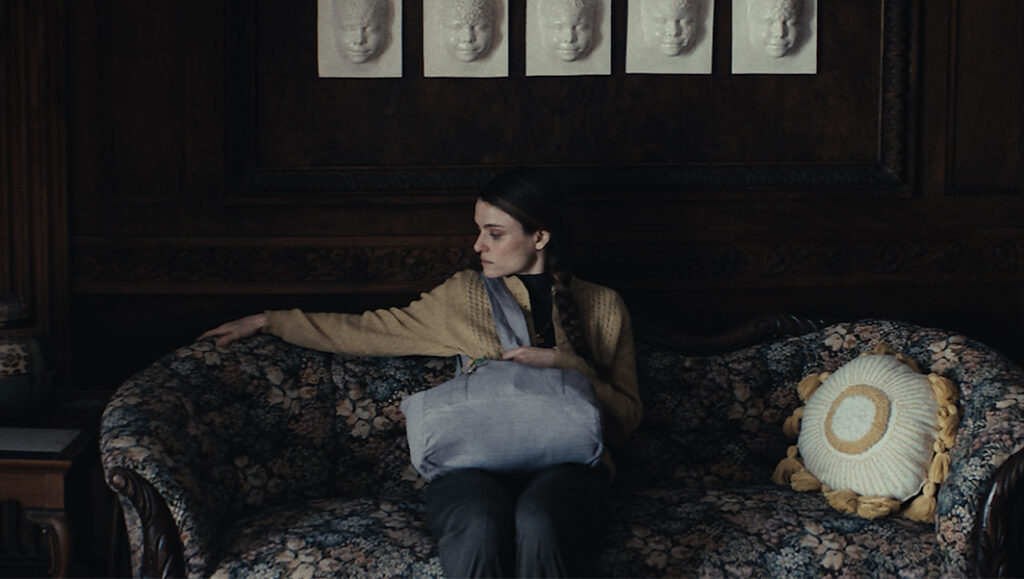
Among the breakout stars of the 2026 Tribeca Film Festival is Mia Vallet, who delivers one of the festival’s most compelling performances in Henry Chaisson’s feature debut, Recluse. Marking her first venture into the horror genre, Mia brings remarkable depth and nuance to the screen, showcasing a range that signals an exciting new chapter in her career.
Set within a sprawling New England estate, Recluse follows Joan, an audio engineer who returns to her childhood home to care for her severely injured father. As old wounds resurface and questions surrounding her mother’s disappearance refuse to stay buried, Joan finds herself confronting both the ghosts of her family’s past and the possibility of something far more sinister lurking within the house. Blending Gothic atmosphere with mounting tension, Chaisson’s debut transforms grief, memory, and obsession into a nightmare that becomes increasingly difficult to escape.
Following the film’s world premiere at Tribeca, we caught up with Mia to discuss stepping into the horror genre for the first time, developing Emily’s layered inner life, collaborating with Henry, and navigating a story that continually challenges audiences to question what they think they know.
PC: There’s so much complexity and depth to Emily. How did you create the space for yourself to explore the different shades to her, and what was it about her that spoke to you when you first read the script?
Mia: I had a lot of conversations with Henry [Chaisson] about his vision for the character. I spent time imagining her history and what her life was like growing up. The film explores the lasting impact of childhood memories and family history, so I wanted to build those details for myself in order to create an internal logic for her behavior and the choices she makes.
PC: There are so many twists and turns in this film, and the audience is constantly reevaluating what they think they know. As you prepared for the role, how did you balance playing the truth of each moment while also knowing where Emily’s journey would ultimately lead?
Mia: It’s a tricky line to walk. Having a cohesive internal logic was crucial so that everything that happens, and every response to it, made sense to me in the moment, even if the audience might interpret things differently. Hopefully, the film is rewarding on multiple viewings and people pick up on new details each time. That also depends, to some extent, on the collaboration between me and the editing team. There are probably different versions of the film on the cutting room floor where more or less is revealed at various points.
PC: Horror is a genre that can hold so many different ideas, emotions, and themes while still delivering a thrilling audience experience. What draws you to horror as a storyteller, and what does it allow you to explore that other genres don’t?
Mia: This is my first horror film, but I definitely hope to do more. As a performer, I’m drawn to the places the genre asks you to go: extremity, anti-social behavior, heightened emotional states, surreal encounters, and conflicts that are literally a matter of life and death. I love when a performance is allowed to push boundaries and get a little wild and freaky.
PC: You’ve collaborated with Henry before, and that creative shorthand can be such a valuable asset on a project like this. How did the trust he instilled in you give you the confidence to push yourself creatively in this performance, and was there a particular scene or moment that best exemplified that collaboration?
Mia: Henry is such a brilliant person and has a calm, composed presence on set that immediately puts actors at ease. Having the time to explore scenes and experiment with different takes is such a gift, but it’s often difficult on indie films where schedules are much tighter. Henry made it a priority to be as sensitive to our needs as possible, ensuring we had the space to relax, collaborate, and really dig into certain key scenes. I think that made a meaningful difference in all of our performances.
PC: The house feels like a character in its own right. How did working in that environment help shape your performance and allow you to access the emotional places the role required?
Mia: There’s such a sense of history and gravitas to that place, along with a display of wealth, status, and power that’s difficult not to react to. That dynamic sits at the core of so many of the characters’ motivations throughout the film: their proximity to Lawrence’s fame and influence without ever fully having access to it. Spending time in that house deepened my understanding of that dynamic and what it can do to a person. And, of course, it was incredibly spooky and grand in a way that naturally inspires a sense of dread and terror.
PC: You’re someone who attends Tribeca every year, but this time you’re bringing a film that’s making its world premiere at the festival. What does it mean to experience Tribeca from that side of things, and what do you hope audiences take away from the film when they see it?
Mia: It’s surreal to premiere a film in the city where you live and celebrate it alongside friends and your community. I also had several friends with films in the festival this year, which made the experience even more special. My best friend, Betsey Brown, starred in Motherfutureself, and my friends Evan Moore and Julie Waters were executive producers on She Keeps Me Young and Act One, respectively. It was incredibly rewarding to support their work and experience their films as well.
As for what I hope audiences take away, I hope they enjoy the film and are genuinely freaked out by it on a visceral level. But I also hope it lingers with them in a deeper, more unsettling way after they’ve left the theater.
PC: Outside of Recluse, what’s next for you?
Mia: I have a number of projects in the pipeline right now, and what excites me most is how different they all are from one another. Next month, I’ll be appearing in Foosball, a play by Sean Czarnecki directed by Claire Siebers at Arts on Site in the East Village. It’s a phenomenal script with an incredible team behind it, and I think it’s going to be a really special production.
Beyond that, several independent films that I care deeply about are currently in post-production. I have leading roles in Nurture, directed by Slater and Logan Stark, By Morning, directed by Peter Rinaldi, and Poetry Night, directed by Caedmon Fair. I also have a handful of projects where I appear in supporting roles, and I’m excited for audiences to discover those as well.
To keep up with Mia, follow her on Instagram.
Photo Credit: Courtesy of Recluse

Discussion about this post