

Exclusive Interview: Tom Morton on Stepping into the Harlan Coben Universe with ‘I Will Find You’
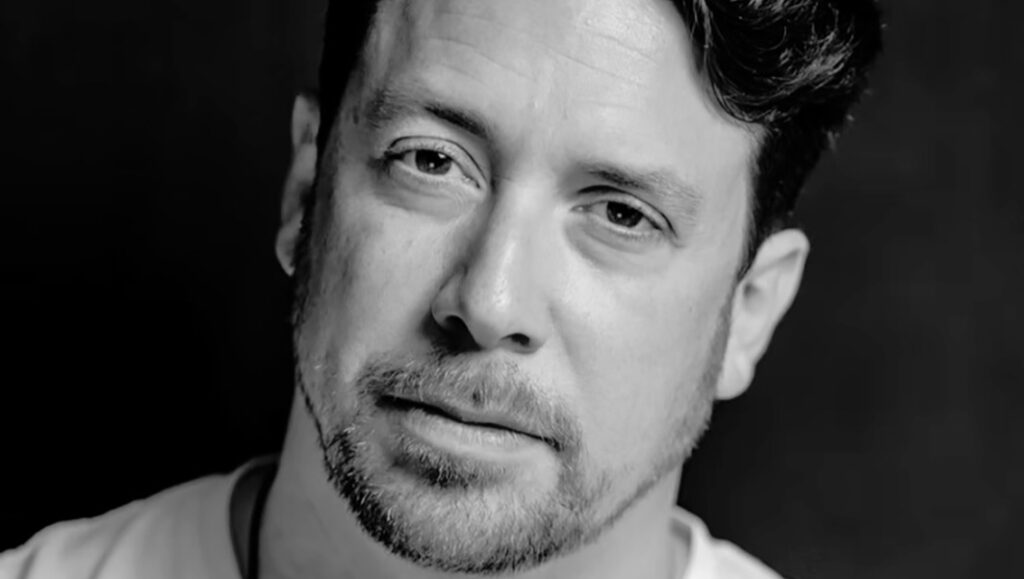
Tom Morton’s career has never been confined to a single medium, language, or corner of the industry. The French-British actor, writer, and director has moved seamlessly between international film, television, theater, and voice work, approaching each project with an instinct for character and an appreciation for the larger story being told. Following his appearance in Coralie Fargeat’s The Substance, Morton now steps into Harlan Coben’s ever-expanding universe with Netflix’s I Will Find You.
Adapted for television by showrunner Robert Hull, I Will Find You follows David Burroughs (Sam Worthington), a father serving a life sentence for the murder of his son. When new evidence suggests the boy may still be alive, David escapes prison and sets out to uncover the truth. His search eventually intersects with Detective Daniel Müller, a Swiss investigator whose unwavering commitment to justice introduces another vital thread to the mystery.
Created specifically for the series, Daniel does not appear in Coben’s original novel, giving Morton the freedom to build him without a preexisting blueprint. What emerges is a compelling portrait of a man whose wry humor and inherent trustworthiness are shaped by an unspoken sadness and a pursuit of justice that has come at a personal cost.
Pop Culturalist spoke with Tom Morton about stepping into the Harlan Coben universe, discovering Daniel in real time, finding restraint within the show’s heightened reality, and expanding his own creative voice as a writer and director.
PC: Harlan Coben has a remarkable ability to take familiar genre conventions and completely upend your expectations. As someone who also writes and directs, what do you think separates a great thriller from one that’s truly memorable? When you first read the script, what convinced you that this was one of those projects?
Tom: Harlan Coben has, over the course of his career, demonstrated an incredible knack for creating stories in which audience expectations are consistently turned on their head. In fact, I’d say the only expectation you can bring into Harlan’s world without fear of being wrong is that you will not figure out the plot before the answers are revealed at the end of the story.
Maybe there’s a paradox here, but to me, what makes these thrillers memorable is their rewatchability. Very few shows, novels, or films of this kind hold up on a second viewing because, once you know how the plot unfolds and who the guilty party is, you don’t really feel that pull to revisit them. If you do, everything can feel a little telegraphed.
But with a great thriller like this one, and I think that’s what we’ve been seeing since the release of I Will Find You on June 18, people watch it once, binge it in one or two sittings, and then go back to the beginning to experience the story again, this time with all the cards in their hands. There really is a joy in watching how all the pieces fit together once you know what that final picture is. It’s something we’ve also seen with classics like The Third Man, Seven, The Usual Suspects, and Chinatown, to name just a few, and that’s something Harlan has really honed over the years.
As for reading the script, to be honest, I didn’t need to. Robert Hull, the showrunner, and Harlan Coben have such an incredible track record with these types of shows that I knew we would be in safe hands as soon as I saw the sides for the audition!
PC: You had the unique opportunity to bring to life a character who didn’t exist in the original novel. How did you approach building him from the ground up, and what creative freedom and responsibility came with introducing someone entirely new to this world?
Tom: Well, this was part of the fun right from the beginning of the project because, when I auditioned, I hadn’t read the novel, so I was coming to it completely fresh. Once I knew I was going to be working on the show, I had to fly from Paris to Toronto for the shoot, and there was very little time between booking the job and arriving on set for my first day. I heard that I had gotten the job on Thursday, and I was expected on set the following Tuesday!
I listened to the audiobook on the flight over. Fantastic performance by Steven Weber, by the way. I’m listening to the audiobook, and I keep thinking, “When is my character going to turn up?” One hour, two hours, three hours, six, seven… I get to the end of the story and there’s no Detective Daniel Müller. There’s barely a mention of Switzerland, for that matter!
On day one, I knew very little about Daniel, and I hadn’t yet seen a script for any of the episodes. I was essentially flying blind beyond what I knew from having familiarized myself with the book. Then again, I also knew that Robbie and Harlan had made a lot of changes to it!
But there was a freedom in that. It was liberating because, rather than worrying about how my character fit into the bigger picture, I was able to remain in the moment and experience what was happening at the same time the character was discovering it. In the end, it was a huge advantage because, once you know the wider picture, it can sometimes be challenging to remain fully present in the moment you’re shooting. We spend a lot of time chasing that reality and truth.
Here, I was able to simply exist truthfully and react in real time.
In terms of responsibility, what was exciting about Daniel was that he gave Harlan an opportunity to fill in a lot of the details that hadn’t made it into the book. It felt to me as though there was an entire narrative strand that, at some point, Harlan had felt obliged to omit to keep the novel moving. With the streaming format, however, he could finally bring that character back and create more shading and texture around David and Matthew’s story.
PC: Detective Daniel Müller has an incredible sense of duty and commitment to his work. At times, that dedication seems to border on unhealthy, yet there’s also something undeniably admirable about his relentless pursuit of the truth. As you got to know him, which aspects of his personality did you relate to most, and where did you find the greatest differences between the two of you?
Tom: The more time I spent with Daniel, the more relatable I found him. Here is a man with a profound commitment to truth and justice, as well as a sense of honor and duty that can indeed border on obsession. Many of Daniel’s characteristics felt very close to my own. His wry sense of humor and deadpan delivery were certainly qualities I identified with immediately.
But there’s also a tragedy to Daniel, a melancholy that I really enjoyed exploring. It informed much of how I approached him because he’s someone burdened by a great deal of pain and sadness, which is partly why he has become such a relentless pursuer of justice. In the process, however, he has forsaken himself and lost sight not of his humanity, but of who he is. It felt to me as though he was seeking refuge in his pursuit of justice to avoid confronting his own pain, and that is a pretty self-destructive place to reach.
PC: Daniel is constantly crossing paths with new people, and every interaction seems to reveal a different side of him. While you have to do the individual work of building the character, so much of a performance is also informed by the actors with whom you share your scenes. How did your castmates shape your understanding of Daniel, and is there a particular scene or scene partner you’re especially proud of?
Tom: The bulk of my scenes are with Logan Browning, who plays Agent Sarah Greer, and what really struck me about that dynamic emerged when we filmed their first meeting. Initially, there is a lot of cat and mouse in their relationship because Daniel keeps trying to get hold of her, while she’s too busy chasing David to take a moment to acknowledge him! But there is a scene in which he finally tracks her down at the hospital, and Agent Greer immediately gets on board with his theory and decides to trust him. That shift in the script and in Logan’s performance told me a great deal about how Daniel comes across. He is intrinsically trustworthy, so he needed to exude both confidence and reliability. Knowing that helped me tremendously.
The scene I’m most proud of, which was also the most fun to shoot, is when Daniel confronts Hayden and Gertrude Payne for the first time. It’s so different from any of my other scenes in the show because, much of the time, Daniel is explaining things and helping move the story forward for both Agent Greer and the audience. Suddenly, here was a scene that felt like theater. It was simply three people in a room talking, listening, and observing one another. That is incredibly fun to play, which I think comes across on screen. The way the scene was shot also gave us the space and time to explore the dynamic among these three characters. When you get the opportunity to sit across from powerhouses like Milo Ventimiglia and Madeleine Stowe, the whole thing doesn’t feel like work.
PC: This series is built on revelations that continually reframe what you think you know. As an actor, how did you navigate receiving the scripts over time rather than all at once? What level of trust and collaboration did that require with the writers and showrunner?
Tom: I’ve touched on the subject of script availability and how different this project was from anything I had experienced before. On The Substance, for example, I had the opportunity to read and reread the entire screenplay multiple times before I was ever called to set!
I would say that when you find yourself in a position like the one I was in on I Will Find You, your trust in the showrunner and writers has to be absolute and unwavering. But I tend to believe that’s a solid way to approach most film work. As an actor working in film and television, you truly are a cog in a much, much bigger machine, and that is not a bad thing. More often than not, you don’t and can’t have a complete vision of what the finished project will be, especially because so much of it comes to fruition in the editing suite and during other stages of post-production.
You really have to put yourself in the hands of the director, producer, or, in this case, showrunner and trust that they will steer the ship while you focus on your contribution to the journey. Thankfully, Robert was never more than a few feet away from the set, so I was always able to touch base with him if I needed to. Episode directors Adam Davidson and Maggie Kiley were also incredible guides through this world.
PC: This series does such a wonderful job of existing within a heightened reality without ever losing its emotional authenticity. As an actor, what is it like to play in that space, and how do you find the balance between pushing your performance far enough and maintaining that sense of truth?
Tom: When you’re working in a world as heightened as this one, and indeed across the entire Harlan Coben Extended Universe, the key to authenticity is not to push the performance because the circumstances and the world itself are already doing that work for you. For me, the key was to keep the performance as grounded in reality as humanly possible and, in fact, to go smaller.
Perhaps that’s a byproduct of coming from a theater background and being accustomed to playing to the back row. When I work on camera, I know I have to leave all of that at the door, be as minimal and restrained as possible, and trust that the camera will find everything it needs. Otherwise, if you try to meet the heightened reality where it is, you run the risk of putting a hat on a hat, which, frankly, I don’t want to see!
PC: Outside of this project, what is next for you?
Tom: I’ve been so thrilled by the response to the show. It’s been wild to see those viewing figures and how much love there seems to be for Daniel out there. If only he had known…
I’m finishing my short film, Freya, which I wrote and directed, so I’m currently in post-production on that. Beyond that, I’m also considering what the right next acting project might be. I’ve had a really interesting run of international work recently, and I’m excited to continue moving in that direction. I’m also involved with a couple of very exciting video game projects, but they’re all tied up in NDAs, so I can’t say anything more about them for now!
To keep up with Tom, follow him on Instagram. Stream I Will Find You on Netflix today.
Photo Credit: Brian Downie Photography

Discussion about this post