

With ‘Warfare,’ Ray Mendoza and Alex Garland Deliver the Most Unflinching War Film in Years
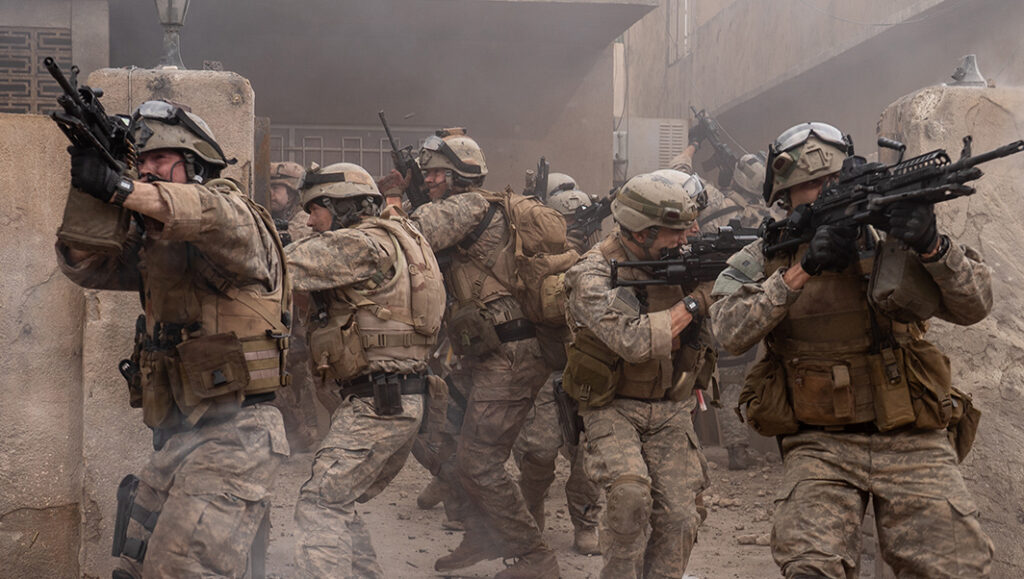
Warfare opens with no introductions, no origin stories, no guiding hand. What follows is not a traditional narrative, but an unrelenting immersion into war as it’s endured—moment to moment. Former Navy SEAL Ray Mendoza brings the weight of his own combat experience, teaming with filmmaker Alex Garland to dismantle the familiar architecture of the war genre. What emerges is a harrowing and immediate film shaped by memory, not mythology—one that resists romanticism and leans into the brutal realities of combat. Warfare doesn’t just chronicle a mission; it pulls you into the thick of it, capturing the disorientation, fear, and resilience that define survival in the field.
The mission at the heart of Warfare isn’t dramatized—it’s drawn directly from a 2006 operation in Ramadi, Iraq. That November, a Navy SEAL team—joined by two Iraqi scouts and two Marines—moved under cover of night to surveil a residential neighborhood controlled by Al Qaeda, preparing the way for incoming ground forces. Divided into three units, one group—Op 1—occupied a second-story apartment, unaware they were just steps from an insurgent stronghold. The tension escalated fast: a grenade launched through a sniper hole wounded several SEALs, including sniper and medic Elliott Miller (Cosmo Jarvis). During the evacuation, an IED detonated outside the building, severely injuring both Miller and Joe Hildebrand (Joseph Quinn, whose character is named Sam). Mendoza—played by D’Pharaoh Woon-A-Tai—was embedded with that team. Nearly twenty years later, he returns to that night with exacting clarity, transforming personal history into something shared and cinematic.
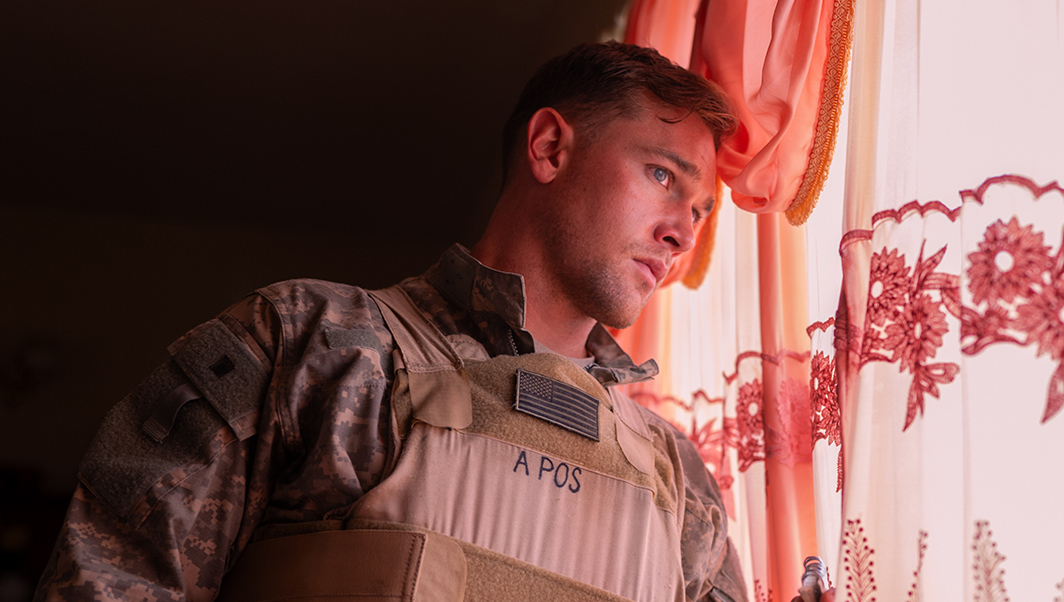
Warfare assembles a formidable ensemble. The cast is rounded out by a talented group of rising actors: Will Poulter, Kit Connor, Charles Melton, Finn Bennett, Noah Centineo, Taylor John Smith, Michael Gandolfini, Adain Bradley, and Henrique Zaga. Rather than carving out individual arcs, Garland and Mendoza focus on the collective—on the quiet courage, instinctive discipline, and unspoken loyalty that bind these men together. It’s a portrait of unity forged not through exposition, but through action. At times, the language spoken feels almost foreign, steeped in the cadence and codes of those who’ve served—yet the emotional clarity never falters. Each performance simmers with restraint and purpose, evoking a deep sense of camaraderie that transcends dialogue. That brotherhood—rooted in shared risk, bravery, and trust—radiates off the screen. It’s not just shown; it’s felt. In the tension, in the stillness, in every glance that suggests these men are holding each other up.
Shot with stark precision and immersive intent, Warfare’s cinematography brings you into the action without ever drawing attention to itself. Cinematographer Rob Hardy, a frequent collaborator of Garland’s, avoids sweeping spectacle in favor of a grounded, almost claustrophobic realism. The camera doesn’t stand back—it moves with the team, breathes with them, reacts to every sound, shadow, and shift. There’s a fluidity to the frame that mirrors the mission’s uncertainty, placing the viewer shoulder to shoulder with the SEALs as they press forward. Whether tracking through darkened corridors or settling into moments of tense stillness, the visuals amplify the atmosphere without embellishing it. It’s not stylized—it’s lived-in. And that choice makes every image feel vital, intimate, and undeniably human.
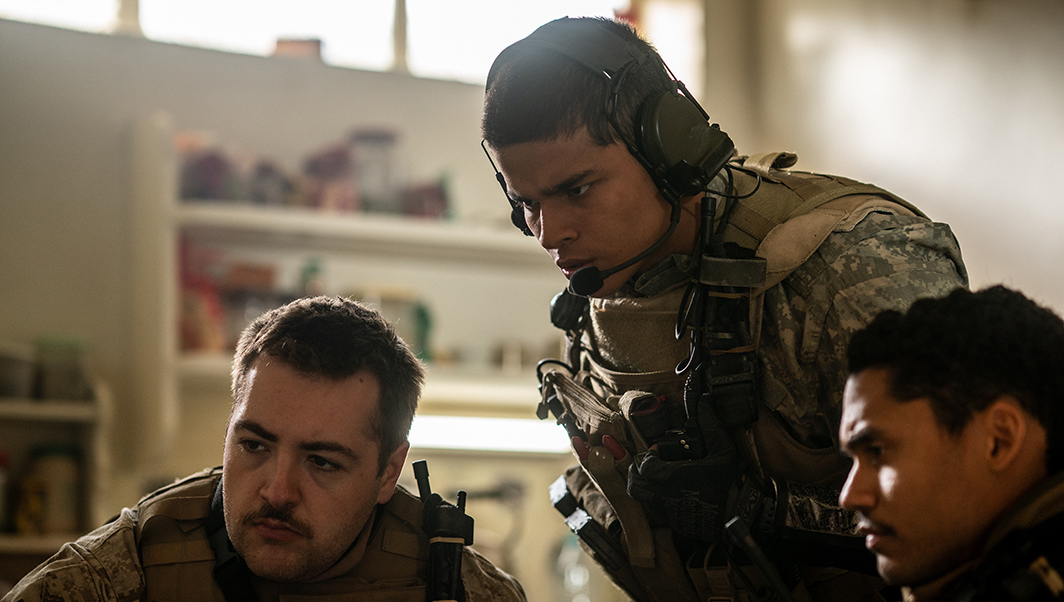
If the cinematography draws you in, the sound design refuses to let go. Every footstep, radio murmur, and distant echo is designed to unsettle, creating a sonic environment that mirrors the soldiers’ heightened state of awareness. Gunfire doesn’t just sound loud—it ruptures the silence. Breaths grow louder. Pauses feel longer. Crafted with precision, the audio doesn’t simply accompany the action—it shapes it. Dialogue blurs into chaos, and then into silence, capturing the sensory overload and confusion of combat with chilling accuracy. This isn’t a film that shows what war sounds like—it makes you feel the weight of listening for what could come next.
What makes Warfare so gripping isn’t just the intensity—it’s how Garland and Mendoza capture the stakes embedded in every choice. The effects of rigorous training play out in real time as the team navigates a crisis. The way they clear rooms, coordinate air support, and relay information under duress reveals how thin the margin for error truly is. The smallest decisions—when to pause, where to move, how to communicate—carry enormous consequence. It’s not brute force that defines these men, but reflex, precision, and the discipline to act in sync. In Warfare, coordination isn’t just strategy—it’s the difference between life and death.
And then come the credits—quiet, reverent, and deeply affecting. As the names roll, we’re shown the real soldiers these actors portrayed, some of their faces blurred, likely for security. It’s one of the most powerful moments in the film—not because it adds anything new, but because it removes everything else. What’s left is the reality: these men existed, and so did the mission. It’s a final reminder that Warfare isn’t entertainment—it’s remembrance.
Warfare is a film of extraordinary restraint and undeniable force. It doesn’t rely on spectacle or sentiment to make its mark. Instead, it finds its strength in intention, authenticity, and the lived truth of those who carried it. Through every frame, every breath, and every moment of stillness, Garland and Mendoza have crafted something rare: a war film that doesn’t glorify or dramatize, but stays rooted in what matters. It stays with you. And beyond its cinematic achievement, Warfare stands as a stark, powerful reminder of the sacrifices made by those who serve—sacrifices often unseen, but never forgotten.
★ ★ ★ ★ ½ out of 5
Warfare is in theaters now.
Photo Credit: Murray Close

Discussion about this post