

Theo Taplitz on Why ‘Bad Shabbos’ Feels Like a Screwball Classic for a New Generation
A quiet Shabbat dinner turns into a masterclass in mayhem in Bad Shabbos, where one untimely accident sends two families spiraling into a night of secrets, snowballing lies, and barely contained breakdowns. What begins as a well-meaning gathering to unite an interfaith couple’s parents quickly unravels into a darkly hilarious free-for-all. It’s a comedy about faith, dysfunction, and the outrageous lengths a family will go to for each other.
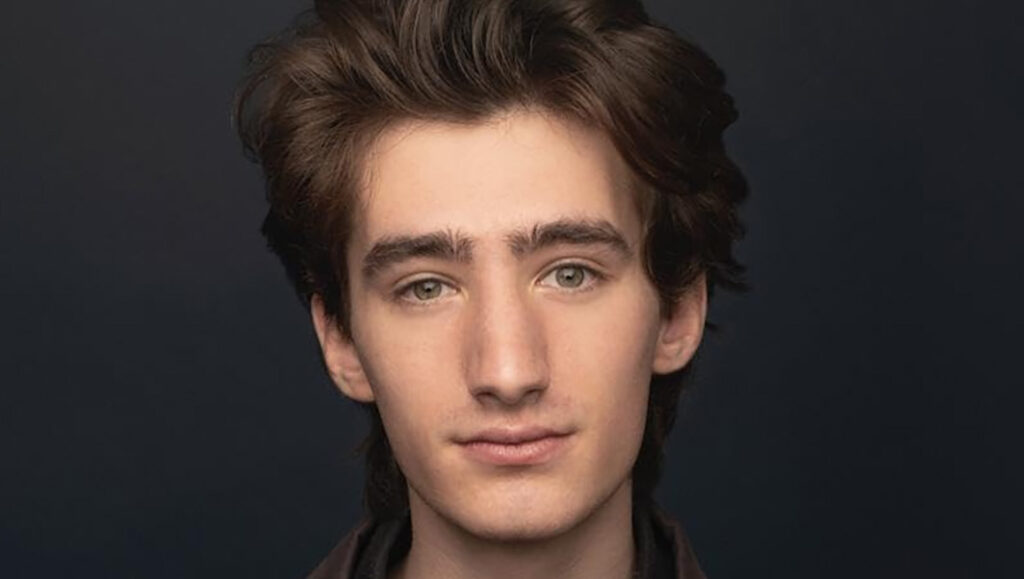
Among the ensemble, Theo Taplitz stands out as Adam—the off-kilter younger brother whose intensity feels fully lived-in. With sharp instincts and unshakable commitment, Theo taps into Adam’s inner world with a performance that’s as precise as it is unpredictable. Every line, every reaction, every beat feels considered yet completely in the moment—making Adam one of the most memorable characters at the table.
Pop Culturalist caught up with Theo to talk about building Adam from the inside out, the joys of controlled chaos, and why Bad Shabbos may be the most fun he’s ever had on set. He shared how last-minute script changes, spontaneous improvisation, and his collaboration with director Daniel Robbins helped shape one of the film’s most unforgettable characters—both on the page and in the room.
PC: In addition to acting, you’re also a writer and director. What was it about this script that first grabbed your attention, and what was it about Adam that resonated with you?
Theo: Oh my God—the script spoke for itself. It’s fantastic, from the character dynamics to the pace, intelligence, and humor of the dialogue. It was incredibly gripping. It immediately took me back to those 1930s screwball comedies—the farce, the His Girl Friday–style rapid-fire wit—blended with the chaos of Meet the Parents and My Big Fat Greek Wedding. There was something very, very appealing about how sharp it all was. That was really exciting. Adam is a deeply flawed, unhinged character, and the chance to stretch myself into that hyper insanity was just fun.
PC: You’re such a scene-stealer. You and Method Man have two of the most memorable characters in the film. They’re both offbeat in their own ways, but each is living in their own truth. How did you find your way into this character? And how did you strike that balance of how far you could push certain moments?
Theo: You’re totally right. It was so hard not to laugh during scenes with Cliff [“Method Man” Smith]—he improvised all these hilarious moments. I don’t know if you remember, but in the film, there’s a line where he talks about where he keeps his foreskin. He did that seven different times with seven different improvs. I really hope there’s a collection of all of them somewhere.
I’ve joked that getting into Adam required a strict diet, a strict workout routine, and keeping my carb levels precise. [laughs] But honestly, Adam was all there on the page. I just needed a few hyperventilating push-ups beforehand to get the adrenaline going.
What Daniel [Robbins] and I talked about is how Adam is an outlier—not just in the family, but tonally within the film. He’s so intense, almost like he thinks he’s in a drama instead of a comedy. That mindset really helped ground certain scenes and gave me a direction to push into.
PC: Wait, was that line Cliff said about skipping leg day part of the original script?
Theo: Yes, it was. [laughs]
PC: Music also plays such a big part in your artistry. How much do you draw on that in your character development? You often hear actors talk about creating playlists to help get into character or for specific moments. Did you do something similar?
Theo: That’s a really interesting question. With this one, it was actually the silence that kept me going. But Daniel sent me a couple of EDM tracks—those intense, gym-leg-day, hyper-masculine playlists. [laughs] I listened to a few of those to get into certain scenes, especially the ones in Adam’s room.
PC: You don’t expect Daniel to be listening to EDM. [laughs]
Theo: No! [laughs]
PC: One of the things that makes this film so special is how each character gets to explore such a wide range of tones—from the controlled chaos of the situation they find themselves in to those more heartfelt moments of reflection, especially for Adam toward the end. How different is the preparation for you when you’re shifting through those tones?
Theo: That’s a great question. There’s definitely a delicate balance within the film. There’s a joke a minute, and it’s incredibly funny—but a lot of that humor comes from the heart. These aren’t just isolated gags. At its core, this is really about a family trying to hold it together, and about new family coming in and pushing up against all the messiness and idiosyncrasies that come with stepping into someone else’s world.
It all funnels into each other. A lot of the intensity in the comedic moments is driven by how much these characters care about one another. So for me, it wasn’t as disjointed as it might seem. The comedy and the emotion really bleed into each other.
PC: Credit to the writing and the performances. This family finds themselves in a terrible situation, but you’re still rooting for them to find a solution. Part of why the film works is the believable family dynamic, especially between the siblings. How did you all create that chemistry in such a short amount of time?
Theo: That’s a good question. We didn’t have much rehearsal or prep time, but we were all crammed into this small waiting area before going on set, since we were in different scenes at different times. So the whole ensemble just ended up hanging out, chatting, and really getting to know each other. There’s something about being stuck in a room together for six or seven hours—you bond pretty quickly. It created this really sweet, comforting environment. We were all looking out for one another and trying to make each other feel like family, which was really special. Jon [Bass], especially, felt like an older brother in the group. Everyone was so supportive and kind, and I think that came through on screen.
PC: It definitely comes across on screen. You were also given a lot of room to improvise. Is there a moment that made the final cut that you’re especially excited for audiences to see when it makes its theatrical run?
Theo: That’s such a good question. I’m trying to think if there’s a specific moment. Both Cliff and Milana [Vayntrub] are masters at improv—I mean, truly brilliant. I already mentioned the foreskin line, which is one of my favorites. I’ll have to think if there’s another one that stands out, but that one always makes me laugh.
PC: Daniel co-wrote and directed this project. What was it like collaborating with him? Was there anything you took away from his approach that you’ll carry into your own work as a writer and director?
Theo: Daniel is unbelievably rare in that he has such a distinct vision of what he wants, but he’s also incredibly collaborative. He’d be rushing us new pages of dialogue maybe 45 minutes before we filmed and would say, “Does this feel right? Let’s workshop it. What happens if we shift the emphasis here or there?” He was always open—whether it was improvising on set or having deeper conversations beforehand about shaping the characters and what we wanted to bring to them.
Part of his genius is that he never gets overwhelmed by all the input. He listens, filters, and somehow shapes everything into a cohesive, focused vision. It’s really inspiring to witness. If I can bring even a fraction of that energy into my own work, I’d be thrilled.
PC: Seguing back to what you were just saying, was there something that you brought to Adam that wasn’t initially in the script?
Theo: There were a couple of physical things we developed on set—like using the rubber band cords we found for makeshift workouts, and a few push-up variations we came up with. That physicality helped shape Adam a bit.
One funny moment that wasn’t originally scripted was when Jon Bass’ character comes back after seeing the dead body. Originally, it was just written as a tense back-and-forth, but Jon was like, “This feels like a moment when Adam would just jump on his brother.” I asked him, “Are you sure? How’s your back?” and he goes, “My back’s great. Jump on me. Jump on me.” So I did—and right after, he was like, “F*ck. Ow.” [laughs] But it ended up in the film, so the injury was worth it!
PC: You’re also no stranger to the festival circuit, and this film has had quite the run so far. Have any of the audience reactions surprised you? What do you think is resonating most with them?
Theo: It’s been so interesting because every audience picks up on something different. I’ve seen it two or three times now with a crowd, and it’s such a joy. What gets the biggest laugh always changes—it’s never the same moment twice, which is fascinating. And I love seeing people catch the smaller details we tucked into the film. A lot of thought went into those, so when audiences respond to them, it’s really gratifying.
To keep up with Theo, follow him on Instagram. Bad Shabbos is out in select theaters.
Photo Credit: Luke Fontana

Discussion about this post