

Exclusive Interview: Michael Stahl-David on the Healing Power of Reflection in Looking Through Water
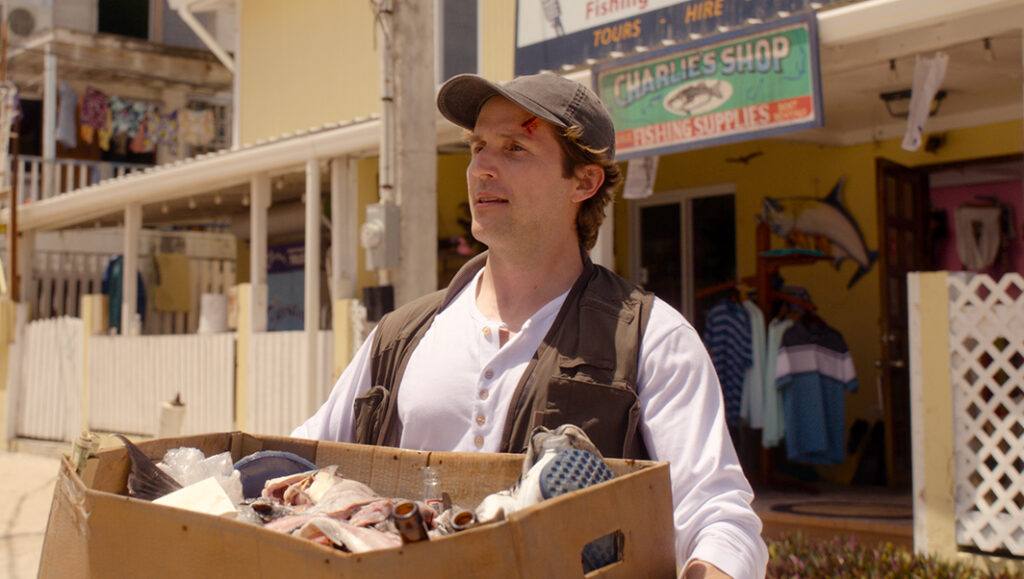
Michael delivers one of his most introspective performances yet in Looking Through Water, a generational story about fathers, sons, and the fragile bonds that tie them together. As William McKay, a man whose carefully built world begins to crumble, he brings a quiet intensity to the screen—capturing the tension between pride and vulnerability, love and regret. His portrayal feels lived-in, deeply human, and reflective of the film’s central question: what does it take to truly see the people we love?
Set against the sun-drenched backdrop of Belize, Looking Through Water follows William as he’s forced to confront the past he’s spent a lifetime avoiding. After a public betrayal threatens his empire, an unexpected invitation from his estranged father pulls him into unfamiliar waters—both literal and emotional. Through clumsy casts, sharp exchanges, and quiet reflection, the two navigate resentment, regret, and the fragile hope of forgiveness.
Pop Culturalist was lucky enough to sit down with Michael to talk about the timeless themes at the heart of Looking Through Water: love, loss, and the fragile ties that hold families together. In our conversation, he opened up about the emotional honesty of the project, his collaboration with David Morse, and how becoming a father reframed the story’s meaning.
PC: This is such an introspective film that demands your attention. When a script like this comes across your desk, is it the material, the character, the themes, or the team that grabs your attention first? As someone who’s written and directed before, how does that perspective influence whether you want to be part of a project?
Michael: Thank you for recognizing my directing and writing work—I really appreciate that. I was intrigued by the opening monologue breakdown in the ballroom. When I read that, I thought, “This looks like it’ll be fun,” so the character grabbed me right away.
To be honest, this came through as an offer, not an audition, which was really nice. It was also shooting in Belize, and it wasn’t a bad paycheck, so right off the bat I was like, “This is 90% a yes,” if I could make the schedule work. It was right around the time my son was born, so that was a little scary, but it worked out because we had to postpone a bit due to the strike.
What I responded to most was that I was about to become a dad, and here was this film about someone with a complicated relationship with his father—someone who, on one level, stubbornly believes his dad is in the wrong, but on another level longs for closeness, for repair, and to truly know this man he doesn’t fully understand.
PC: It opens the film to a lot of difficult conversations. David [Morse] has spoken openly about how this project gave him the chance to say things to his father that he wished he had said. That level of personal investment really comes across in his performance. For you, being opposite him in those raw conversations, what was it like collaborating with somebody carrying so much of his own truth into the role? How did his connection to the material elevate or shift the way you approached those scenes?
Michael: He didn’t talk much about his personal connection to it until after. It was really through his presence and the way he dropped into those scenes that had an immediate effect on me and made it so moving—and such a pleasure. It moves me now just thinking about it. It was really, really meaningful to do those scenes with him and play back and forth. He made it easy for me. I was excited when I saw he was on board.
When we were down there, I wondered, “What’s this going to be? Is he going to be cool with this?” Some of our shooting days were rugged—we were out on boats, the days were long, and it was hot. He’s an older guy, but he never complained. He was super tough and kind.
I had dinner with him early on, and there was this very gentle, thoughtful energy. It was such a pleasure. It brought things out in me. As he was exploring what he wished he could’ve said to his dad, I found myself tapping into a different kind of vulnerability or closeness. You really do feel yourself enacting these different dynamics. The patriarch energy is powerful in each of us. When you truly open up to what it means to be a son to a father—and then he says he’s proud of you—that emotion comes up, and even the embarrassment that follows. It was a real career highlight to play those moments with him and explore all of that together.
PC: There’s so much nuance in your performance, especially given that the father-son relationship has such a natural push and pull. This fishing trip unfolds over the course of a week, and there are these beautiful, quiet moments where we see your character absorbing everything and engaging in that two-way dialogue. For you as an actor, how did you create that emotional space to go to those places?
Michael: Music. Music can be good. Appreciation—and dropping into gratitude. When we did that scene in the boat, we shot his side first. He was fantastic. I was really feeling it—totally alive in the moment, emotionally present, all the things you want as an actor. Then we turned around to my side, and we were starting to lose light. The wind picked up, the boat was rocking, and in one take, “Girls Just Want to Have Fun” was playing in the background. In another, one of our boats got blown by the wind right into the background of the shot. Eventually, we had to call it: “We’re dropping this for today. We’ll get it tomorrow.”
That was strange because we’d shot his side of the scene that day, and now we were going to do mine tomorrow. I thought, “I was in it today. What if I’m not in it tomorrow?” I was nervous. We did the first take the next day, and I wasn’t feeling it. So I grabbed my iced tea, woke myself up a bit, put some music on, and remembered something someone had once told me. When you’re filming a scene and the camera is on the other actor, all you see is them and the environment—it’s easy to feel immersed. But when everything turns around, suddenly the camera, crew, and equipment are all facing you, and your scene partner is in front of them. You have to work harder to get there.
So I tried something. I looked into the camera and decided the camera was my son. I whispered to it privately, as if it were him. That put me in a really tenderhearted space.
PC: There’s something really powerful in your performance in how you embrace that quietness—you can see so much going on in this character’s head, even when he can’t quite articulate it. I also think it’s really fascinating that you and Michael Douglas are sharing a character, but at different points in his journey. Your version is naturally very different from his because of how William evolves over the years. How did that impact your creative process in shaping your version of him? And how did that collaboration between the two of you work?
Michael: Thanks for that question. He shot his part first, and we talked about whether we should work in some kind of gesture, tic, or specific physical trait to connect the two versions of the character. But ultimately, it felt a little contrived—it didn’t feel like it needed that, so we didn’t.
I knew my performance was going to get picked up and sealed in gold by Michael Douglas. [laughs] I just had to try to do it justice, especially because of that big time jump. What I decided to do was watch a bunch of his films. At night, I’d put them on—not to imitate him, but just to let them wash over me. It was fun.
PC: One of the messages I took away from this project is the lessons we learn from our losses. Did portraying this story open up any new perspectives for you on how loss can sometimes create space for possibility? In your own journey, are there moments that, looking back, feel less like setbacks and more like turning points?
Michael: Wow. What a thoughtful question. I love these questions. I had a relationship in my twenties that was really important to me. We were together for about three years, and there were some questions around wrongdoings on her part. I carried resentment for a while. Then there came a point where I dropped into this realization of, “We were both young. We tried our best.” Just compassion—compassion for her and compassion for myself at that age. Letting go of that resentment, and of that simple narrative that says, “You were wrong.” I played my part too. We were young. We tried. We loved each other in our imperfect ways.
In terms of this film, it’s made me more aware that our time is limited. Both of my parents are alive, but that won’t always be the case. So I’ve been thinking a lot about how I want to relate to them while they’re here. What do I want to focus on? What can I let roll off my back? What do I want to stay curious about? And what do I want to dedicate my time and energy to?
PC: That’s something else I took away from this. The film is such a reminder to have those conversations with the people you love. It speaks to the idea of seizing the moment, but also to second chances. Who is somebody you would love to sit down with again and have one final conversation?
Michael: Who is that for you?
PC: My grandmother. This is what happens when you create great art.
Michael: I’m really happy that it brought all these questions up for you—that’s great. It’s funny you said your grandmother because my answer might be my grandparents too. I wasn’t particularly close to them, and I wonder if, with a bit more curiosity and closeness on my part, I could’ve known them better.
PC: You’re somebody who’s worked on projects of all sizes. When it comes to independent filmmaking, what is it about that process that fuels your artistic soul and inspires you creatively? And what’s next for you?
Michael: I love indie movies because the crew tends to be a bit younger—people who aren’t locked into a routine, especially when you’re on location. It’s an adventure. This crew, in particular, was fantastic because it was mostly Mexican. I speak Spanish—my wife is Colombian, so we speak it all the time—and it was really fun to have that side of myself come out while working in this incredibly gorgeous place. It was a fantastic adventure that had both depth and fun.
Cameron [Douglas] and I actually matched funds with the production and threw a wrap party at Estelle’s Bar. The whole crew came out. There’s a scrappiness, and often a youthful energy, in indie films that I really love. That was true on Down to the Felt too, which comes out soon—you can preorder it now; it’s released digitally on the 17th. That was another amazing experience.
To be honest, this time has been challenging. Television has become much more competitive, and everything’s shifted from in-person to virtual. I’ve only had three in-person auditions since the pandemic, and one of them was for the film I booked, The Last Day, with Victoria Pedretti. Being in the room makes a difference. It’s been tough, but it also has its advantages.
At the same time, both this role and Down to the Felt were leading parts with a lot to do—and very different tones—which has kept my spirits up. I come back from those projects feeling completely fulfilled. I’ve done a lot of roles, like Narcos, where you’re joining a show that’s already successful and has a big following. You’re working with someone like Pedro Pascal, but your role is smaller. There are no small roles, only small actors—but still, it’s different when you’re on set six days a week, putting in the hours, being challenged, and stretched in ways that are exciting.
To keep up with Michael, follow him on X and Instagram. Watch Looking Through Water wherever you stream movies.

Discussion about this post