

Exclusive Interview: Julia Wackenheim on Caregiving, Community, and Creating ‘Ethel & Ernie’
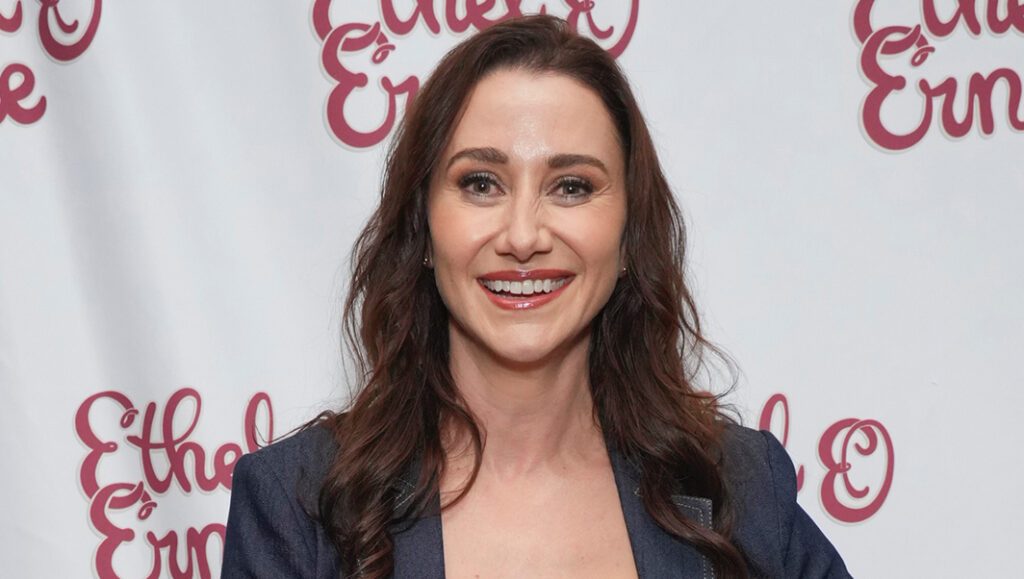
Independent filmmaking has always been a space for stories that matter—ones rooted in truth, empathy, and connection. With Ethel & Ernie, writer, director, and actress Julia Wackenheim brings that spirit to life, drawing from her own experiences advocating for domestic worker and long-term healthcare rights. Fresh off a Los Angeles screening of her pilot presentation, Julia is introducing audiences to a story that’s as heartfelt as it is hilarious—one that celebrates the everyday heroes whose work makes all other work possible.
Pop Culturalist was lucky enough to chat with Julia about her journey from a family of Scottish storytellers to the comedy stages of Los Angeles and how those experiences shaped her as a filmmaker. She shared how Ethel & Ernie became a labor of love led largely by women, the importance of community both on and off set, and why she’ll always stand by one universal truth—women are funny.
PC: What first ignited your passion for storytelling, and when did it click for you that this could be more than just a dream — that it was your career path?
Julia: My mom is Scottish, and that side of my family—like most Scots—are captivating, sometimes bawdy raconteurs. So, part of it was in my blood. I grew up watching TV (as many of us Zennials did) and voraciously reading enough books as a kid to regularly complete Pizza Hut’s Book It program. By age eleven, I was half mozzarella.
In high school, I had a moment that changed everything. I filled in for one of the actors in our production of Into the Woods, directed by my drama teacher, Charles “Chip” Garrison. He recently retired after teaching for thirty-five years. He inspired so many of us and continues to be our biggest cheerleader. As soon as I was under the lights, something clicked—and from there, I started acting.
At Emerson College, I joined This Is Pathetic, a comedy troupe where we performed long- and short-form improv. That’s where storytelling truly clicked for me. There’s nothing more rewarding than making someone laugh—especially my therapist.
When I moved to Los Angeles, I dove into the comedy scene, performing live five to seven times a week throughout my twenties. I just stuck with it—working day jobs in offices and performing at night and on weekends. I never gave it up, even after taking a break when I had my son. It was never really an option to do anything else.
PC: You’ve got a new project in the works with Ethel & Ernie. What can you tell us about the inspiration behind it?
Julia: Yes—Ethel & Ernie is ready to be seen! This project is deeply personal to me. I based it on my experiences advocating in the domestic worker and long-term healthcare rights space. (Domestic workers—along with farm workers—were left out of employee protection laws passed last century and continue to face unfair working conditions, trafficking, and wage theft.)
I co-founded a grassroots coalition made up of interfaith-based organizations focused on advocacy, education, and social justice around these issues. While working in this space, I witnessed two very different communities—Filipino American immigrants and older Jewish folks—come together and collaborate closely. The stories that emerged from that intersection are rich with life: humor, sadness, support, and the pursuit of the American Dream.
Caregiving is the work that makes all other work possible. I’m able to pursue my own career because I’m an employer of a domestic worker. This project was partially possible thanks to the incredible care and support of my son’s nanny, Elizabeth Chavez. While I was on set, on location, or editing, she ensured that my son was cared for—picking him up from school, sharing meals, and being there when I couldn’t be. I’m so grateful for her—she’s been with our family for many years.
PC: You wrote, directed, and starred in Ethel & Ernie. How have those different disciplines informed each other and shaped your approach to the project?
Julia: Interestingly enough, I find that writers tend to be directors and actors, directors tend to be writers and actors, and actors tend to be directors and writers. As an artist, the three are intrinsically tied together. The great actors can direct themselves or “write” through emotion and performance what their character’s story is. A good writer can get into the mind of a character—how they’d like to be portrayed—and successfully put that on the page so the director can execute their vision. Directors, in turn, bring their vision of how to take the words—made into worlds—and show it all on screen…but with, you know, explosions and stuff!
For Ethel & Ernie, I had a clear vision of the story I wanted to tell and how I wanted to tell it, so I felt like I had a jumpstart in applying each “department hat.” I fell in love with directing—it’s the same kind of magic as making a live audience laugh, that rush you get when you capture the perfect take or see the wild contraption the props team built come to life. Alas, I didn’t have a big enough budget for explosions… Next time, though—many explosions.
PC: You’ve said the people you collaborated with made this one of the best experiences of your life. How did you create an environment where everyone—on and off screen—could bring their best selves? And did their involvement shape the project in any surprising ways?
Julia: My main goal with this production was to make it as enjoyable, fulfilling, and fun as possible—a place where everyone could shine. I wanted it to be a positive experience, where a ten-hour day didn’t feel like an eighteen-hour day, where everyone was respectful, collaborative, and free from the stress that so often accompanies a film set. I’ve had both incredible and not-so-incredible experiences on set, and my philosophy is simple: why make things difficult? At the end of the day, we’re playing make-believe with Barbies and Hot Wheels—just with expensive cameras, lights, and human meat puppets.
Almost every department head on Ethel & Ernie identified as a woman, and I don’t think that’s a coincidence. Women—especially Millennial and Gen Z women—are incredibly skilled at lifting each other up with the mindset of, “When one of us succeeds, we all succeed.” I’ve seen it in the advocacy space, and it was wonderful to watch it unfold in real time on this production. Leading the charge was our producer, Ryan Buffa, who is not only immensely talented but also persuasive in the best way—she found great talent, kept us on task, and ensured we stayed on budget. During filming, Heather Mingo set the tone on set and kept everything running smoothly and on schedule with incredible grace. That’s no small feat. You can adjust lights for twelve hours and still not have them exactly how you want. And then, of course, there are the explosions…
The most surprising part of this project was how much bigger and better it became compared to what I’d initially imagined. Every department elevated the production—from our cinematographer to our production designer to our beloved script supervisor, Amy Blanc Lacy. We love and miss you, Amy; may her memory be a blessing. What made this project even more special was that most of the cast and crew had personal connections to caregiving—either as employers or as caregivers themselves. That shared experience added an extra layer of dedication, compassion, and care to everything we did.
PC: Your series highlights women and communities we don’t often see represented as leads on TV. Why was it important for you to bring those stories to the forefront?
Julia: The main reason is selfish—I wanted to see them. But we’re also living in a very tricky time in history. We’re becoming increasingly isolated in our own bubbles, glued to our small screens. It’s a challenging moment for women and marginalized communities; people are scared. My hope was to tell a story about family—something that connects all of us, no matter how, where, or what we were brought up in. Everyone will need care. Everyone ages. Everyone needs support. I wanted to shine a light on these stories so that we can recognize our intersectionality—and maybe pop an isolation bubble or two.
Oh, and also—women are funny!
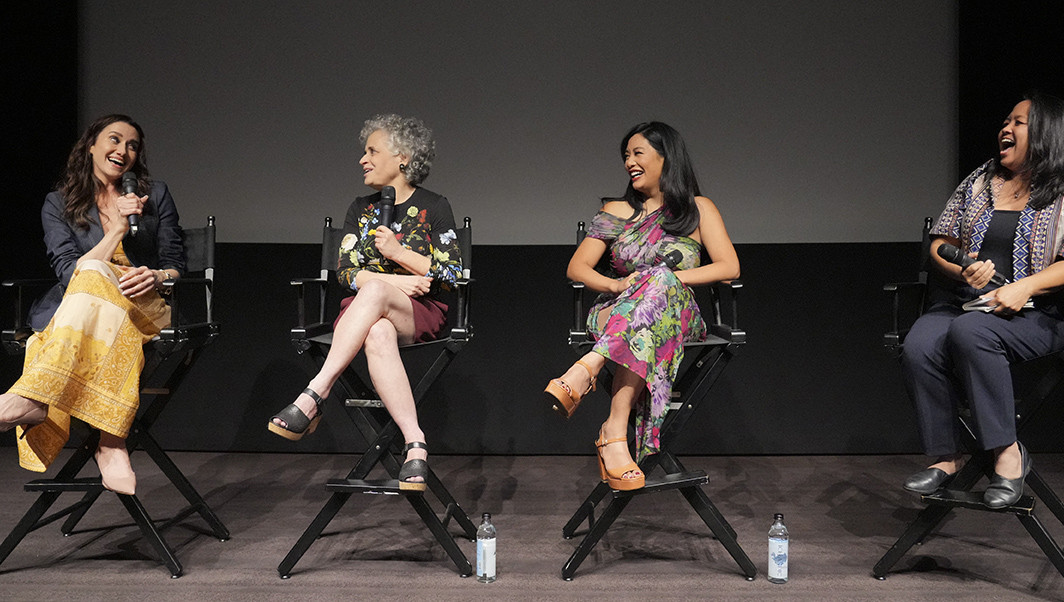
To keep up with Julia, follow her on Instagram.
Photo Credit: Jordan Strauss

Discussion about this post