

Exclusive Interview: John-Michael Powell and Billy Magnussen on Creating Worlds, Navigating Identity, and Finding Truth in ‘Violent Ends’
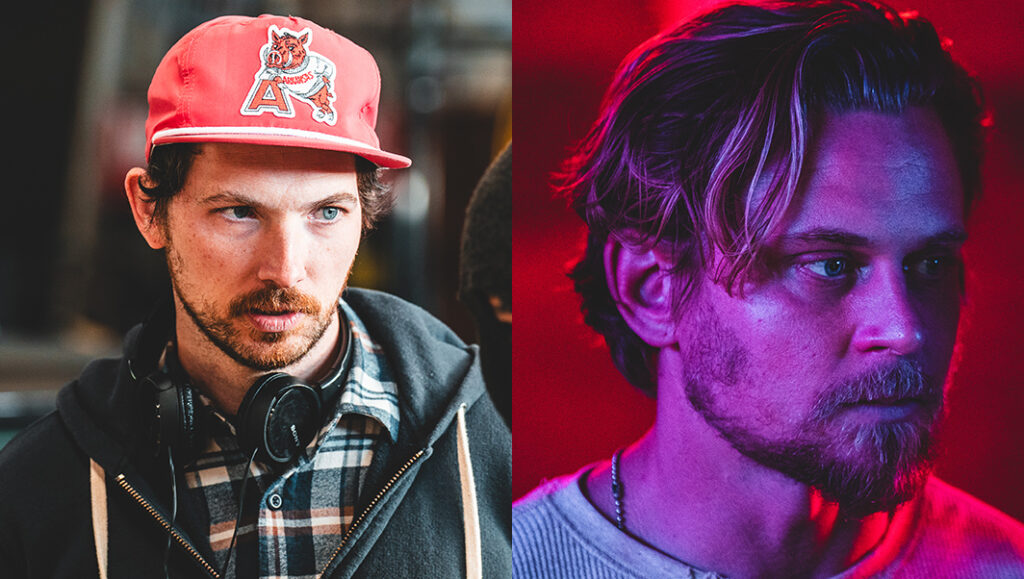
Independent cinema has long been the space where filmmakers take creative risks, exploring the gray areas of human nature with honesty and empathy. With Violent Ends, writer-director John-Michael Powell delivers a gripping portrait of the American South—one that trades clichés for complexity. Set against the breathtaking backdrop of the Ozark Mountains, the film examines love, loyalty, and the lasting imprint of the choices we inherit.
At the center of this emotional journey is Lucas Frost (Billy Magnussen), an honest man raised in a crime family whose only legacy is violence. Determined to carve out a peaceful life with his fiancée, Emma (Alexandra Shipp), Lucas soon finds that walking away from his past isn’t as simple as it seems. When his cousin, Eli, commits a brutal armed robbery, Lucas is forced to confront the world he’s tried to leave behind—testing the limits of love, loyalty, and redemption in the process.
Pop Culturalist was lucky enough to sit down with John-Michael and Billy to explore the artistry behind Violent Ends—from shaping its world with honesty to finding emotional truth in the unexpected. The duo opened up about their shared philosophy of trust and collaboration, how openness on set led to moments of pure discovery, and why the best stories are built together.
PC: John-Michael, one of your goals with Violent Ends was to portray the South—and Arkansas, specifically—in a more nuanced way. You more than accomplished that. From the cinematography to the layers within each character, there’s so much depth and humanity in this story. What was the starting point for you in shaping that perspective? And how did your background in editing help you craft a story where we’re not always sure how we should feel about characters like Billy’s, yet still connect with them on a human level?
Billy: Well, it’s an autobiography of John-Michael’s life. [laughs]
John-Michael: [laughs] Pretty much. This is just a documentary on how I was raised. [laughs] No, I had a normal childhood. But I do think, from a practical standpoint, when approaching the world and trying to create a nuanced version of Arkansas, it started with my family. I didn’t grow up in a family mired in crime, but all of these characters—the way they talk, the way they move—they’re just my aunts, uncles, cousins, and my mother. I drew so much from the people I grew up with.
Nobody would care about Lucas if the relationship between him and Alexandra Shipp’s character didn’t feel real. We knew from the start that if Billy and Alexandra—or whoever played that role—didn’t have chemistry right away, we’d be in trouble. Luckily, Billy and Alexandra had amazing chemistry. She’s such a light in this really dark film. Through that instant connection, she’s the one who sets up the whole story. Honestly, the end of the movie wouldn’t have landed if you didn’t love them at the beginning. They’re amazing.
PC: There’s also such an effective use of flashbacks throughout the story that make the emotional impact hit even harder. Without giving any spoilers, Billy, you do a fantastic job bringing the contrast of this character to life—especially in how the film explores that intersection of identity and family—leaving audiences uncertain about what your character will do in those final moments. As an actor, how did you approach finding the balance between that push and pull, especially as grief threatens to unravel the future he dreamed of?
Billy: Fortunately, you have someone write a script that you genuinely enjoy reading—like John-Michael did. It tells you everything about the character. From my perspective, the stakes of that relationship were his key to getting out of the life he was raised in. That was the anchor to everything. The most powerful force in the universe is love. If you take that away, what does he have left? That was how I related to it. Lucas has nothing to lose anymore.
When it comes to characters and acting, I don’t think you can ever truly become someone else—but you can dial up certain aspects of yourself in different ways.
PC: I’d actually challenge that, because I feel like this performance is very transformative. As someone who knows your work, it’s such a different side to your artistry. John-Michael, Violent Ends was always meant to be your first feature—but as we see in the film, life has funny ways of taking unexpected turns. Looking back now, how did The Send-Off shape your growth as a filmmaker and influence the direction of this film, whether it was in the writing, the way you approached the story, or even in the edit?
Billy: That’s a great question.
John-Michael: Yeah. To give some context, The Send-Off was a micro-budget film. We shot that movie in twelve days—all in one location, mostly interior. The challenge was trying to build a world inside a house. By that, I mean making something small feel much bigger.
That really helped me by the time we got to Violent Ends, because I had learned how to take one contained setting and expand it into a cinematic landscape. With Violent Ends, I literally had land to work with. Arkansas is beautiful—you can point the camera anywhere—but from a world-building standpoint, I was much better prepared.
From a technical standpoint, when you’re shooting in twelve days, you have no time. You’re flying by the seat of your pants, making a thousand decisions every second. Honestly, Violent Ends felt leisurely by comparison—we shot it in twenty-two days. I was much better equipped to navigate that time crunch.
That gave us the freedom to make creative discoveries, which is where all the best parts of any movie come from—those unexpected moments of inspiration. I felt very prepared going into Violent Ends.
PC: Billy, I love the juxtaposition within Lucas’ story and the relationships in his life—the way his mother’s influence helped shape the man he is, contrasted with someone like Sid Frost, whose presence carries a much darker weight. How different was that collaboration, working with someone like Kate [Burton] versus James [Badge Dale]? And in what ways did their interpretations of their characters influence your own?
Billy: They’re both fantastic artists and such a treat to work with. They showed up prepared, excited, and open to collaborate—that’s all you can really hope for in any creative process. Funny enough, I actually believe that how other characters view my character defines him. There’s only so much I can do, but I think it’s the world’s perception of a character that ultimately shapes who he is.
PC: There are so many context clues that you gather from those relationships, especially with his brother.
Billy: Nick Stahl is awesome. I grew up watching him, so I was like, “This is great.”
PC: It feels like everyone in this ensemble is elevating one another. John-Michael, you’ve described filmmaking as guiding the process, giving space for collaboration, and then ultimately letting go. That really stuck with me because these performances feel so lived in. Was there a particular moment during this project when you felt that philosophy really came to life? Was there a character that took on a different life because of that openness?
John-Michael: That’s a great question. I’ll go back to my editing background. The value of having experience in editorial is that I’ve worked with a lot of directors who are very rigid in their intent. That can work—don’t get me wrong—but the beauty of being an editor is that I’ve made millions of choices. I’ve spent hundreds of thousands of hours watching performances, so I feel comfortable letting actors find whatever they want to find. They don’t have to live within the rigidity of my intent.
Often, I find that the moments when they paint outside the lines—when they go left instead of right—are the most interesting. When that happens, a lot of directors will freeze up because the actor was supposed to walk through that door instead of this one. My brain doesn’t work that way. I get excited when they go through the door on the left, because I can re-edit the scene in my head and reimagine the moment in new ways. There’s a time and place to hold hands, but for me, especially with a cast like this—who are all at the top of their game—I’m there to guide if we get lost, but mostly, I want them to own these characters. Once I’ve written it, it’s their movie. I’m just there to make sure the building doesn’t burn down.
Billy: You’re not giving yourself enough credit. You set the tone on set with your openness—being excited by new ideas and able to re-edit things in your mind on the fly.
John-Michael: Yeah, but to answer your question, when I saw Badge coming out of the wardrobe fitting, that haircut was mostly his idea. He brought me a few photos and asked, “What do you think about this?” I remember saying, “Well, that’s a choice. That’s definitely a choice.” I told him, “I’m cool with it, but you’ve got to know—once we make that haircut, buddy, we’re not going back. Once that hair’s gone, it’s gone.”
Billy and I had already built a rapport, but when Badge came to set and I felt his presence, I knew we had a movie. I knew he and Billy were going to be great going toe to toe. You could feel that tension the moment he walked out of his trailer. It was great.
Billy: When we’d go for beers on the weekend, he’d have this hat on. [laughs]
PC: That’s a great point because there’s a scene where you highlight that and you’re like, “That’s a choice.”
John-Michael: Yeah! But that’s a perfect example—I wouldn’t have made that choice for that scene if he hadn’t made that haircut. That moment came directly out of that fact. It’s a collaboration, just like Billy said.
PC: Billy, you’ve worked on projects of all sizes, but there’s truly something special about independent cinema. What is it about this art form that fuels your creative fire, and how does that connect to the kinds of stories you want to tell through your production company—and your decision to help produce this film?
Billy: The coda of our company is to support artists around the world. There are things I do well, and a lot that I don’t—but there are so many talented people out there who inspire me. If I can help them in any way, I want to celebrate that. We’re in a communal art form—it only works when we’re all sharing in it together. That’s what always excites me.
I’ve said this a lot, but as an actor, you’re often just a hired gun or one color in someone else’s palette. When you produce, you get to be the painter. You have the paintbrush. You get to play with all these colors.
I don’t know why I’m relating it this way, but it’s almost like being a proud parent saying, “Go get them! Go do it.” That gives me such a kick out of life. I’ve been in this industry for over twenty years now, and a lot of times, acting can feel a little selfish. It’s much more exciting for me these days to see other people win.
Make sure to follow John-Michael (Instagram) and Billy (X/Instagram). Violent Ends is out in select theaters now.
Photo Credit: Courtesy of Kai Caddy. An Independent Film Company Release

Discussion about this post