

Exclusive Interview: Hunter Metts on Creative Growth, the Art of Letting Go, and the Light Within ‘A Crater Wide’
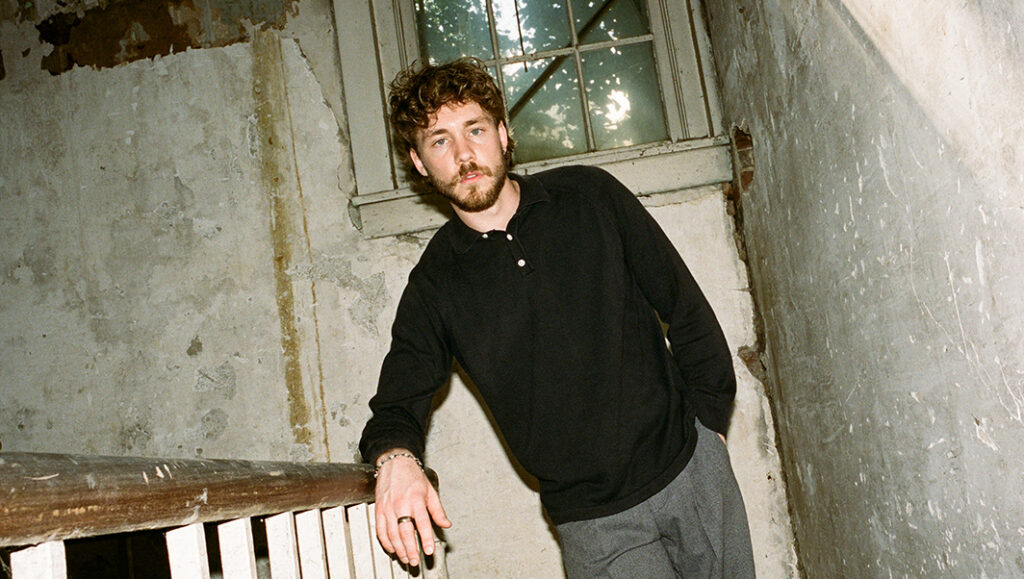
Hunter Metts has a rare gift for turning reflection into resonance. His songs hum with quiet honesty, unfolding like entries in a journal—raw, tender, and true. Quickly becoming a voice of his generation, his music has become the soundtrack to so many listeners’ lives, capturing moments of love, growth, and self-discovery with striking sincerity. With his latest EP, A Crater Wide, the Nashville-based singer-songwriter steps into a new season of creative growth, finding beauty in simplicity and purpose in stillness. Each track feels like a snapshot of who he is right now—grateful, grounded, and wholly himself.
Blending the intimacy of folk with the expansiveness of cinematic storytelling, A Crater Wide captures a chapter of stillness and renewal. Across its seven tracks, Hunter explores the light that comes with love, the quiet strength of self-discovery, and the simple beauty of growing older. Songs like “Center of the Universe” and “Abilene” showcase his gift for turning deeply personal experiences into something universal, while “Weathervane” remains a defining anthem of creative honesty. It’s a body of work that feels lived-in and luminous—proof that sometimes the most profound stories are the ones told softly.
Pop Culturalist was lucky enough to sit down with Hunter Metts to talk about the creative journey behind A Crater Wide, the lessons learned through letting go, and how embracing simplicity has redefined his artistry. He opened up about creative growth, the balance between expression and perfection, and the stories that continue to shape his voice as one of his generation’s most heartfelt storytellers.
PC: There are so many people who can relate to your story—working a nine-to-five that feels safe and stable even when your heart is somewhere else. What was that moment for you when you realized it was time to take that leap and pursue music full time?
Hunter: It reached a point where music was all I could think about. It started to distract me from everything else in my life, and I realized I couldn’t ignore it any longer. Even if it meant giving something up for the chance that it might work out, it felt worth it. It became the only thing that truly mattered—it completely took over.
PC: There was also a time when you produced on your own but wrote with others, which feels like a perfect bridge between your background in software engineering and music—and now you do both. How has your creative process evolved over time, and what have you learned about yourself through that evolution?
Hunter: In the beginning, I just wanted to do whatever I could to stay in the music world. Producing became that outlet—I was working on my own songs, helping others, just doing anything that kept me creating and chasing the dream.
Over the past year, that process has really changed. I’ve started giving up a bit of control at the production chair to give myself more room to express. When you’re producing everything yourself, you can become hypercritical. Sometimes you get lost in the details and forget about the emotion behind it.
The balance now is really fun because I can say, “Hey, another take. Let me try this. Let’s do that,” instead of, “That was a clean take—let me move the mics, go back, and listen to it in full before I make an edit.” There’s more paint on the canvas now. It’s less about perfection and more about expression.
PC: It’s so interesting when artists release new projects because they’re time capsules of who they are at that point in time. With A Crater Wide, what does this chapter represent for you, and what is it that you hope to say as an artist?
Hunter: A lot of times with folk music—and I do this too—it tends to lean into the sadder side of things. But this chapter of my life has been really good. I wanted to capture what it feels like to be married for the first time, to grow up, to move away from family, and to really press into the good stuff. When I look back on this project, it feels bittersweet, but mostly sweet—a snapshot of a really meaningful time in my life.
PC: That juxtaposition really lives in your music. You’ve shared something profound about finding authenticity—and how with each song, you discover a bit more of who you are. Was there an a-ha song for you where everything clicked and led to the vulnerability and vividness you write with today? Because there’s something so beautiful about how your music feels deeply personal yet still universal and relatable.
Hunter: “Weathervane” showed me how valuable it is to write about real things. The biggest takeaway from that song was to just keep doing it. If it’s good, press into the good. If it’s bad, press into the bad. Don’t shy away from any emotion. Trust yourself and trust what you have to say.
PC: Surrendering yourself to the art that you’re creating. Speaking of that lyricism, you have this incredible ability to take universal themes and present them in such a fresh, intimate way. Who or what has had the biggest influence on your writing style? And is there a lyric you’ve written that feels especially meaningful to you?
Hunter: I can still remember the first time I listened to Fleet Foxes, Ben Howard, or The Paper Kites. With each of those artists, I remember exactly where I was and how the air felt. Their music had such a profound impact on me—it became the soundtrack of my life. I want and hope to be that for other people. I was eighteen, on my first cross-country road trip with friends, and I remember the exact campsite where I first heard “Tin Lover” by The Paper Kites. They had a huge influence on me.
There’s a song called “Nothing to Lose” that I released before the last two EPs. There’s a lyric that goes, “’Cause I need you like water / And I’d never tell you / If your love was the rain / Oh, I’d lie on the roof.” Those are the kinds of lyrics that stand out to me—where you’re expressing something universal, like needing someone, but doing it in a way that feels personal and true to who I am.
PC: What I’ve always found so interesting about what you all do as artists is that you pour so much of yourself into your craft—it’s such a personal process—but once you release it to the world, it takes on a new life. Has there been a lyric you’ve written that’s taken on new meaning over time, either for you or through the way fans have connected with it?
Hunter: That’s a great question. I remember playing “Abilene” before it was released and sharing what it meant to me on stage, then meeting people afterward and hearing how they related to it in their own lives.
There’s another song called “Somehow You’re Always There,” which I wrote about my childhood best friend’s mom, who passed away suddenly from COVID. That one always sticks with me because it came from such a specific moment, but the way people connect with it—the emotion it brings out in them—is such a beautiful thing to share.
PC: If you had to pick a song off the EP that best encompasses who you are as an artist at this moment, which would it be and why?
Hunter: I love the song “Till the End.” There’s a simplicity to it that I really connect with. The lyrics and melody feel honest and true to where I am right now. At its core, the message is simple but powerful—I’ll love you till the end.
PC: You’re on tour now. While the focus will be on this EP, is there a song that will always make your set list? And for anybody who hasn’t seen you live, what can they expect from one of your shows?
Hunter: I always love playing the first song I ever put out, called “The River.” It’s just me and my guitar. I have such a vivid memory of working on it at my parents’ house—I had no idea what I was doing, but it was so special. That song will always be part of my set.
As for the show itself, it’s a lot of fun. We gather around one mic and sing a bunch of songs. We trade instruments—it’s a shared experience. I love meeting people afterward because I want to know who they are, to hear their stories. I love that part of it. Hopefully, it feels like you’re sitting in a living room listening to songs—no tracks, no in-ears, just live instruments and real connection.
PC: How much do you use the stage to test out new material?
Hunter: There’s usually a song or two in the set that I’ll test out because I’m curious how it feels live and whether it connects with people the same way it does with me. It’s a delicate balance, though. I want to make sure I’m playing songs that feel familiar, but at the same time, I love sneaking in something new. I’m always excited about what’s next—about pushing myself and seeing how I can keep raising the bar.
Pop Culturalist Speed Round
PC: A band or artist that fans would be surprised to learn is on your playlist?
Hunter: I’m obsessed with this band right now called Little Feat. They’re a rock band from the late ’60s and early ’70s. It’s got this gritty slide guitar sound—and it’s just beautiful.
PC: First album you bought?
Hunter: The first album I ever got was actually a gift. It was a CD—Parachutes by Coldplay—and I had this little CD player that I’d carry everywhere. I remember wearing that thing out. It had such a huge influence on me. Chris Martin is an icon.
PC: First concert you attended
Hunter: Tori Kelly at the Ryman. She’s one of the best vocalists I’ve ever heard.
PC: An album that changed your life and why?
Hunter: For Emma, Forever Ago by Bon Iver. It’s such a prolific record—not just because of the story behind it, but because you can hear that story in the music. It was recorded with one mic, alone in a cabin, before the whole DIY movement really took off. It inspired a generation of artists to try things for themselves—to explore without a big team of producers, co-writers, or players. It showed that music could truly be the expression of one person’s mind.
PC: A venue on your bucket list to perform at?
Hunter: The Ryman in Nashville. I have such an emotional attachment to that place, so I’d love to play there someday.
PC: A must-have on the road?
Hunter: Honestly, just my band. We talk nonstop and play trivia in the van. We’ve made this thousand-song playlist that we go through, guessing the artist and song titles. I love those guys—it makes the long drives a lot more fun.
To keep up with Hunter, follow him on Instagram, Spotify, and Apple Music. Listen to A Crater Wide wherever you stream music.
Photo Credit: David OD

Discussion about this post