

Exclusive Interview: Daniel Diemer on the Internal and External Transformation of Tyson in ‘Percy Jackson and the Olympians’
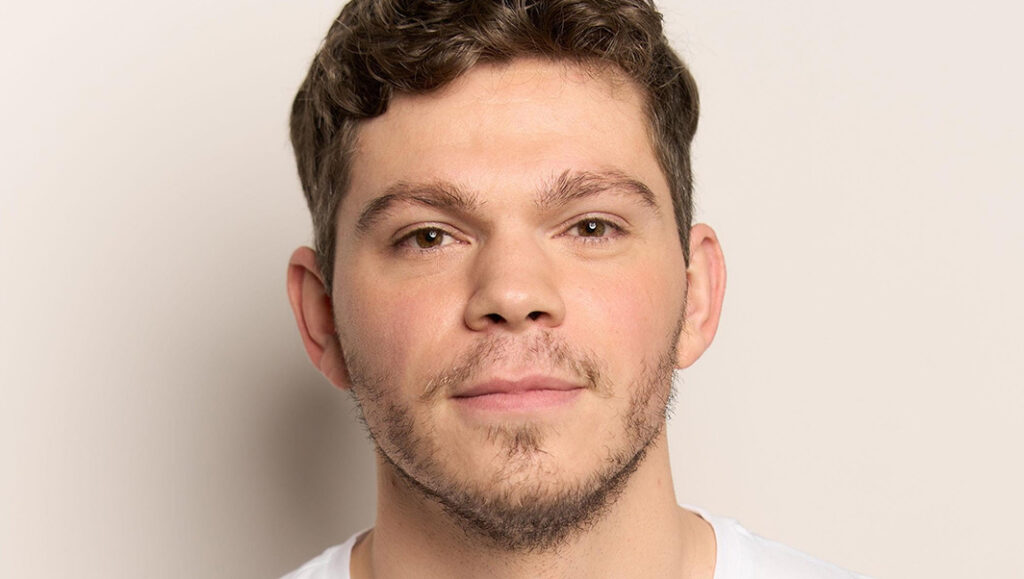
Daniel Diemer approaches performance from the inside out. That sensibility guides his art, especially in Percy Jackson and the Olympians, where he joins the cast as Tyson, stepping into a beloved franchise with both care and confidence—bringing a take that feels nostalgic yet fresh. A longtime fan of the books, Daniel brings a deep personal connection to the role, allowing Tyson to feel grounded and true to the world fans know.
For Tyson, transformation is as much internal as it is external. Daniel’s process centers on how emotion shapes physicality and voice—from posture to pitch—allowing the character’s inner world to guide the way he moves, speaks, and connects with others. Every choice is rooted in instinct rather than exaggeration, creating a performance that feels cohesive and lived-in. It’s a balance that honors Tyson’s childlike wonder while grounding his role as a protector, letting the character evolve naturally within the series.
Pop Culturalist was lucky enough to sit down with Daniel Diemer to explore the artistic intention behind bringing Tyson to life, and how his relationship to the material informed the choices he made throughout the process. In our conversation, he reflects on working within a well-established world, trusting instinct, and shaping a performance that feels personal while honoring what fans already love.
PC: You grew up as a fan of the novels and came into this role with such a deep understanding of this character. How did you balance honoring what readers know and love while also meeting him where you are and putting your own creative spin on him? Was there a subtle detail in the book that you wanted to make sure was translated to the screen?
Daniel: You put it perfectly just the way you said it. That’s exactly what it was—it’s about trying to find that balance. It was a lot of exploration and practice, trying different things out. The starting point is always going back to the source material, along with the actual scripts and sides that I’m given. What’s on the page is the heart and soul of what I’m trying to get across. Then it becomes about how I do that—trying things out, like if I go more sensitive here, or if I pitch my voice up an octave there. What do those choices do? How does that come across?
There were early iterations where I played it a little more childlike. We realized that a certain amount of that wasn’t working for us, especially within the world and the overall balance of things, so we adjusted. I had been pitching my voice up a bit more, and we ended up bringing it closer to my natural voice while still maintaining that innocence and purity. It was really about exploring a bunch of different options and approaches.
Physicality was a huge part of that, and luckily we landed on it pretty quickly, which I was really happy about. Most of the choices were very instinctive, and then it became about playing with the team—seeing what the acting coach, the producers, and the directors responded to, and knowing when to let go.
By the time we got an episode in, everything felt really easy and smooth. It was really nice to have that figured out pretty early on.
PC: There are so many layers to Tyson, and you do such a beautiful job bringing them to the forefront—from his childlike sense of wonder to that deep yearning for belonging and family. How did your physical and emotional preparation for this role intersect? How did his internal world shape his physicality, and how did that physicality then shape his emotional journey? Was one more challenging to bring to life?
Daniel: I love that question. That’s such a huge part of how I approach any character. Physicality, in general, has such a massive impact on how we feel. If I’m sitting and leaning back in my chair, there’s a relaxed nature that I automatically feel, whereas if I’m hunched over with my arms clutched, there’s more stress and intensity that comes across. It’s about looking at all these different behaviors—what impact do they have, and how do they come across? But a huge part of it, like you said, is how it makes you feel. How do you get into that space of innocence and protectiveness?
I’m a large man, so for me it was about how I use my body in a way that honors the childlike nature of Tyson while also representing him as this protector. It’s about owning his strength, but also finding that line where he’s still figuring things out as he goes along.
I wouldn’t say one was harder than the other—they’re so intimately intertwined. Figuring that out along the way was one of my favorite parts of the process. It’s one of the easiest ways to separate characters. My own experience of the world is continual—I’m learning things every year—but there’s only so much you go through.
I’ve played ten or fifteen characters at this point in my career, and I like to keep them very separate from one another. A huge part of how I do that is through physicality, and how it internally impacts my energy and emotions as I move through a performance.
PC: It’s a very transformative performance—you can feel the weight of everything he’s gone through. Because such a key aspect of this character’s physicality is added in post, what adjustments did you have to make not only in your own performance choices, but also in how you interacted with the other cast members and navigated their unique relationships with Tyson?
Daniel: Thank you. Honestly, there was very little I had to adjust in terms of how I interacted with the other actors, which was really, really nice. Because of that, all of the focus went into the internal aspects of the performance. The more expressive elements of the transformation came from knowing that the eye was such a vital and tricky part of the character. I wanted to make sure there was as much expression and storytelling happening with the rest of my body and face as possible, so that it would support the eye in the final product, however that ended up looking.
There was a lot of figuring out my mouth—how I could make him look a bit more nervous—and playing with that in ways that weren’t caricaturesque, but still conveyed a lot of information. Because of the eye, it actually allowed me to play much more than I normally would with a regular two-eyed human being. It was really, really fun, and it gave me a much bigger sandbox to play in. But there were all these different elements that I had to balance along the way.
PC: As an audience member, you can see that when Tyson is a bit more reserved, his mouth closes up, but when he feels the excitement of helping Percy, it widens. That dynamic between Tyson and Percy is so central to this story. How did you and Walker [Scobell] collaborate to explore that relationship and its evolution? In what ways did his performance influence your own? It feels like such a dance that the two of you are partaking in.
Daniel: I’m loving this interview. I love your questions—they’re so intuitive and nuanced. It really is, if possible, just as you said: a dance. My favorite actors to work with are actors who come from a place of being alive in the scene. There are incredible actors who do a lot of prep and know exactly what they’re going to do the moment they step in, but you can’t really play with them. There’s less listening happening. They have something they want to express, and they’re taking in less of what’s coming from their scene partner.
With Walker, it’s much more about the art of being with somebody, which is very much how I interpret what we do. That was the heart and soul of everything. How do I stay present with him while honoring the internal, emotional aspects I’m bringing forward? How do those internal emotions collide with where he’s at, and how do they shift based on what he’s giving in the moment?
Luckily, I was a fan of the books and the series ahead of time, so I had already spent a lot of time in Tyson’s world. Because of that, it felt very organic. I didn’t have to intellectualize what my reactions should be while we were doing scenes—it just happened. The more time we spent together, the easier it became. Walker is such a fantastic actor that a lot of the work unfolded through that natural progression.
PC: That chemistry really comes across on screen. It’s also so rare to have the creator of these beloved novels so closely involved with the series—and you’re such a big fan of the world. Having that level of access to him, was there a question, either personally or professionally, that you were especially excited to discuss with him?
Daniel: In general, with my art, there’s a certain understanding and intuition that connects me with the characters, and I just lean into that until somebody tells me I’m doing it wrong. With Rick [Riordan], I was very much like, “Hey, I’m an open vessel. If there’s anything that you or the team want from me, let me know. Otherwise, I’m going to do my thing.” Because if I don’t have that level of trust in myself, I think insecurity starts to impact my performance.
I try not to question myself as I’m going along. I really want to make sure I’m following what makes sense to me based on how I see things. And if you see something else, I’d love to have that conversation—but I’m going to keep moving forward until that conversation comes up. It never did. He was so supportive throughout the entire process.
To know that he was there and part of everything meant so much to me. It was something I was incredibly grateful for, knowing we were in good hands and that the story was being told in a way that honored him and his original creation.
To keep up with Daniel, follow him on Instagram. Percy Jackson and the Olympians is now streaming on Disney+.
Photo Credit: Adam Hendershott

Discussion about this post