

Exclusive Interview: Angelo Madsen on ‘A Body to Live In’ and the Radical Legacy of Fakir Musafar
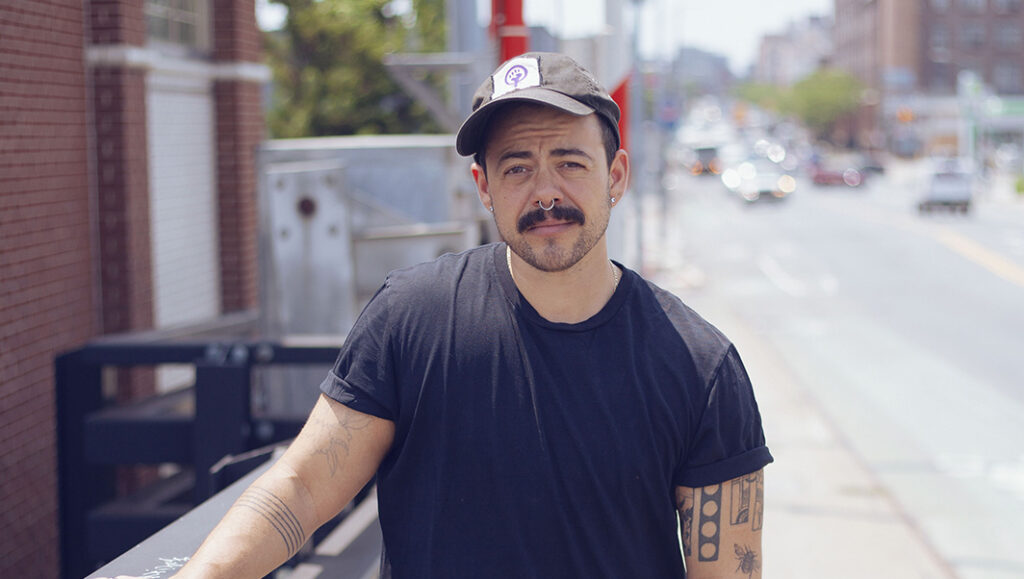
From its opening moments, A Body to Live In makes it clear this is not your typical documentary portrait. The film begins with a striking image of a young Fakir Musafar tightening a leather belt around his waist—an early act of experimentation that would evolve into a lifelong exploration of expression, resistance, and ritual. Through Angelo Madsen’s lens, Musafar emerges as a complex and deeply influential figure whose work within the “Modern Primitives” movement reshaped conversations around body modification, autonomy, and authenticity across queer BDSM and performance art communities.
Built from more than 100 hours of unseen archival footage and framed through the voices of movement elders, the film unfolds as an intergenerational dialogue that resists easy conclusions. Instead, Angelo leans into the tensions at the heart of Musafar’s legacy, confronting cultural appropriation, the impact of the AIDS crisis, and the messy humanity behind the mythology. Ahead of the film’s theatrical release via Altered Innocence, Pop Culturalist spoke with Angelo about the film’s tactile visual approach and the power of letting audiences wrestle with the questions themselves.
PC: You’ve spoken about not wanting to overtly guide the audience’s conclusions, but rather to present the history and trust viewers to wrestle with the questions themselves. How did that philosophy shape your storytelling choices in this film?
Angelo: No one wants to be told what to think. I think that ethos shapes a lot of my approach to filmmaking and art-making in general, and I don’t think it’s exclusive to this project.
I built in a lot of room in this film so that people can sit with those questions. The pace has this languidness specifically meant to invite people to sink deeper as they’re watching. I think that formal decision is really about inviting reflection and introspection. I try to deviate from anything too didactic, you know? A lot of my approach is about weaving away from the more righteous or directive sentiments.
It’s interesting—the question references objectivity in some ways—and while I do want people to sit with these ideas, at the same time, I’m certainly not objective. It’s impossible for me to be an objective voice. So I am leading people in directions that I want them to go, and toward ideas I want them to sit with and think about. Those are the choices I’m making as a writer/director—to point people toward the reflections I hope they’ll have.
PC: You’ve described wanting the film to feel in conversation with Fakir’s philosophy rather than simply documenting his life. What did you discover about him—or perhaps gain a deeper appreciation for—through that process?
Angelo: I was continually moved by how often I was confronted with personal fallibility and human flaws. When you look at someone else’s life so closely, it makes you look at your own—aren’t we train wrecks as humans? There’s really no way around it. We’re trying so hard, and we’re so insular in our perspectives, even though we think we’re expansive. There’s something really humbling about being forced to sit with that idea as you’re working on a project.
I do aspire to be someone who has grace, and watching someone else struggle through all these amazing ideas they had—all these inventions they were creating, all the ways they were inspiring other people and building community and resources—and who still had all of these flaws and blind spots…that just felt so human.
PC: The film’s visual language elegantly weaves together varied source materials with Fakir’s archival footage. How did you navigate creating a cohesive aesthetic across those textures?
Angelo: I really tried to let the archive tell me what it wanted. When I looked through it, I decided to base the visual language in photography—in negative reversal and in overlays. I allowed visual tropes associated with photography to inspire the rest of the film. I used overlays in moving images as well as still images, and I think that helps create a sense of cohesion.
The film has a sort of woven, fabric quality to it—a texture that supports that visual cohesion. We’re moving through various textures all the time. There’s a lot of materiality and a tactile quality that creates a visual through-line for the film. There’s nothing clean, crisp HD or glossy 4K in the way you might see on TV. I think the removal of that kind of gloss does something formally, visually, and contextually.
I think of the film as a tapestry—as a weaving project. Because of that, so much of the way it works visually is actually related to pace and rhythm more than one might expect.
PC: Given your longstanding connection to many of the subjects in the film, how does working within that sense of creative kinship influence the opportunities and complexities of your storytelling process?
Angelo: It’s very exciting to be able to go deeper and faster with people because there’s one less layer to build or approve. Personal relationships were required to even enter the content and the material. But I will say that openness comes with the detriment of my own blind spots, which is true for any maker, you know? Because I already have a relationship with someone, I might be asking questions very differently than someone who doesn’t. It’s just what I bring to the film—both a benefit and a detriment.
Specifically, I do think there’s a certain ease of communication because we speak the same language and we’ve shared some of these experiences before. No one has to catch me up to speed, and nobody has to work to legitimize what they’re doing. I think oftentimes in marginalized communities, people have to spend a lot of time in an interview process legitimizing their right to do what they’re doing. Without that need, you can go much deeper and much faster and talk about richer, more interesting things.
To keep up with Angelo, follow him on Instagram. Learn more about A Body to Live In on their official website.

Discussion about this post