

Exclusive Interview: Brian Wecht on Blending Jazz and Comedy as Trey Magnifique in ‘Bebop Cowboy’
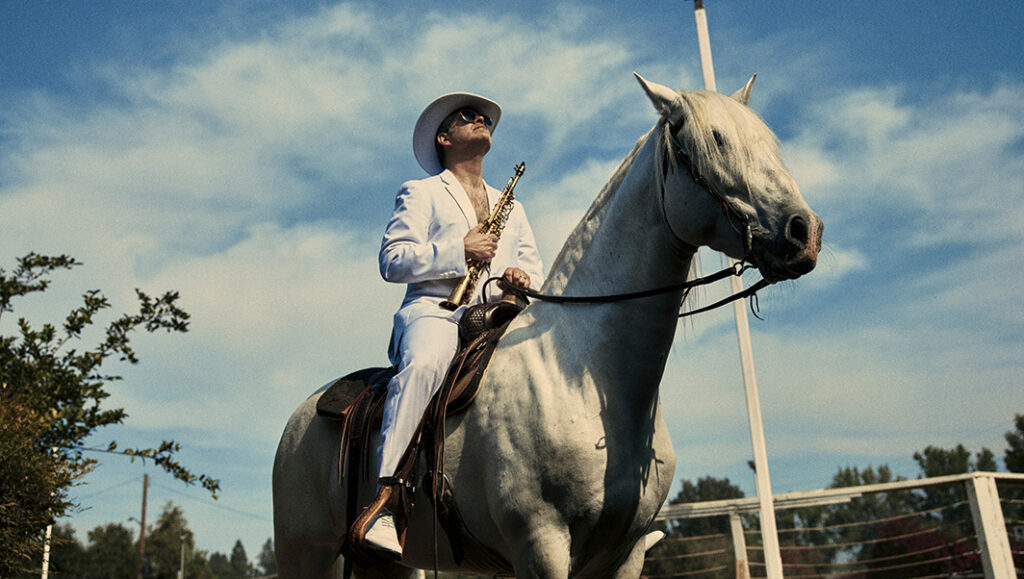
For Brian Wecht, Trey Magnifique offers the freedom to follow his musical instincts with a sense of humor. Through the jazz persona, he brings together accomplished musicianship, retro influences, and a playful approach that makes room for both a brass choir and cricket sound effects. His second album, Bebop Cowboy, builds on that combination with a more assured sound and a sharper understanding of the character, shaped by time spent performing in front of live audiences.
Produced by longtime collaborator Commander Meouch, Bebop Cowboy draws inspiration from Dave Brubeck, ’90s Eurodance, Esquivel, and more, reflecting the range of Wecht’s musical interests. The record also brings friends and family into the mix, including his wife, Rachel, and musician Dallas Kruse. Across its varied arrangements, the album captures the pleasure of making music with people who share his enthusiasm for exploring where a song can go.
Pop Culturalist caught up with Brian to discuss Trey Magnifique’s evolution, the creative partnership behind Bebop Cowboy, and how performing live helped him fine-tune the balance between jazz and comedy. He also shared the story behind the album’s lead single, what made recording with Rachel so special, and the possibilities ahead as he prepares for his first headlining tour in early 2027.
PC: Mature Situations introduced us to the sound and personality of Trey Magnifique. As you began working on Bebop Cowboy, how did you want to build on that foundation, and how did your creative partnership with Commander Meouch evolve between the two albums?
Brian: With the first album, I was still somewhat figuring out who Trey Magnifique was and exactly how comedic I wanted the music to be. The biggest difference between the two albums is that, in the interim, I spent a lot of time playing the character and the songs in front of live audiences, and I got to fine-tune the scope of the comedy. When I listen to the first album today, there are a few moments that I think were too broadly comedic, and I wish I had dialed it back a bit.
As for working with Commander Meouch, the only real difference is that we’ve now streamlined the process of how we want these albums to be made. We’re still very much on the same page as each other, and he’s still the only person I’d ever want to produce the Trey music. Basically, he’s the best.
PC: How does creating through the persona of Trey Magnifique shape your artistic instincts, and where do you feel Brian’s creative voice ends and Trey’s begins?
Brian: Trey gives me license to do things that I want to do but that would be a bit too on the nose for more traditional jazz. I find it very hard to write “serious” (that is, non-comedy) things, even instrumental music, and Trey lets me write without worrying about taking things too seriously. Basically, it’s an excuse to put out the music that I’d want to put out anyway, but it’s more fun to do it in character.
PC: Albums often capture a particular place and time in an artist’s life. What does Bebop Cowboy capture about where you were when you made it, both as Brian and as Trey?
Brian: These albums are very purposefully retro, so if they evoke any particular time and place at all, it’s usually something from the past. Bebop Cowboy has homages to Brubeck, ’90s Eurodance, Esquivel, and more, but the album was recorded last year in Toronto at Taurus Recordings, where I do all the Trey stuff. I think the only thing it really captures about the current time and place is where I am in my sax playing. I notice a big difference in my sound between the first and second albums, and I like my current sound a lot more.
PC: If you had to choose one song from Bebop Cowboy that most completely captures Trey Magnifique, which would it be, and why?
Brian: Hard to choose, but “Summer’s Hot” is the one I keep coming back to when performing live. It’s very smooth, has a fun title and cricket sound effects at the beginning, and totally fails to restate the melody at the end of the song. I love it.
PC: Was there a song on Bebop Cowboy that took on an entirely new life during production compared to how you originally imagined it, and what did the collaboration in the studio bring out of that track?
Brian: The lead single “But What Can Do You?” is the best example of that. I was looking for a few more tracks to fill out the album and had written just the chorus as a piano fragment. Meouch encouraged me to build it out, and it became one of my favorite tracks on the album, including a brass choir, an ’80s drum machine, and more. It ended up very far from where it started.
PC: Bebop Cowboy brings together so many people who are important to you, including your wife, Rachel, as well as longtime friends and collaborators. How did inviting those personal relationships into the album shape the experience of making it, and does hearing them on the finished record change what it means to you?
Brian: Everything I make, I make with friends, so that part wasn’t very different for me. But having Rachel on the album was really special. She’s an incredibly talented singer but had never been in a recording studio before (she typically works on stage), and it was great to see her shine in that environment. She’s been on a bunch of other songs on other projects, especially my kid band Go Banana Go!, but this was the first time we were in the studio together for a song like this. And having Dallas Kruse there at the same time was the best. He’s a phenomenally talented musician and was a huge help when it came to the vocal arrangement.
PC: With Bebop Cowboy, you wrote far more material than ultimately appeared on the album, which is very different from your process with Ninja Sex Party, where almost nothing gets left behind. What did that freedom to be more selective unlock creatively, and how did you decide which ideas belonged on the record?
Brian: That was really just a discussion with Meouch and also having a limited amount of studio time. I know we’ll make more of these albums, so we just picked our favorite songs and went from there. The only late addition was “Giant Steps,” which we didn’t record during the main session in Toronto. I recorded the sax for that one at the same time we did the vocals with Rachel and Dallas, at Palmquist Studios in LA. But I wanted a justification for the album title, and I thought that having a nod to actual bebop was important.
PC: As you look ahead, what’s next for Trey Magnifique, and where would you like to take the persona and his sound in the next stage of their evolution?
Brian: My main goal right now is to keep doing the set live, and I’ve got my first headlining tour planned for early 2027, as well as monthly shows in Las Vegas at the Virgin Hotel & Casino. The next album will probably be a bit different, and I’ve been talking with Meouch about doing a “We Like It Here” type of thing where we record it live in the studio with a small ensemble. The great thing about this project is that the sky’s the limit, so I’m never entirely sure what the next step will be.
To keep up with Brian, follow him on Instagram, Spotify, and Apple Music.
Photo Credit: Sela Shiloni

Discussion about this post