

Exit Interview: Brad Fiorenza on the Blue Team’s Struggles and Playing as an Underdog on ‘The Challenge 42: Cutthroat’
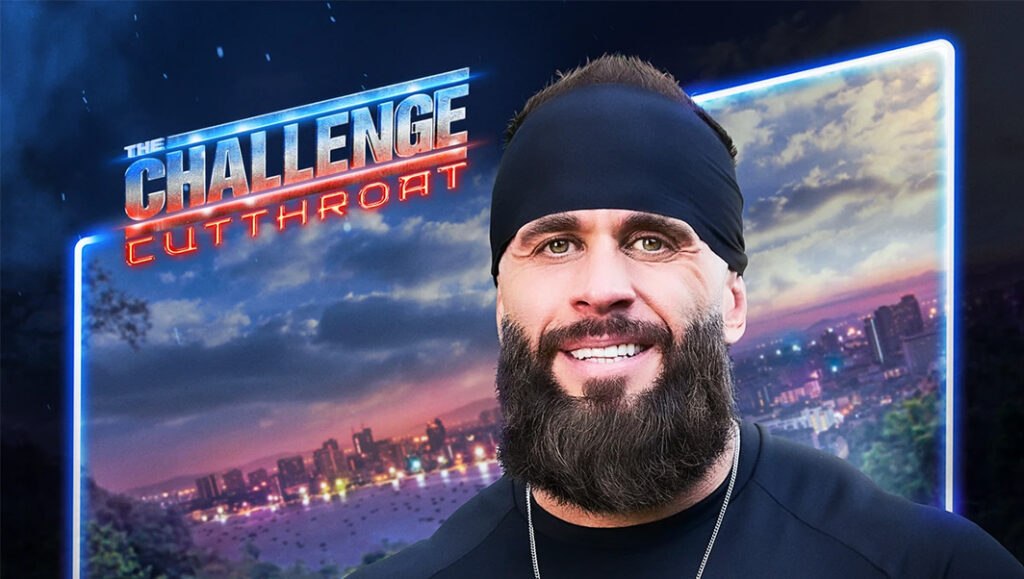
After fifteen seasons of The Challenge, Brad Fiorenza still finds something worth coming back for. The competition gives him a chance to test himself, reconnect with people who have become like family, and see how much he’s grown. On The Challenge 42: Cutthroat, he arrived ready to build new relationships and help the Blue Team prove everyone wrong.
That proved difficult from the start. With unfamiliar faces, shifting alliances, and a team struggling to find its rhythm, Brad never felt entirely secure in the game. His season came to an end in an elimination against Keanu that turned far more physical than he expected.
Pop Culturalist spoke with Brad about what keeps drawing him back to The Challenge, the bond he built with Sydney Segal, his conversation with Johnny Bananas, and what he wishes had gone differently for the Blue Team. He also takes us inside that elimination and shares why Keanu was the last person he wanted to face.
PC: You’re one of the competitors I immediately think of when I hear The Challenge. After fifteen seasons, what continues to motivate you to come back beyond winning? What do you hope to take away from each experience?
Brad: That’s a great question. I think what gets me excited to come back is the experience itself, both on and off camera. When you’ve filmed enough shows like this, you start to feel like you’re part of a family. In a way, it feels like coming home. It’s fun to catch up with everybody.
You also get to see a new country. As intense as the living situation can be, it’s a great opportunity to test your personal growth in a challenging environment and push yourself to new limits. That’s what keeps me coming back.
PC: Speaking of those connections, you’ve said that you approach every season by trying to build genuine relationships. This time, though, most of the competitors were people you didn’t know well. Who did you build the strongest bonds with, and who do you think would have been best for your game moving forward?
Brad: That’s another great question. There were so many new faces that it felt like a brand-new game. Even though I played on the first season of Cutthroat, back then I felt like I could predict how each player was going to play.
This was so different. There were no layups this season. Everybody was an athlete. Everyone could compete. The rookies and new threats had nothing but confidence going up against the vets. It wasn’t like prior seasons where rookies had to earn their stripes. They came out of the gate with all gas and no brakes.
One of my closest allies among the new players was probably Sydney [Segal]. I reached out to her after Season 41 and told her she did a great job. We kept in touch on social media for a bit, so when we met on Season 42, I felt like I already had an in with a very strong player. She was one of the people I trusted in this game.
Outside of her, I felt like I was building rapport, but not enough to feel safe. I never felt like I was in this game. Even the vets were playing differently than I was used to seeing. There was a lot of talk about the “41 strong” alliance, and some vets were trying to find their way into the younger alliance because we’re outnumbered these days. They’re playing a strong game, so it’s harder than ever to play a strong political game. But those were the cards I was dealt, and I tried to play them the best I could.
PC: That’s the perfect segue to my next question. Something I appreciate about you is your vet mentality: you’re not necessarily trying to politic your way out of every elimination. If you have to go in, you’re ready. Do you think that’s the biggest difference between the vets and this newer generation of competitors?
Brad: Possibly. I feel like most players do everything they can to avoid going in. And I appreciate the compliment, but I’ve had moments where I wanted to change things up. On the original Cutthroat, I kept going into elimination, and I wanted to change that, but the team was against it.
This season, I did try to talk to Johnny [Bananas]. I wasn’t going to extremes, but I was trying to play a smart game. I let Johnny know that if he did me a favor, I would repay it. Apparently, he thought Josh [Goldy] was the better investment for how he wanted to move through the game. I respectfully disagree. I would have been loyal, and I would have done whatever I could to help him moving forward.
There are no hard feelings about his choice, but I took note of it. If I’m ever in a position where I have to choose between Johnny and somebody else, that’s information I’ll take into consideration.
PC: That’s been a throughline in your Challenge career, where you’ve remained loyal to the people you’ve given your word to. In past seasons, being a captain typically meant putting yourself at risk. But this season, there’s an advantage to being in that role, especially on your respective day. Did that change the way you played the game?
Brad: There were so many twists, starting with the captains picking the other teams. That didn’t help the Blue Team very much. I remember thinking that being a captain usually isn’t a good thing, especially on the original Cutthroat. But this season, it was an advantage because if your team finished in second place, you were safe.
I was the captain for the third challenge, the slide puzzle, and I was hoping we could at least finish second. But the Orange Team finished so fast. It was over before I knew it, and I couldn’t believe it. Unfortunately, it wasn’t my season.
PC: Fingers crossed that we’ll get you on another season. Can we talk a bit about that elimination? From an outsider’s perspective, you initially think it’s going to come down to speed and endurance. Then, halfway through, it suddenly becomes really physical. With all of your experience, you’ve come to expect the unexpected. But how surprised were you by that shift when you were in the elimination ring?
Brad: I was very surprised. I was focused on climbing and going fast. I knew there would be a little bit of physical contact on the wall itself, but after I scored that point, he took it to a whole new level and ran me through. I was shocked because, in that moment, I didn’t even know what the rules allowed anymore. But I knew I needed to stay ready and do whatever I could to get to that number first. It was extremely difficult.
PC: Same. I thought TJ [Lavin] was going to pull a red card and say that wasn’t allowed.
Brad: I would have loved that. It would have at least helped me understand the rules better. But after I missed that first point because I hit the number and not the buzzer, I was super disappointed in myself. I’m sorry to anybody I let down by missing that part of the rules. That was a huge mistake.
I had a couple of close points, but once he turned up the physicality to the extent that he did, he was basically running football drills on me. I had to do whatever I could, and I tried. He was bigger than me, and he was fast, too. I’m not sure who’s faster, but he was definitely carrying more weight, and it didn’t slow him down. His workouts are super intense. He works super hard. He’s a hell of a competitor. I don’t think there’s anybody I would have wanted to face less in that elimination. He was my last choice.
Historically, CT [Tamburello] has been the last guy you’d want to face in an elimination. I would have rather gone against him on that wall three times in a row than gone against Keanu [Soto]. I felt those were better odds.
PC: You were really trying to turn the Blue Team’s luck around. Looking back, what do you think was the biggest thing preventing the team from finding the success you’d hoped for?
Brad: We didn’t have a whole lot of cohesiveness in our planning right before a challenge. We had a lot of people talking and nobody listening. So I tried to be a better listener, hear who had the best idea, and ask that person more questions. That could help change the direction of the conversation instead of having everybody yell out ideas.
But we didn’t have the strongest team right out of the gate. The odds were stacked against us a bit. I was still confident in our team and tried to have a positive outlook. Even at the very beginning, when Anna Leigh [Wilson] was disappointed that Justin [Hinsley] and Chris [Underwood] worked together, I understood why she felt that way. But it was the worst way for our team to start, knowing the other two teams had picked us to lose. It was a damn shame it worked out that way. I really wanted to win with that team because we were doubted. I wanted us to prevail as underdogs, but it wasn’t our season while I was there. Hopefully, they can turn it around.
There’s a big element of luck in this game. You train so hard, but for what? You’re training for a big question mark because you don’t know what you’ll face in an elimination. It could be a puzzle, it could be eating, or it could be something physical. You prepare for everything you can. I was doing Sudokus and all the puzzles I could find on Amazon. I thought we really had to dial in on puzzles going into this season, but it didn’t work out. That’s the luck portion. That was just how it went for me this season.
To keep up with Brad, follow him on Instagram. The Challenge 42: Cutthroat is streaming now on Paramount+.

Discussion about this post