

Exclusive Interview: Leonardo Nam on the Heartbreak Behind Maddox’s Transformation in ‘Descendants: Wicked Wonderland’
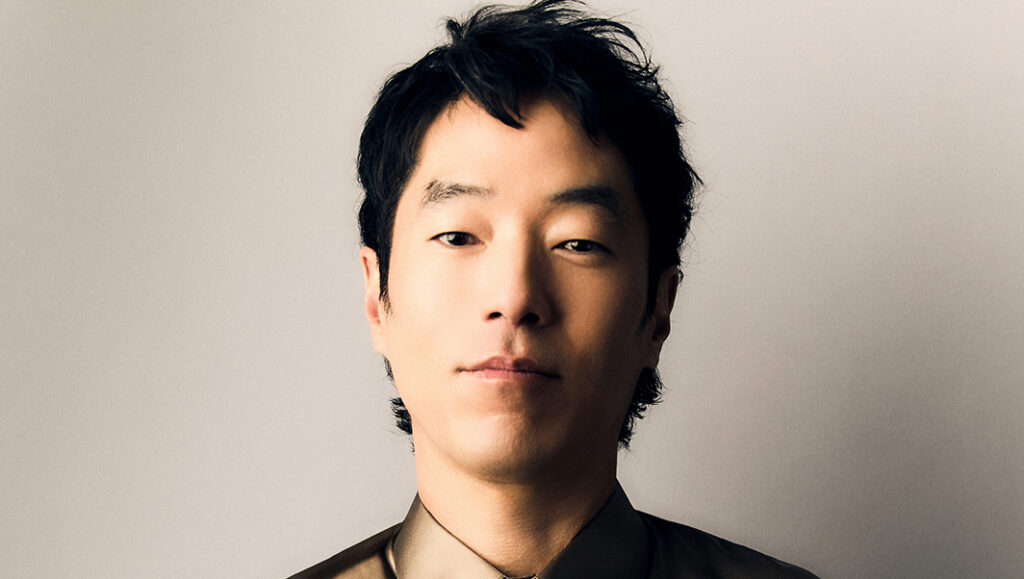
Leonardo Nam has always brought an undeniable warmth and eccentricity to Maddox Hatter, making him one of the most endearing figures in the world of Descendants. In Descendants: The Rise of Red, audiences met a character defined by his enormous heart, curiosity, and devotion to those around him. But in Descendants: Wicked Wonderland, Leonardo gets the opportunity to turn those qualities on their head, exploring what happens when that same capacity for love has been shaped by years of heartbreak, anger, and obsession.
It’s a transformation that Leonardo approaches from every angle. From the music that helped him unlock Maddox’s changing emotional state to a physical language that evolves from the image of a rose bush into the unstoppable force of a tidal wave, every choice reflects where the character has been and what he has become. At the same time, Wicked Wonderland pushed Leonardo into new territory as a performer, including singing and dancing professionally and embracing the vulnerability that comes with being a beginner again.
That willingness to keep challenging himself extends far beyond Wonderland. Through Good On Ya Productions, Leonardo has taken a more active role in creating and championing stories while expanding his perspective on what it means to be an artist. Pop Culturalist spoke with Leonardo about the heartbreak behind Maddox’s transformation, finding a character through music and movement, the mentors who shaped him, his aspirations to direct, and why he no longer believes an artist should build their life around being chosen.
PC: You’ve gotten to explore two very different sides of Maddox across these films. In The Rise of Red, he has this huge heart, and in Wicked Wonderland, we see how that same heart has been shaped by hurt, anger, and obsession. As an actor, how did you trace that emotional journey while still making sure we recognize the Maddox we first met underneath it all?
Leonardo: For me, the key was never thinking of Maddox as becoming a completely different person. He’s still the Maddox we met in Descendants: The Rise of Red. He still has that enormous heart. It’s just been broken. I kept coming back to the idea that the qualities we love most about someone can sometimes become the very things that undo them. Maddox loves deeply. He’s loyal. He believes fiercely. In The Rise of Red, those qualities make him this wonderful mentor and safe place for Red. In Descendants: Wicked Wonderland, that same capacity for love has been sitting alongside hurt for a very long time. Hurt becomes anger, anger becomes obsession, and suddenly, the thing that made him so beautiful is also driving him somewhere dangerous.
I never wanted to play “evil Maddox.” I wanted to play someone who genuinely believes what he’s doing is justified because that’s much more human and much more interesting. Hopefully, even when you’re watching him make terrible choices, there’s still a part of you that recognizes the man underneath and thinks, “Oh, Maddox, don’t do it!”
PC: I know music plays such a big role in how you prepare for a character. What song helped you find your way into Maddox during The Rise of Red, and what was that song for Wicked Wonderland? Has music always been such an important part of your process as an actor?
Leonardo: Music is huge for me. It gets me out of my head. I can spend hours doing all the intellectual work on a character, but then sometimes a song comes on and suddenly I understand how that person walks into a room. For The Rise of Red, the music I was drawn to had this playfulness and buoyancy to it. Maddox felt curious, eccentric, and openhearted. With Wicked Wonderland, the playlist got much louder. I was listening to Green Day and Ozzy Osbourne, music with rebellion, danger, and this feeling of something barely being contained.
What I love is that music doesn’t always give me an emotion. Sometimes it gives me a rhythm. And rhythm becomes breath, breath becomes posture, posture becomes movement, and suddenly I’m not thinking about how to “play” Maddox anymore. I’m just in him. I’ve used music throughout my career, but the older I get, the more I trust those instinctive doors into a character. Not everything has to be figured out intellectually. Sometimes your body knows before your brain does.
PC: Maddox has been such an important mentor figure to Red. Thinking about your own journey, who were some of the mentors who helped shape the artist and storyteller you are today, and what have you carried with you from them?
Leonardo: I’ve had so many, and they’ve appeared at completely different moments in my life. When I moved to New York, I knew I wanted to be an actor, but I don’t think I fully understood yet what it meant to devote yourself to a craft. My acting teachers and the people I worked with in theater changed that. I discovered that there was an actual process to taking words on a page and finding the humanity underneath them. That was transformative for me because suddenly, acting wasn’t about getting somewhere. It was something I could spend my entire life getting better at.
Then you start working professionally, and your mentors can change. They become directors, writers, producers, and other actors. I’ve learned enormously from simply watching how great people behave on a set, especially how they treat people when they’re under pressure. And now, one of the unexpected joys is that I learn from younger actors too. Watching Kylie Cantrall, Malia Baker, and this younger cast work with such fearlessness reminds me not to lose that sense of play. Maybe that’s the biggest thing I’ve learned from all of them: stay curious. The second you think you’ve figured it out, you’re probably in trouble.
PC: There’s so much about Maddox that’s communicated through his physicality and movement, sometimes without him having to say anything at all. How did you develop that physical language for the character, and what did you want those choices to reveal about who he is?
Leonardo: The physicality is one of my favorite parts of playing Maddox because I wanted you to be able to turn the sound off and still understand something about him. I initially worked with my brother, Supple Nam, exploring shapes, rhythm, and movement. I wanted to get away from my own natural physical habits so that Maddox didn’t just feel like me in a fantastic coat and hat. Then I got to expand that work with our incredible choreographer, Emilio Dosal.
For The Rise of Red, I thought a lot about a rose and a rose bush. In that film, there was beauty and softness, but also these unusual angles and thorns. Maddox could fold himself into strange shapes and then suddenly open up. For Wicked Wonderland, that image completely changed. I kept thinking about a tidal wave. Tidal waves genuinely terrify me. There’s something almost beautiful about them from a distance, but once that force is moving toward you, there’s no negotiating with it. That became Maddox for me in this film. He has momentum now.
Even the costumes became part of the performance: the coats, the silhouettes, the way the fabric moved behind me. I wanted it to feel as though Maddox sometimes entered a space before he physically arrived in it. That’s the joy of Wonderland. You can make the internal life of a character external in this huge, theatrical way, and somehow, it still feels completely at home there.
PC: There’s something so valuable about having experience on both sides of the camera, and with Good On Ya Productions, you’ve gotten to expand the way you tell stories beyond acting. How has stepping behind the camera informed the way you approach your work as an actor, and what kinds of stories are you hoping to champion through the company?
Leonardo: Producing has completely widened my lens. As an actor, particularly when you’re starting out, so much energy goes into your piece of the puzzle. You prepare the character, you show up, you try to give the director what they need, and hopefully do great work. Producing makes you see the entire puzzle. You’re thinking about the writer, the director, financing, casting, the audience, why this story needs to exist, and how you actually get it into the world. And weirdly, I think understanding all of that has made me freer as an actor. I’m much more aware that my performance isn’t the destination. It’s one part of telling the story.
That’s also the philosophy behind Good On Ya Productions. “Good on ya” is such an Australian expression. To me, it means, “I see what you’re doing. Go for it. I’ve got your back.” That’s the energy I want the company to have. I’m drawn to stories about people who exist between worlds because that’s something I understand instinctively. But I also don’t want the medicine without the sugar. I want to make things people genuinely want to watch. Give me comedy, romance, horror, thrillers, and big entertainment. Let audiences fall in love with the characters first. If we’ve done our job well, maybe you’ve experienced the world through somebody else’s eyes without anyone having to tell you that was the point.
PC: You’ve talked about how the things that scare you are often the things that help you grow. Is there something that still scares you creatively that you haven’t done yet, but you know you want to explore?
Leonardo: Directing. Even saying that makes me slightly nervous, which probably means I should do it. Singing and dancing professionally scared me enormously going into Wicked Wonderland. I remember having this moment of, “Wait, I’m actually going to sing in a Disney musical?” But there was also something incredibly liberating about being a beginner again. I think that’s what I’m chasing now. I’ve been acting for a long time, and I love it more than ever, but there’s something very healthy about putting yourself in a room where you don’t already know exactly what you’re doing.
Directing feels like that next mountain for me. You’re responsible for holding the entire story while also creating the space for everyone else to do their best work. That excites me and terrifies me in almost equal measure. I’ve started to recognize that feeling. When my instinct says, “Absolutely not, that’s terrifying,” there’s usually another little voice underneath saying, “You should probably go toward that.”
PC: You’ve talked about how earlier in your career, the focus was on getting the next job, whereas now you’re creating opportunities and taking a more active role in shaping the stories you want to tell. Knowing everything you know now, if one of your kids told you they wanted to follow in your footsteps, what advice would you give them about building a life and career as an artist?
Leonardo: I think I’d tell them something that took me years to understand, which is: don’t build your life around being chosen. Actors spend an extraordinary amount of their lives waiting for someone else to say yes. You audition. You wait. You get the job, and suddenly you feel validated. You don’t get it, and especially when you’re young, it’s very easy to confuse that rejection with some judgment about your worth or your talent. It took me a long time to understand that being an artist is much bigger than being employed as an artist.
I’d tell them to learn their craft and then go build an interesting life. Read. Travel. Have friends who have absolutely nothing to do with your industry. Fall in love. Get your heart broken. Be curious about people. Pay attention. All of that eventually finds its way into the work. And don’t wait for permission to create. That’s probably one of the biggest changes in my own life. Earlier in my career, I was constantly asking, “What’s my next job?” Now I’m much more interested in asking, “What can I create? Who can I bring with me? Whose story can I help get told?” At some point, you realize the goal isn’t to spend your whole life waiting for someone else to choose you. It’s to keep choosing the work, choosing your own voice, and creating something of your own.
Photo Credit: Timothy Fernandez

Discussion about this post