

Exclusive Interview: Shawn Wasabi on ‘Forgotten Island’s’ “A Parallel World” and Creating with Curiosity
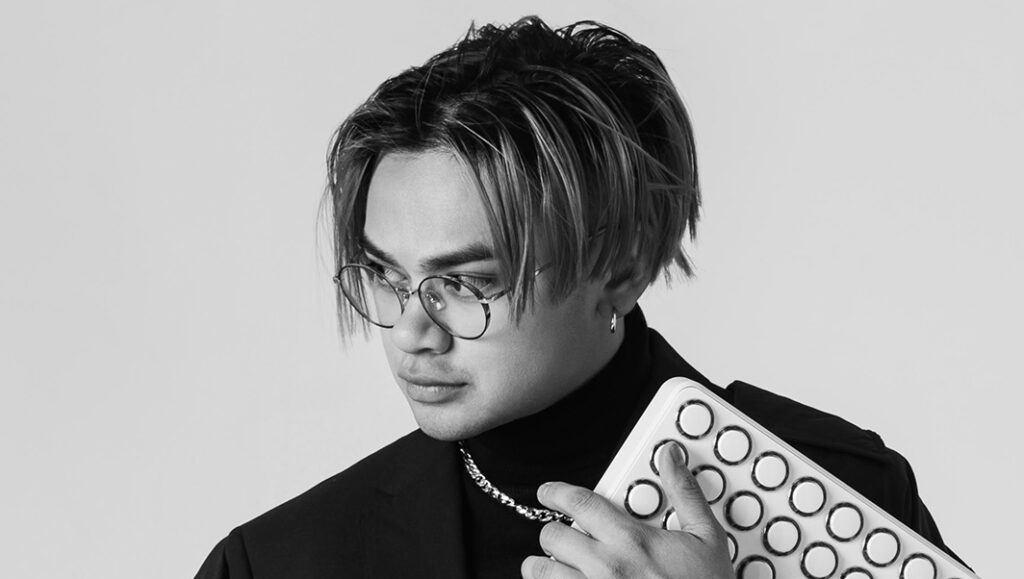
Curiosity has long been at the heart of Shawn Wasabi’s artistry. Across his career, the producer, songwriter, and multi-instrumentalist has built a distinct sound through experimentation, intricate layers, and an instinct to follow the ideas that excite him most. But beneath the playful production and technical ingenuity is an artist interested in connection, creating music that allows listeners to feel seen, understood, and perhaps discover something new about themselves along the way.
That philosophy takes on new meaning with “A Parallel World,” a song Shawn co-created for DreamWorks’ upcoming Forgotten Island and performed by Filipino pop group BINI. Rooted in Filipino culture and mythology, the film offered Shawn the opportunity to contribute to a story and scale of representation he never imagined seeing growing up.
Pop Culturalist spoke with Shawn about the emotion of seeing that world brought to life, the cultural details woven throughout “A Parallel World,” watching BINI perform the song at Comic-Con, how gaming continues to shape his creative perspective, and why curiosity remains the driving force behind whatever comes next.
PC: When the creative team behind Forgotten Island and DreamWorks approached you about this project, how much did you know about the story and who would be performing the song? How did that influence your creative process and your collaboration with Nathan Matthew David?
Shawn: I knew absolutely nothing going into it. Nathan first reached out to me a while ago, and then in December 2025, I went over to his house. There was nothing about the film online at the time, so I genuinely had no idea what to expect.
Nathan is one of my favorite collaborators. He’s such a sweetheart, and he really understands and trusts my creative process. I’m always coming in with these crazy ideas, and he’s the person who’s like, “Let him cook for a second.” There’s a real sense of creative trust between us.
When he showed me the scene for the first time, I almost couldn’t process what I was seeing. Here was a DreamWorks film centered on Filipino mythology and culture at a scale I had never seen represented in mainstream media before. I had this overwhelming feeling in my heart. I remember thinking, “Wait, hold on. What’s going on? This doesn’t happen.”
There’s almost this cognitive dissonance because you understand how Hollywood and the industry work. You know how many people something like this has to go through, how many approvals it takes, and everything that has to happen for a film of this scale to get greenlit. Seeing that scene, I honestly almost cried.
The scene where the song comes in is such an important moment in the film, and I immediately felt a responsibility to honor it. I wanted to make sure the sound, composition, and overall musical palette felt authentic to the world they had created and everything this movie represents.
PC: Have you had a chance to see the response from fans online? So many people have shared that they’re seeing themselves represented in this way for the first time. What do you think your younger self would have taken away from seeing something like this?
Shawn: Oh, wow. If I could teleport back into my childhood bedroom and talk to my younger self, he would have freaked out. He wouldn’t have believed any of this was possible.
I don’t think people realize the magnitude of what it took to get to this point. Joel [Crawford] and Januel [Mercado], the directors of the film, and the entire creative team were so open to all of these ideas. They knew exactly what they wanted the movie to represent, but they also wanted to push everything to 1,000% when it came to the ideas, the story, and the world-building. Everything was created with so much intention.
Even for me, it took time to process what was happening, in the best possible way. Seeing Filipino culture represented with this level of care and on this scale is something I never could have imagined as a kid. I still have a hard time fully wrapping my head around it.
PC: It’s an incredibly powerful moment for this community, and I’m excited for audiences to discover the film in September. Something I’ve always appreciated about your work is the introspective quality of your music and your ability to step into someone else’s perspective. You’ve written across so many different mediums. When you’re writing for film or television, how do you find that intersection between bringing yourself to the song and serving what the project needs?
Shawn: Thank you for mentioning that. That’s a very thoughtful question, and I’m glad you noticed it. I’ve been doing this for a long time, and things like that really matter to me. Whenever we make art or have an idea, we want people to feel heard and understood. We want to create connections that help people understand more about themselves and hopefully feel a little more comfortable in the world.
When I’m in the studio or collaborating with someone, my songwriting mentor, Justin Tanner, and I can sit there for one or two hours before we even start writing, and it’s almost like a therapy session. If we’re working with another artist, we’ll talk about what’s happening in their life, who they recently broke up with, what they’re going through personally, and what they want for themselves. That’s always where we start.
Usually, those conversations give us three or four ideas that could become a beautiful story for a song. You find the thing that feels honest and worth putting into the world, and hopefully it helps someone else feel seen or understood.
Working with Nathan, Joel, and Januel was similar in that they started by showing me the scene and the film. I’ve watched it so many times at this point, and I notice something new every time. I’ve also cried every single time I’ve watched it. Seeing something that moving makes me want to strive to be the best creative person I can be.
It reminds me why I wanted to make music in the first place. It also reframes the creative process and what we’re trying to accomplish through art, animation, and music. You’re constantly searching for those feelings, whether they come from a lyric, a melody, or something happening within a scene. When you find that feeling, it’s like capturing lightning in a bottle.
That’s how I felt watching this movie and seeing these two characters meet, hang out, and have a sleepover. I found myself asking, “Why does this resonate with me so much? Why is this making me cry?” That curiosity is what drives me creatively. I want to understand that feeling and then find a way to translate it into the music.
PC: Speaking of that, it was incredibly important to the creative team that Filipino culture was represented authentically. Your music is known for its layered production and the little nuances you discover with each new listen. What influences or details do you hope audiences pick up on as they spend more time with the song?
Shawn: Oh my gosh. Thank you. I thought so much about that. It’s interesting because there’s always this intersection between the realities of the industry and what I emotionally respond to in the music I’m making. All of those things are constantly doing this dance and influencing one another.
I have so much respect for Joel and Januel and how they were able to navigate that while still making the culture feel so authentic. There are so many details in the movie that immediately feel familiar to me. It’s exactly what a Filipino gathering feels like, from the food on the table to the little interactions happening around the room. There’s even the uncle doing karaoke really off-key because he’s trying to hear the reverb coming out of the karaoke machine. [laughs] Those details are so specific, but that’s what makes the world feel real.
I wanted to bring that same level of specificity to the music. It requires having a deep understanding of yourself, what you respond to, and the cultural influences that have shaped you. That’s what I love about the process. You can put all of those layers into the work, and someone might notice something different every time they come back to it.
PC: You’re also a gamer. There’s something incredibly full circle about being at Comic-Con, creating music for a film like this, and then having BINI perform it. What was it like seeing all these different parts of your life and artistry come together on that stage and at the screening?
Shawn: I love BINI. They’re so sweet and incredibly talented. Seeing them surprise everyone at Comic-Con with the song and perform the choreography was such an emotional moment. I cried in the audience. Nathan and I were hugging each other. It was surreal seeing everything come together in that way.
I also love that you started the question with gaming because I’ve always had a very holistic view of creativity. To me, video games are one of the ultimate forms of entertainment because you’re directly interacting with the story. You don’t have that same level of participation when you’re watching television, reading a book, or listening to music. In a story-driven game, the decisions you make can lead you down completely different paths or even result in eight different endings. I remember experiencing that as a kid playing games in my living room and being fascinated by it.
When I’m creating, I’m always thinking about how we can capture some of that feeling and translate it into music or film. Music can be interactive in its own way because what you take from a song depends on where you are in your life. Your mood, your experiences, and what you’re going through can completely change what you hear or how you interpret a lyric.
I love that idea that the audience brings something of themselves to the experience. In a way, it’s almost like choosing your own path in a video game. The art gives you the world, but your own experiences help determine what it ultimately means to you.
PC: There’s also so much intention behind everything you do. When you released your debut album, you had written hundreds of songs and carefully chose which ones would ultimately make the record. I’ve always found it interesting that the music you release represents a particular chapter in your life. Could we expect another album from you in the future, and what do you hope this next chapter represents?
Shawn: Thank you for asking that. I have some really fun and exciting music that I’m hoping to share with the world very soon. I always learn so much about myself through the process of making something new.
Everything I create starts from a place of curiosity. I’m constantly asking myself what I want to hear, what excites me, and what would make me happy if it existed in the world. I try not to force what a project needs to be and instead let that curiosity guide me toward whatever feels meaningful at that point in my life.
Ultimately, I hope whatever I make can create that same sense of connection we’ve been talking about. If someone can hear something I’ve created and feel a little more seen or understood because of it, that’s always what I’m striving for.
To keep up with Shawn, follow him on Instagram, Spotify, and Apple Music.
Photo Credit: Michelle G. Gonzalez

Discussion about this post