

Exclusive Interview: ‘The Outsiders’ Star Wes Williams on His Broadway Debut and the Life of a Swing
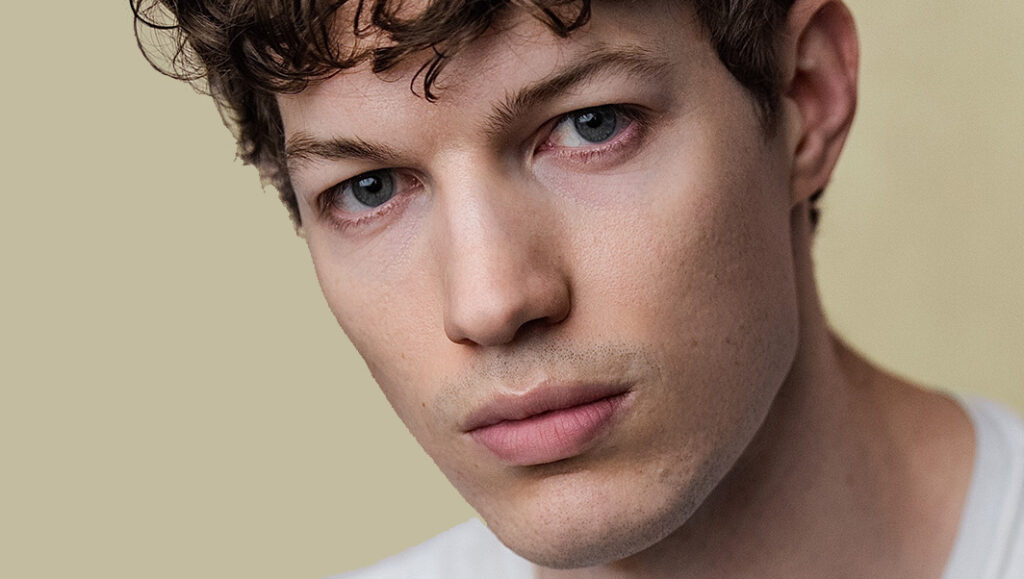
There are few performers who know The Outsiders as intimately as Wes Williams. As a swing, he moves between Greasers and Socs, stepping into multiple characters whose hopes, fears, and motivations reveal a different side of the musical each night. It’s a rare vantage point within one of Broadway’s most emotionally resonant productions, one that has reinforced a simple truth at its heart: every character believes they’re fighting for something worth protecting. Adapted from S.E. Hinton’s beloved novel, The Outsiders follows Ponyboy Curtis as he navigates friendship, family, and identity in a divided Tulsa, reminding audiences that understanding often begins with seeing the world through someone else’s eyes.
That unique position has shaped Wes’ experience both on and off the stage. Making his Broadway debut as a swing has meant embracing the unpredictability of studying multiple characters and being ready to step into the spotlight at a moment’s notice. With every role comes a new emotional rhythm, a different relationship, and a fresh understanding of the story, deepening his appreciation for the empathy and humanity that define The Outsiders.
Pop Culturalist caught up with Wes to discuss making his Broadway debut, the unique life of a swing, and what he’s learned from inhabiting both Greasers and Socs. Along the way, he reflects on the mentors who helped shape his career, the lyrics that continue to resonate with him, and why he believes the best stories have the power to change the way we see one another.
PC: In The Outsiders, Ponyboy has such a deep connection to storytelling, whether it’s through literature or film. It shapes the way he sees the world. Was there a piece of art that affected you in a similar way and helped set you on this path as an artist?
Wes: I think about stories a lot. I had a director tell me once during rehearsals that, as people, we go to stories to learn our lessons, whether it’s through listening to music, watching movies, or going to the theater. Whether we realize it or not, stories teach us how to feel and how to respond to the world around us. I’ve always loved that idea. Growing up, I loved superheroes and really looked up to certain performers.
My favorite Disney movie is Hercules. The kind of person Hercules strives to become is someone I always aspired to be. I want to be someone people can rely on. To me, he’s a symbol of strength and kindness.
There have been so many stories that have shaped me into the storyteller I am today. They’ve come from all kinds of different mediums, and each one has influenced the way I approach storytelling.
PC: There’s something so powerful about what you all do as artists in providing that escapism. Art has that funny way of sneaking into your subconscious, where you’re still thinking about what you’re taking away from the show long after it’s over. The Outsiders also marked your Broadway debut, which is something every performer dreams about. I imagine you spent years picturing what that moment might feel like. When you stepped onto that stage for the first time, how did the reality compare to what you had imagined?
Wes: It was everything I could have hoped for. As a performer, you hear all the time that you shouldn’t compare your career to anyone else’s. You’re running your own race, and it’s a constant battle to stay focused and trust that your moment will come. I worked for so long, and there were so many auditions where I thought, “Maybe it’ll be this one. Maybe it’ll be this one.” When The Outsiders finally came around, I was so glad this was the one. Those other opportunities would have been amazing too, but there’s something so special about this show.
Luckily, the cast was so ready to support me in that moment. My Broadway debut was as Sodapop, which I didn’t expect. I thought it was going to be Darrel. Sodapop does so much in the first ten minutes of the show, including a lot of dancing, which was one of the most intimidating parts for me going into it. It honestly felt like being shot out of a cannon. We also had a really energetic audience that night. Earlier that day, Daryl Tofa had taught a master class for about a hundred kids, and they were all there to see the show, so the energy in the room was incredible. A few people came up to me beforehand and said, “Hey, I know you’re probably feeling overwhelmed, but at some point tonight, take a moment to look out at the audience and really let yourself enjoy it. You only get one Broadway debut.”
For me, that moment came right after the bedroom scene, as Ponyboy starts “Great Expectations.” As Ponyboy got off the bed and picked up the flashlight, I finally had a chance to breathe. I looked out at the audience and thought, “Holy cow. It’s happening.” It was really, really magical. That’s also the life of a swing.
PC: I definitely want to see your interpretation of Sodapop. I got to see you on as Darrel, and it was very moving. Chosen family is such a central theme within this production. The journey to this moment doesn’t happen alone. Looking back at your own path, who have been the people in your life who have shown up for you in a similar way and supported you on this artistic journey?
Wes: It’s really been a village of people. A lot of them are from South Carolina. I’m from right in the middle of South Carolina. It’s not exactly a huge cultural mecca. There are a lot of people who enjoy doing theater, but for most, it’s just for fun. I didn’t really know it could be a career when I was growing up.
It started with my drama teachers. I had a middle school drama teacher who cast me in a show even though I was incredibly shy. It was a weird experience for me, but she was like, “Hey, you can do this. Just breathe. It’s going to be okay.” Then in high school, I had an incredible drama teacher named Brandi Owensby. She passed away very suddenly at the beginning of last year, but she was always one of my biggest champions. We never really explored theater as a business or career in school. We just did shows because we loved them, and honestly, I think that was a good thing. It let me fall in love with performing without putting too much pressure on it. Maybe if I’d known how difficult this career was going to be, I would’ve scared my younger self out of it. [laughs] Instead, I was blissfully ignorant and just loved doing shows. She was always incredibly supportive of me pursuing this, even though I started the formal training process pretty late.
My family has always been incredibly supportive too. I remember telling my mom in seventh grade that I wanted to do this, and she was immediately like, “Let’s do it.” Nobody in my family knew anything about theater. [laughs] My dad’s first reaction was, “Are you sure?” But then he was all in. They were always like, “Do your thing.” I also had a mentor in college who helped me tremendously. None of this would’ve happened without such an incredible community of friends, family, and mentors.
PC: You’ve spoken about the importance of introducing a new perspective, encouraging people to see the world through a different lens. As an understudy in The Outsiders, you’re tasked with studying multiple characters, each with their own worldviews, motivations, and experiences. How did you go about finding that intersection between yourself and each of these roles, and what have those different perspectives taught you along the way?
Wes: I really love that I get to play not only the Greasers and the Socs, but also Darrel and Sodapop. They’re all so different. It can definitely be stressful when you’re going on for one character at the last minute and then, two days later, you’re on for someone completely different. But it’s also been really amazing. I was lucky to work closely with our creative team, especially our associates, as they helped me rehearse the show and prepare for each role. They were great about laying the groundwork, saying, “These are the beats that need to be hit,” while also giving me the freedom to bring as much of myself to each character as possible.
The first thing I try to do with any character, beyond making sure I’m telling the story that needs to be told, is understand their motivations. I don’t think any character sees themselves as the bad guy. Everyone feels justified in what they’re doing, so I’m always trying to figure out why they’re making those choices.
I remember early on, when I was rehearsing Paul, thinking, “I don’t think Paul’s a bad dude.” I think he’s craving connection and approval from a group, so he’s willing to follow Bob and go along with everything because that’s where he finds a sense of belonging. Maybe he’s not getting that at home. That’s the most important thing to him.
With Soda, there’s a line at the beginning where Ponyboy says, “Soda smiles all the time, but we probably shouldn’t.” I remember thinking, that’s going to be my mantra for this role. He’s always going to be the one who tries to smile.
It’s honestly really nice getting to live in all of these different perspectives because, even when you’re opposite the same actors, every role reveals a different side of the story. I remember the first few times I went on as Darrel during the journal scene at the end. Most of the time, I was opposite Eli [Talley] or Josh [Strobl], and I was always struck by the fact that this kid playing my younger brother could write something so poignant. Then the first time I did it with Noah [Pacht], I realized how important it was to him that I read it. I got really emotional because it became less about what was written in the journal and more about what it meant for Darrel to read those words. It’s little discoveries like that that make playing different roles so rewarding.
PC: Most performers get to experience The Outsiders through the lens of a single character, but your track gives you the opportunity to inhabit both sides: the Greasers and the Socs. How has getting to see the story in that way shaped the way you view the show and its central themes?
Wes: Everything, right down to the way they move onstage, is different. Even the choreography reflects who they are. One of the first notes I got was that the Greasers are always concave and vulnerable. I always thought that, if I wanted to be a good dancer, I had to keep my chest out. But they were like, “No, that’s a Soc thing. Save that for when you’re playing a Soc,” because they have the freedom and confidence to carry themselves that way. The Greasers are much lower and more guarded.
The costumes tell that story too. The Socs wear these bright colors and expensive fabrics they can afford, while the Greasers’ clothes are more worn and lived-in. There are all these little details that shape how you see the story and how you understand each character’s place in it. It’s really cool to experience the same show from both perspectives.
PC: Every audience brings its own energy into the room. Looking back at your run so far, has there been a particular moment on stage or interaction with the audience that’s really stayed with you?
Wes: My Broadway debut was pretty major. The audience was so supportive. I remember people coming offstage saying, “You’re getting spoiled. This is a great audience.” [laughs] Then, at the end of the night, you have the dirt induction during roll call, which is another really special part of making your Broadway debut.
But it’s not just about the reception during the show. The fans at the stage door have been incredible too. They actually stopped doing the cutouts in the Playbills about three days before my debut, so a lot of people didn’t realize I was a cover. If you don’t go to the theater often, you might not even know to check the board in the lobby to see who’s performing that night.
Even with that, so many people have come up to me and said, “I saw your Soda. I couldn’t wait to see your Darrel.” They’ve given me bracelets, keychains, and all these little gifts. I’ve only been with the show for a couple of months, and as a cover, the amount of support I’ve received has been really overwhelming. The fan community around this show has been incredibly special.
PC: They’re incredible. Also, the music is so powerful. With you getting to play all of these different tracks, is there a song that has resonated with you in a different way throughout this run, or one that you always look forward to singing?
Wes: I love singing “Soda’s Letter.” That was the only song in the audition that I wasn’t nervous about. To me, it’s not a stressful song. Singing can be really stressful for me. I love acting, and singing is something I’ve always had to work at. It’s been that way since I was young. But “Soda’s Letter” is one I always enjoy singing.
The lyric that resonates with me the most is in the “Finale”: “We all come from different places. We all start from different lives. But when they hear our story, maybe we can change their minds.” I love those lyrics because, at its best, that’s exactly what theater does. It introduces people to a different perspective, and they walk away thinking, “I never looked at it that way before.” Or maybe something that was just a statistic to them suddenly becomes personal. Even if it’s a week later and they think, “I’m going to call so-and-so and apologize,” that’s the power of storytelling.
So that’s my favorite lyric in the show, and “Soda’s Letter” is still my favorite song to sing.
To keep up with Wes, follow him on Instagram. Don’t miss The Outsiders on Broadway.
Production Photo Credit: YellowBelly

Discussion about this post