

Exclusive: Romina D’Ugo on Exploring Identity, Vulnerability, and Healing in ‘Byeeee’
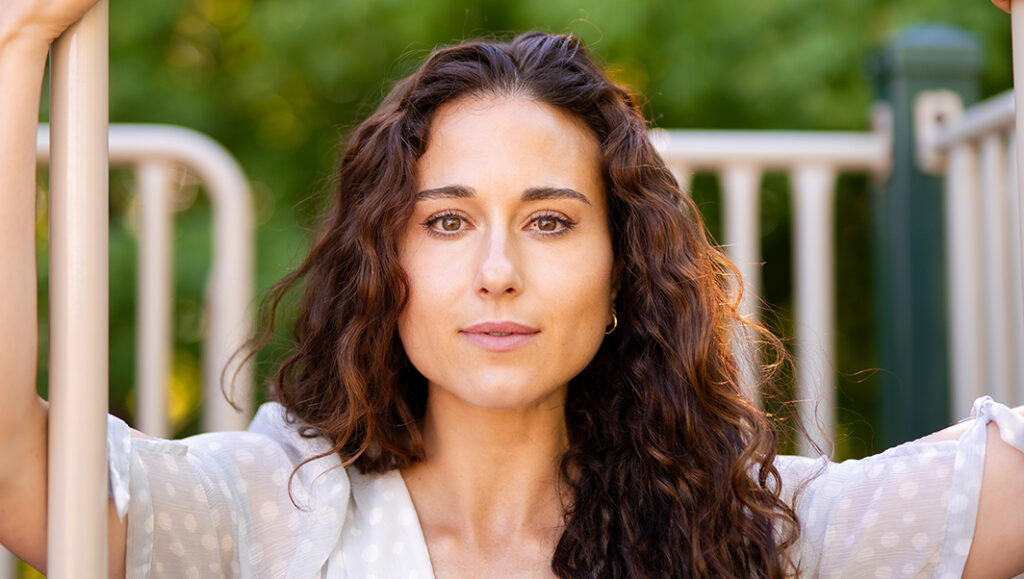
In Byeeee, the unraveling of a carefully constructed life reveals something far more intimate beneath the surface. Following Andy—a tech entrepreneur reckoning with the fallout of her own actions—the film trades spectacle for stillness, offering a quiet, unflinching examination of identity, consequence, and the fragile space between who we present to the world and who we are when everything falls away.
At the center of that journey is Romina D’Ugo, whose performance is both restrained and deeply affecting, capturing a woman suspended between self-preservation and self-confrontation. There’s a precision to her work that never feels calculated—only lived—grounding the film’s heavier themes in something profoundly human.
Pop Culturalist caught up with Romina to talk about her immersive approach to the role, the collaborative rhythm of indie filmmaking, and the responsibility of telling a story that holds space for vulnerability with care, nuance, and intention.
Content Note: This interview discusses themes explored in Byeeee, including mental health and suicidal ideation. If you or someone you know is struggling, support is available through the 988 Suicide & Crisis Lifeline in the United States by calling or texting 988.
PC: Writer-director Chell Stephen crafted this character with your voice in mind, and you’ve collaborated before. When she initially shared the concept with you, what about the story resonated most? And how has that creative trust between you empowered you to take bigger swings and explore the character’s deeper vulnerabilities?
Romina: Oh, it was like my birthday came early! Being handed a script by a director you love both personally and professionally—who tells you it was written for you. Then realizing you’d be sharing a story that’s so complicated and relatable—how many of us either know someone on the edge or have visited it ourselves?
Chell had mentioned she wanted to shoot a movie and had me in mind for the lead role. This was about six months before the script actually landed in my lap. Two weeks later, we went to camera. I initially had no idea what the film would be about, but Chell and I get deep in our conversations. We are unapologetically real and bring our experiences to light—we share. And that’s important, both as people and as creatives: to have a safe space within ourselves and within our community. We also have compassion for the fact that that kind of space isn’t easily accessible for everyone. We wanted to make something people could watch and know they weren’t alone—but tell it in that darkly funny way that those who’ve been through it understand.
This character felt more like the Jack Nicholson roles I grew up idolizing and wishing I could play—the worst parts of people with the best intentions (or maybe the worst), who are real nonetheless. I struggled with an eating disorder for over a decade and know intimately that teetering point where a coping tool becomes a life sentence. So embodying this character’s internal war—her confrontation with herself—is both a privilege and a plight I know all too well.
PC: This is such a tour de force performance, where you’re playing in so many different tonal spaces—especially the darker places this role demands, but also the humor. There’s a groundedness that keeps the audience fully with you. How did you know when to lean into each of those elements and find that balance?
Romina: Wow, thank you so much for that! It really feels like holding your breath once a movie is on the precipice of release to the public, so what you said is like a hug around the heart. Thank you.
I got to know this character so viscerally and walked with her through the fire. And now she belongs to everyone else—and rightfully so. But I want to start by saying it was truly in the writing. That vacillation between humor and pain, or painful humor—it was in the music of Chell’s script.
Preparation for me was really about trying to uncover every formative memory this character has ever had—every experience that shaped who she is and led her to do what she’s doing, who she’s becoming. The music she likes. The things she hates. Lovers, childhood dreams, the things she can’t stand about herself—on and on. That prep can really depend on how much time an actor has once they’ve gotten the role. It determines how I balance my time between getting to know the character and learning 100 pages of dialogue.
With Byeeee, I had about two weeks from the moment I was handed the complete script to when I heard my first “Action.” I also happened to be on vacation in Italy during that prep time! [laughs] Emailing Chell about character breakthroughs while enjoying my Nutella breakfasts at the BnB.
But once that prep process is maxed out and it’s showtime, the character just lives—like any full-fledged, complicated person—stumbling into the dark, then tiptoeing into the light. Off balance, but still somehow moving forward.
PC: So much of what you do as a creative involves feeding off what your scene partner is giving you, but there are also many moments where this character is confronting her own demons. How different was your preparation for those more internal scenes versus the ones opposite Augustus [Rivers] and Djouliet [Amara]?
Romina: That’s such an interesting question. When I think back to those moments, I know I was working with two actors who were truly present with me. Augustus Rivers and I clicked immediately. He flew in from New York, came directly to set, we shook hands, he climbed into his character’s truck, and we rolled camera. That scene chronologically happens in the middle of the film, so we quite literally hit the ground running. That man became a great bud—he’s a tremendous actor and person. He even pulled an all-nighter to help me run lines between takes while I shot a night scene he wasn’t even in.
Djouliet Amara came in with fresh energy mid-shoot and was just a total light. Both of these actors had strong opinions about who they were as their characters, so I just had to stay present with them. When it came to my solo work—where I was both the protagonist and antagonist in the same scene or shot—I knew the thoughts this character was saturated in. I understood that her private and public lives were curated very differently, but that those lines were starting to blur. Without public appearances to uphold, maybe one can finally meet themselves as they truly are. Maybe that’s the secret to finding safety within yourself where there was once none.
PC: There’s a scrappy, all-hands-on-deck energy to indie filmmaking where everyone wears multiple hats. You did your own hair and makeup for this role—did that hands-on process help you connect to the character in a different way? And was there another moment that really embodied that indie filmmaking ethos?
Romina: [laughs] That’s right—we all wore multiple hats. Hats on hats! The best part of indie filmmaking for me (aside from the opportunity to play taboo or unpopular characters that blockbuster cinema can shy away from, especially for women) is being used every second of our working day. There’s far less money and, therefore, far less time for anything other than getting the shots and moving on.
But I never want to be in my trailer on an indie set. I want to be immersed with the crew and in the flow. Sometimes you shoot the rehearsal, and it turns out that take is the only one you’re getting. And that’s sometimes the secret sauce—the surprise and fumble of how you played that moment without the finesse of multiple tries. None of it is fancy, and all of it is done in adoration of the work and the experience.
PC: As the film continues to make its way around the festival circuit, what have audience reactions been like so far? And what do you ultimately hope viewers take away from the film?
Romina: I was just in San Francisco for their indie fest and got to watch it with our first audience in this very intimate, cozy theater, and the post-screening response was just so deep and moving. People wanted to share their own experiences around their dark nights of the soul—we’re talking ex-military, AIDS survivors, college students. They witnessed this one subjective story about an otherwise abhorrent character, found her humanity, and related it to their own. It means a lot to us, and we did not take this mission lightly.
Ultimately, I hope viewers watch our film and discover a deeper compassion for themselves or others who may be struggling around them. And even beyond that, I hope anyone watching who feels they’re on the edge of darkness will reach out to someone, take another second, and text or call 988, the Suicide & Crisis Lifeline. Allow the possibility for a crack of light in.
To keep up with Romina and the film, follow her on Instagram.

Discussion about this post