

Exclusive Interview: Dacre Montgomery on the Art of Giving Everything to a Role in Went Up the Hill
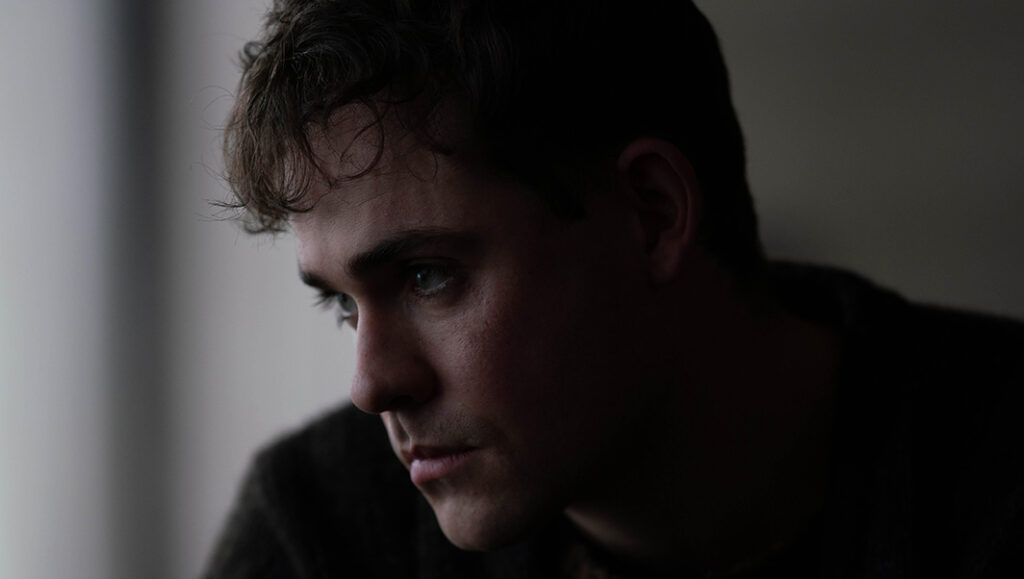
Few actors devote themselves as completely to their craft as Dacre Montgomery. Since his breakout in Power Rangers and Stranger Things, he has sought out roles that challenge expectations and expand his range. With his latest project, Went Up the Hill, Dacre delivers one of his most raw and layered turns yet, stepping into a narrative that drifts between the psychological and the supernatural.
Directed by Samuel Van Grinsven, Went Up the Hill follows Jack as he confronts the mother who abandoned him. The film unfolds in an eerie setting where the house itself seems to carry her shadow, blurring the boundary between memory and reality. In sharing the role of Elizabeth with Vicky Krieps, Dacre embraced a unique collaboration that pushed him to uncover deeper currents of empathy, fragility, and grief.
For Dacre, the experience was more than a role—it was a revelation of the kind of artist he aspires to be. Went Up the Hill required him to strip away defenses and give himself over entirely to the work, a process that left nothing in reserve. Yet in that surrender, he discovered something uncommon: a story, a director, and a film that returned as much as he invested. Pop Culturalist was lucky enough to sit down with Dacre to talk about that exchange, the openness it demanded, and how Went Up the Hill has reshaped his creative path.
PC: Your portrayal of Jack feels so lived-in, and you spent a year shaping him with Samuel [Van Grinsven]. But you held off exploring Elizabeth until you were on set. Was that choice more about staying true to Jack’s journey—getting to know his mother as the film progresses—or was it more about figuring out that shared dynamic with Vicky [Krieps]? And how did this character evolve over the year?
Dacre: It was the latter when it came to Elizabeth. I was just saying to someone earlier that when Vicky and I arrived, we both agreed we didn’t see the movie as a supernatural film. We saw it as a story where both characters create the person they love—and their antagonist—in order to deal with their trauma. Because of that, there wasn’t a need for Elizabeth to be performed in the same way, so there was less reason to rehearse her extensively. Even on the page, it’s written as Jack/Elizabeth when I’m playing her, and Jill/Elizabeth when Vicky is. You’re always in the skin, body, and mind of your core character, whether that’s Jack or Jill.
We didn’t feel a big need to rehearse Elizabeth too much. We both spent most of our time working on Jack and Jill, because that was the important part. Elizabeth exists beyond performance—she’s in the house she designed, in the property they live on. She’s an architect, so her presence is everywhere. Genetically, she’s also part of me because she’s Jack’s biological mother. There’s so much of her woven into everything.
PC: There’s also an interesting intersection between all the preparation you did and staying present with your scene partner. Did you make any new discoveries about Jack through Vicky’s portrayal of Jill?
Dacre: That’s a really good question. I think so, because Jack gains a new perspective on the pain his mother has inflicted—not just on him, but on someone else. He was given up and taken from that home at such a young age that he hasn’t been around that dynamic for a long time. Through Jill, he sees that pain, especially in the bruises on her arms, her body, and her neck.
For me, I discovered a new empathy watching Vicky embody a woman so beaten down. Samuel, our director, felt he’d never really seen domestic violence portrayed in queer relationships on screen before. Through Vicky’s performance, I saw the pain of being mentally and physically abused by someone you love so deeply—the heartbreak of being demolished by the very person you adore. Vicky brought such a powerful lens to that, and I think it really shaped my performance throughout the months we spent rehearsing and shooting the film.
PC: You can feel how deeply this character sits with you. There’s also such a boyish vulnerability you bring to him, especially in the way he yearns for his mother. Without giving away spoilers, there’s a moment when he finally gets to ask the question he’s been holding onto for so long. It’s so quiet and deeply impactful. As an actor, how do you create that space for yourself to tap into something that raw? In that scene in particular, how did you strike the balance between giving in to the emotion and holding back just enough to keep it grounded?
Dacre: It was really hard—but honestly, I wasn’t able to hold it back. I felt like a little boy all over again. Sitting there, I felt so exposed. This was my first Australian/New Zealand character, so I had my accent, and it almost felt like I was sitting with a relative at ten years old. There was no barrier. I was just a little boy in that moment—as Jack, but also as Dacre.
It was difficult to watch afterward, and I know my mum finds it hard to watch as well, because it feels so raw and so me. As adults, we build up walls and safeguards around our personalities—we don’t want to give too much of ourselves away. But when you’re a kid, you’re just an open vessel, and that’s why you get hurt. That day, I felt like all those layers had been stripped away, and I was just a little boy sitting in a chair. It was really hard to shake that.
PC: It’s one of the most powerful moments in cinema I’ve seen all year. So much of your creative process is rooted in the sensory. The film’s score and the house—which feels like a character in itself—add this extra layer of tension and an intentionally suffocating quality. How did filming in that environment elevate your performance? And what was your reaction when you saw the final cut with all those elements fully realized?
Dacre: It honestly makes or breaks the film. We shot on location in the middle of nowhere— like The Shining with Shelley Duvall—we were all going a bit stir-crazy. The film wouldn’t have been the same if we hadn’t shot there.
What was fascinating was seeing how the diegetic score came together. I spent a lot of time at TIFF with composer Hanan Townshend, who’s worked with Terrence Malick—one of my favorite filmmakers. Knight of Cups is one of my favorite soundtracks. Hanan talked about capturing those sounds—the cracking of the ice, the aching and shifting of beams and rafters inside the house—and weaving them into the score. All of that adds to the atmosphere.
And the house itself… it’s an architectural masterpiece in New Zealand that’s won awards and is often rented by very wealthy people. But as beautiful as it is, it’s freezing, it’s overwhelming, and it’s haunting. To see that feeling translated to the screen was really powerful. You can’t fake that by just adding creepy sounds—it needs to be real. Elizabeth is the house; it’s her creation. It had to feel that way. And it did.
PC: That’s the perfect way to describe that setting and the way audiences are going to feel. You’ve also said that you love being creatively challenged by your collaborators, and that’s what fuels you. How did taking on the role of Jack and Elizabeth push you outside your comfort zone and help you grow as an artist? I also know you held onto this project for a long time. How have they influenced your ever-evolving creative process moving forward?
Dacre: I don’t know if I’ll ever get to play two characters in the same film again, let alone share a second character with another actor. There’s so much I’ve taken from this project. Vicky, in particular, is one of the greatest living actresses, and I learned a lot from her process.
But more than anything, I’ve realized how much of myself I give to a role. I always go into a film wanting to work as hard as possible, to give everything. That’s part of why I took six years off—I give so much of myself that it takes a lot out of me. What this film taught me is that I want to continue doing that, but to also be intentional about the projects I take on.
It’s like a relationship—you don’t want to give your heart to someone unless it feels reciprocal. If someone toys with your emotions, you become jaded. For me, this film proved that I can give myself completely to a role, and in return, I can be loved back—by the director, by the character, and by the film itself. That’s become a really important part of my process. It also reaffirmed that I’m happy to wait—for the right story, the right character, the right collaboration. And when that comes, I’ll give all of myself again. Not to overly romanticize it, but that’s just how I feel now.
To keep up with Dacre, follow him on Instagram. Went Up the Hill is available wherever you stream movies.
Photo Credit: Kristy Griffin

[…] winteriscoming.net, pop-culturalist.com, facebook.com, facebook.com, tiktok.com, people.com, reddit.com, […]