

Trenton Judson Isn’t Playing It Safe: Inside the Vulnerability, Vision, and Heart of Bad B*tch
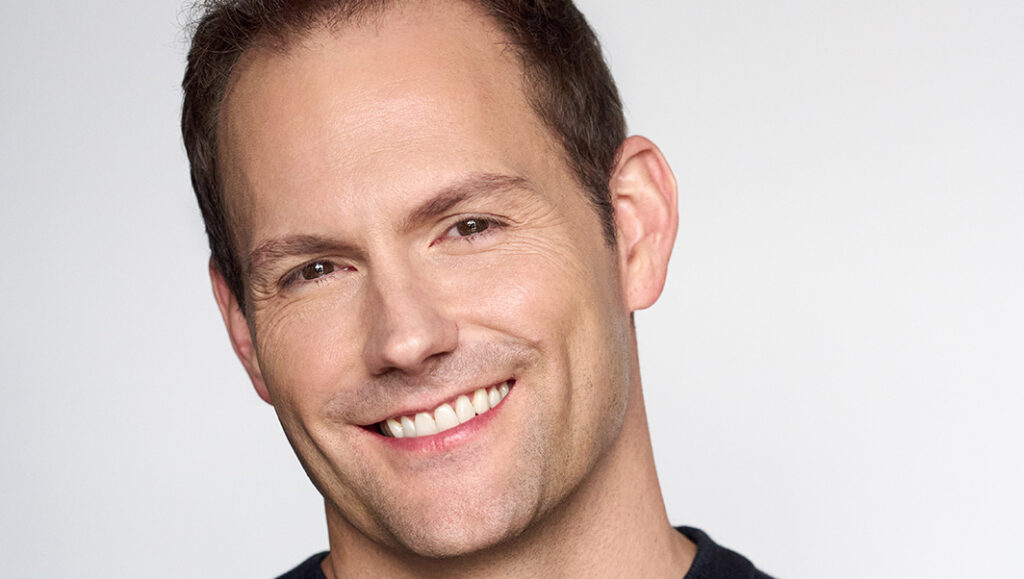
Trenton Judson is a filmmaker who believes every creative risk is worth taking—if it comes from truth. With his genre-defying debut Bad B*tch, the writer-director-actor has delivered a fierce and fearless film that blends high-octane action with emotional depth. Centered on a relentless small-town businesswoman who goes head-to-head with a brutal local gang, Bad B*tch offers a thrilling story of justice, survival, and the cost of rebuilding a community from ruin. But beneath the bullets and bravado lies something deeper: a filmmaker determined to infuse every frame with soul.
Pop Culturalist sat down with Trenton to unpack the bold creative choices behind Bad B*tch and the emotional core that grounds it. He spoke candidly about crafting vulnerability within the framework of an action film, how directing himself deepened his collaboration with the cast, and why he believes hope—however fragile—is an artist’s greatest currency. Whether reflecting on the importance of rehearsal or the childhood stories his mother used to tell him, Trenton makes it clear that his storytelling is rooted in honesty, intention, and heart.
PC: Bad B*tch is not only wildly entertaining but also layered with timely and relevant themes. How did you approach striking that balance—creating a film that’s fun and engaging, while also leaving space for deeper conversations afterward?
Trenton: Thank you. It really means a lot that you saw what we were going for. From the very beginning, I wanted to create something fun—something people could enjoy in the moment but also walk away from wanting to talk about. While writing, I spent a lot of time imagining which scenes would be fun to shoot and fun to watch, and I tried to bring that same spirit to set every day. One of the biggest compliments I received after we wrapped came from a seasoned crew member who pulled me aside and said, “Can we sit down and talk? I want to know how you created such a fun movie to work on.” That meant the world to me.
As for the themes, I’ve always believed in the transformative power of art. Whether it’s a painting, a sculpture, a novel, a piece of music, or a genre film, I truly believe that when we approach it with the right mindset, it can be sublime. I wanted to touch on the kinds of things I discuss with friends and colleagues—real, meaningful conversations—and it felt important to build a world where those dialogues could live naturally. Some of my favorite films don’t just entertain me; they shape how I see the world. And I love conversations about art—how it magnifies life, how it reflects us back to ourselves. I wanted to offer that to the audience members who are open to having that kind of experience.
At the same time, I also wanted to make a movie that could just be a good time—where, if you didn’t feel like digging deeper, you could simply watch a badass heroine take on the world and enjoy the ride. Obviously, as an artist, I hope to reach people on a deeper level too. But I’m not naïve enough to think everyone who watches the film will connect to its subtext—or even want to. That doesn’t stop me from hoping, though. Hope is an artist’s greatest currency. We have to hope with the force of universes, even when we’re just telling a story that takes place in a single neighborhood, or a diner, or on a single blade of grass. With energy, size and scope are relative—and so it is with art. When you’re doing it right, there’s a sun in your chest and a galaxy in your smile.
PC: You didn’t just write and direct the film—you also stepped in front of the camera. How did being on screen influence your decisions behind it, and in turn, how did your perspective as a writer-director shape the way you approached your performance?
Trenton: Acting in the film taught me so much about how to interact with and direct the rest of the cast. I remember this one scene where I was supposed to be seething with anger, but it just wasn’t landing—it felt canned. My incredible cinematographer, Johnny McConville, kept pulling me aside to let me know the performance was off. Then a few of the other actors came over and, rather than just watching me struggle, they rallied to help me get to that emotional place. It took time and several takes, but with their support, I finally got there. Being on that side of things—being the one not quite delivering—was incredibly humbling and instructive. It reminded me how important it is not just what you communicate to actors, but how. Everyone responds differently. People are such a beautiful mystery, and learning how to connect with each person to help them reach their best performance is one of the most rewarding parts of directing.
I’ve always talked out and acted out my screenplays—it’s the only way I can hear the dialogue honestly enough to critique it. But once we got into rehearsal, hearing the actors’ interpretations added another layer of perspective that helped me refine the film even more. When it came to playing Colt, I wanted to portray a villain who was undeniably terrible, but still deeply human. Those are the characters that stick with me—the ones who aren’t just evil for evil’s sake, but complicated and visceral. In action films, villains can often feel one-dimensional, and that weakens the entire arc. We had a tight schedule and a lot of people working long hours to bring this to life. Maybe, on some subconscious level, I wanted to be the character everyone could direct their ire toward—both on set and on screen. Though I didn’t actually feel much ire on set, I was ready to be the bad guy if needed. And honestly, I thought it’d be a damn lot of fun to cast myself as the villain. So many of my filmmaking heroes cast themselves as the savior—I wanted to flip that. And I’m really glad I did. One of the best compliments I’ve received is from friends and family who’ve said Colt is nothing like me at all. I’m hoping that means the acting worked!
Directing yourself requires a level of hyper-criticism, and you have to lean on people who’ll tell you the truth. I was incredibly lucky to be surrounded by a cast and crew who made me feel both supported and challenged—that’s a rare and magnificent balance. That said, I’m not in a rush to direct myself again. Trying to do both at once means something inevitably gets sacrificed, even temporarily. I don’t want to lose any artistic brushstrokes because I’m focused on hitting my marks as an actor. This experience reminded me how much I truly love directing—that’s where my heart is. I’m so grateful I had the opportunity to wear both hats, and I know it’s made me a better director moving forward. If the right acting role comes along with someone else at the helm, I’d love to throw the uniform back on. But for now, I’m focused on telling stories from behind the lens.
PC: As the writer, you likely had a strong sense of who these characters were from the start—but when it came to casting, it was important for the actors to bring their own interpretations to the roles. How did you create space for them to make the characters their own, while also guiding them through the vulnerability and emotional depth in their arcs?
Trenton: I love rehearsal—it’s a big part of my process with actors. It creates a space where they can let go, experiment, and build trust with me and the rest of the ensemble. During rehearsals, I take detailed notes and then check in with each actor individually so we can work together on how best to support their character’s arc in each scene. I also make it a point to listen and ask questions about how they like to work, because every actor approaches the craft differently and feels supported in different ways. Establishing that trust is essential—it’s the foundation for discovering the emotional depth and nuance in their performances.
Even when we’re on set and working against the clock, I want them to feel safe—to keep taking creative risks and immerse themselves in the world we’re building. And honestly, being on set always brings a certain kind of magic that we don’t have in rehearsal. Whether it’s stepping into the physical space or interacting with a specific prop, something unlocks. Suddenly, these doors and windows of creation open, and we’re discovering things together in real time.
PC: As a first-time filmmaker, you took some bold creative swings that really paid off. Who or what has had the biggest influence on shaping your voice as a storyteller? And is there a particular scene you’re most proud of bringing to life?
Trenton: Thank you so much! That really means a lot. We definitely took some creative risks, but every one of them came from a place of truth. I wasn’t interested in playing it safe—I wanted to explore the edges of the material and let the performances live in that space. But for me, those choices weren’t about being bold just for boldness’s sake. They came from something personal, something I felt deeply would serve the narrative. I tried to be honest in the work and hoped that honesty would translate, so hearing that it resonated is incredibly humbling.
The storytelling question is a gargantuan one! If you were just asking about filmmaking, I could probably give you a quick answer—but this one? This one’s going to take a little more thought. I see you! Well played.
Growing up, it was mostly just me and my mom. She worked multiple jobs to make ends meet, so I spent a lot of time alone—wandering empty tennis courts, dirt roads, and wild stretches of undeveloped land. In those spaces, I created entire worlds. I was an all-star basketball player, a skillful spy disarming a nuclear warhead, a medieval knight riding into battle—or sometimes just a boy who had a best friend. At night, my mom would tell me stories—an ongoing series she created called Bunnyhopper and Woodchopper, about a bunny and a fox who were best friends having magical adventures in an enchanted forest. Those early days shaped the core of my storytelling voice. I’ve since challenged my mom to write those stories down—hopefully they’ll be on a bookstore shelf near you someday.
Literature has also had a huge impact on me. Writers like Shakespeare, Leo Tolstoy, Zora Neale Hurston, and Charles Dickens taught me about character, language, and scale. Fine art runs close behind—Monet’s impressionism, Rodin’s rawness, Hokusai’s energy, Botticelli’s elegance—all of them inform how I think about tone, framing, and worldbuilding.
In terms of film, the list of influences is long. But some of the directors who’ve shaped me most are Tarantino, Barry Jenkins, Spielberg, Kurosawa, Kathryn Bigelow, Kubrick, Howard Hawks, John Ford, Werner Herzog, and Wong Kar-Wai. As for actors: Bruce Lee (as both a performer and philosopher), Audrey Hepburn, Daniel Day-Lewis, Jamie Foxx, Meryl Streep, and Al Pacino. The films that changed me include Citizen Kane, A Clockwork Orange, The Good, The Bad, and The Ugly, Moonlight, La La Land, Sinners, In the Mood for Love, Enter the Dragon, Pulp Fiction, Empire Strikes Back, Indiana Jones and the Last Crusade, Singin’ in the Rain, and Charade.
These days, though, what inspires me most is my family—my wife and our two children. I tell my kids the same Bunnyhopper and Woodchopper stories my mom once told me, and those tales continue to evolve with our life together. My wife is always who I imagine when I write a love interest. My children are the blueprint for every character under twenty.
And I couldn’t do any of this without my incredible production team. Liz, Amir, and Johnny may just look like names on a page to others, but they are the heart of my filmmaking process. They help shape and refine the work from beginning to end, infusing it with their perspectives, their strength, and their belief in the story we’re telling.
Ultimately, I hope to make films that the young boy in the tennis court—sword in hand, armor imagined—would have loved. I think about him often.
As for the scene I’m most proud of, it’s definitely the Fred Astaire dance number. That sequence lived in my head for so long. I wanted it to feel fun, disarming, and visually striking—and I think we captured all of that. We spent a lot of time on the choreography, and the mural we used as a backdrop (which has sadly been painted over now) added something special to the chaos and joy of the moment. Considering the time and resources we had, I couldn’t be prouder of that scene. It’s something I’ll always hold close.
PC: This is a film that transcends genre, yet it all comes together in such a cohesive way. Was there a particular tone that was more difficult to strike? And how much of that evolved organically on set during filming?
Trenton: I really appreciate you saying that. The most challenging scenes, tonally, were definitely the emotionally vulnerable ones. In the action genre, those moments don’t usually get the time and space they need to simmer. But we made a deliberate choice—both in directing and editing—to allow those beats to breathe. We knew that meant pushing beyond the typical runtime for a genre film, but it felt more important to let the audience fully sit with those emotional moments. There were definitely tough calls in the edit about what to cut and what to keep, but ultimately, we preserved most of the space we originally envisioned, and I fully stand behind that decision.
On set, what evolved the most was our willingness to let those moments unfold naturally. That ties back to your earlier question about acting—giving the performers space to explore and not rushing the process. That approach led to some longer takes, some shorter ones, but overall it gave the actors the freedom to find complexity in the moment. I think that freedom brought a real authenticity to the performances—and hopefully, to the film as a whole.
PC: Outside of Bad B*tch, what’s next for you creatively? Is there another story you’re eager to tell—or a genre you’re excited to explore?
Trenton: I’ve written four films that our production company plans to produce over the next four years. The one we’re currently developing is called The Great Salamanca. The logline is: “Caught between an absentee father and an alcoholic mother, fifteen-year-old Adelaide struggles with her identity as a Thai girl in a small East Texas high school. She fills the emptiness in her life with old Damon Griffin movies and dreams of becoming a filmmaker. When elusive mega film star Damon Griffin—who has been missing for nearly twenty years—is discovered just an hour away from Adelaide, she embarks on a journey to find him. She discovers that Damon is a curmudgeon who now lives as the characters from his films—one day a defense lawyer, another day a magician. An unlikely friendship develops between the two as they decide to make a short film together—one that may uncover clues to who they both really are.”
We’re aiming to begin filming in Fall 2025. It’s a much larger project, and we already have some exciting talent attached!
I also have a novel coming out in October, with preorders beginning in July. It’s called Words Alone Are Certain Good and it’s a family saga set before, during, and after Hurricane Katrina. It’s being published by Pen & Leaf Press, and it took me ten years to put together—so I’m incredibly excited to finally share it with the world.
Other than that, I’m spending my time watching great films, reading incredible books, and trying to find art in everything I do.
To keep up with Trenton, follow him on Instagram. Stream Bad B*tch on Tubi today.

Discussion about this post