

Exclusive Interview: Virginia Madsen on ‘Sheepdog,’ Post-Traumatic Growth, and the Power of Grit
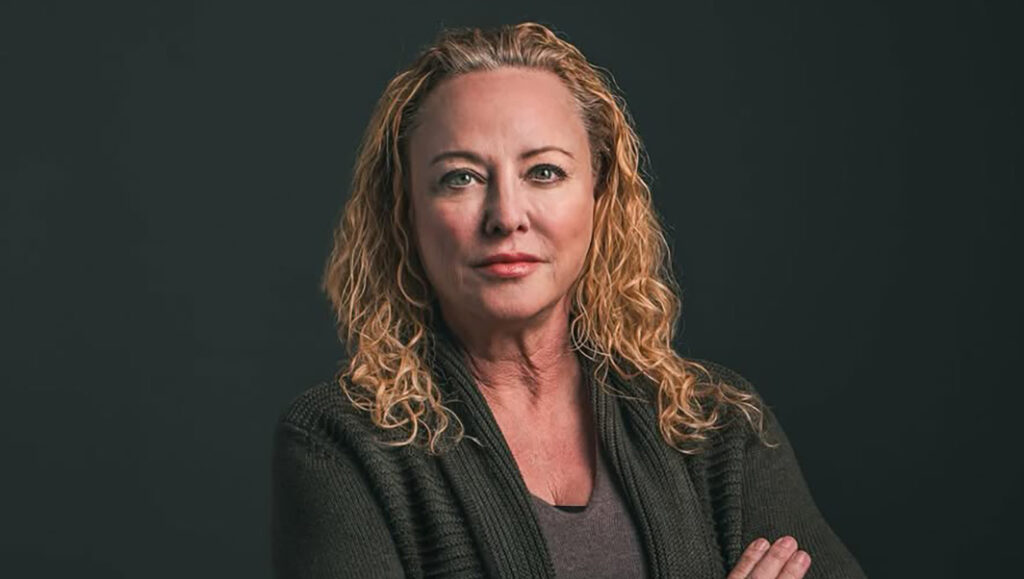
Virginia Madsen has always brought a rare emotional precision to her work—an ability to make every character feel lived-in, human, and undeniably unforgettable. In Sheepdog, she delivers some of her most vulnerable work yet, inhabiting a role that demands both strength and tenderness as the film explores trauma, healing, and what it truly means to keep going when life changes you.
Written and directed by Steven Grayhm, Sheepdog follows decorated U.S. Army combat veteran Calvin Cole (Grayhm), who is court-ordered into treatment under the care of a VA trauma therapist-in-training (Madsen), who works nights at a local diner to help pay for college. But as Calvin’s plan to run from his life becomes impossible—especially when his father-in-law, a retired Vietnam veteran (Vondie Curtis-Hall), suddenly appears after being released from prison—he’s forced to confront what healing really looks like. Grounded in first-hand testimonials and centered on the concept of Post-Traumatic Growth, the film explores recovery and redemption with compassion, grit, and a belief that rebuilding is possible—even when it feels out of reach.
Pop Culturalist was lucky enough to speak with Virginia Madsen about stepping into the world of Sheepdog and the emotional weight of telling a story rooted in Post-Traumatic Growth. In our conversation, she opens up about collaborating with Steven Grayhm both behind the camera and in front of it, the vulnerability required to bring her character to life, and why she believes this film has the ability to make audiences feel not only seen—but supported.
PC: There’s a moment in the film where your character talks about how the career she’s dedicated her life to has helped so many people, and it feels like such a beautiful parallel to what you all do as storytellers—especially with a film like this. When this script came across your desk, what immediately caught your attention? And how do you balance your instincts as an artist with the awareness of what telling a story rooted in post-traumatic growth could mean to so many people?
Virginia: I heard Steven was coming by after a performance of a play I was in. It was a really tough time for me, and this story felt very personal. So I was very, very protective. I remember thinking, “Who does this guy think he is, coming in here and talking about a veteran? What does he know?”
But he was so sincere. He truly believed in what he was doing. He said, “I don’t want to tell you anything about it—just please read it.” I agreed, and when I read it, the writing was beautiful. I found it incredibly truthful.
Then I put him through the wringer for about an hour and a half on the phone. But listening to him talk about his process—how long he worked with people in order to write this script—I thought to myself, “I’ve got to take a leap of faith. I’ve got to do this.”
And it wasn’t just the material—because ultimately, all I can do is serve what’s on the page—it was the experiences behind it. The real voices he brought into the script made it clear that this was something I needed to be part of, and that I had to take that leap.
PC: That relationship between your character and Steven’s is so rooted in putting in the work. Speaking of the work, what was that collaboration like with Steven—not only as the writer and director, but also as your scene partner—and how did you find where this character lives within you so that the relationship, and its evolution throughout the film, feels so lived-in on screen?
Virginia: It’s complicated, because the woman I was playing and the woman I was in real life—she was a lot stronger. I was pretty fragile at that point in my life. I knew it was going to be a lot of heavy lifting emotionally for me to play this role: the caretaker, the helper, the sheepdog who guides and protects him.
But he’s also my director. And he’s really young. And he’s also playing this really fragile young man in the scenes. I kept thinking, “How is this going to work?” But he made it work.
When I met him, he didn’t have the beard or the long hair. Then when I saw him on set, I was like, “Who is that?” He played this role with such quiet grace that it was hard not to always want to hug him. But he also managed to create a safe space for me—while still being my director at the same time. It was hard for me, and I’m sure it was hard for him too, but he didn’t show it.
When I wrapped, I left, and then you wait and hope you didn’t blow it—hope they can put together a film. And they did. The first time I saw it, I was so emotional. I had to wait a while before I watched it a second time so I could really take in Vondie Curtis-Hall’s performance. I’ve never seen him like that before.
Now, to show it to veterans, Gold Star families, active troops, and service members—and to have them approve it and hug me—I’m so glad I had the time to go to festivals and spend time with them. It reassured me that what I did was right. They helped me, because I could talk about my own life. I could talk about my own experiences. I’m so grateful I had that time before it’s released into the world. And I think it’s going to help.
PC: The film has such a healing quality, and the performances feel deeply lived-in. Your character is constantly navigating the line between leading with empathy and pushing back against the system. How did you approach living in that gray area?
Virginia: I’ve raised a son, so that helped. [laughs] Sometimes you have to be strong and direct. Other times, you have to be soft and just listen—even when you want to scream. I brought a lot of that into my character.
PC: There’s also this beautiful sentiment your character shares about grit, and how, with it, you can survive anything. It feels especially relevant to making an independent film. Were there moments in the process—or a particular scene—that really exemplified that ethos, and that you’re excited for audiences to see?
Virginia: I’m excited for audiences to see the end of the film. We hear PTSD all the time, but what I had never heard before was “post-traumatic growth.” I didn’t even know that term existed—and that it’s something you can talk about with professionals, and with people who will listen. Because there are people who will listen. That’s the first step.
You can work through it by journaling, bringing it forward through words, and then going out and taking action. That’s what I learned. And I feel like people are going to walk out feeling fulfilled, thinking, “That’s a great story. It’s hopeful.”
It shows a way someone can survive—not just survive the battle, but survive coming home. That meant a lot to me, and that’s why the story is so important.
PC: I’m so glad you mentioned that scene—it really stuck with me after seeing the film. It felt almost like a theater production, where it’s just you and Steven in this honest exchange. There’s a moment where your voice cracks that emotionally wrecked me. What was it like preparing what you wanted to deliver on the day, while also staying open to the discoveries that can happen when you’re working opposite a scene partner?
Virginia: I did a lot of preparation for the film—talking to professionals who do what she does in the story. I was really trying to prepare for how I could love that work on set. And for the most part, I couldn’t.
My husband came with me and stayed with me on set. Steven was there for me, too. Because I had to take some time off after this project. Self-care is very important after something like this—taking care of myself. I’ve always been like that. Movies where you have to scream and cry? I can do that. But to be that vulnerable—where you’re sort of just being yourself on camera—that’s very hard to learn how to do.
I had to dare myself to do that, and then take care of myself afterward. Let my husband take care of me, which he did.
To keep up with Virginia, follow her on Instagram. Sheepdog is in theaters now.

Discussion about this post