

Exclusive Interview: Steven Grayhm and Vondie Curtis-Hall on Telling a Story of Service, Sacrifice, and Survival in ‘Sheepdog’
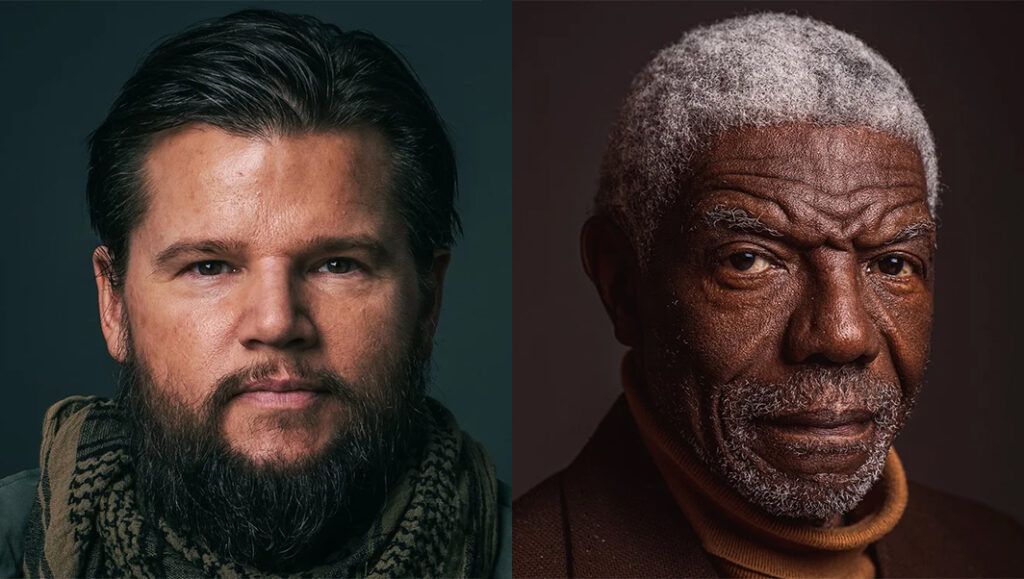
Independent films often carry an undeniable intimacy, but few feel as purpose-driven—and as deeply lived-in—as Sheepdog. More than a decade in the making, Steven Grayhm’s feature is the kind of storytelling that transcends entertainment, existing instead as an act of reflection, truth-telling, and healing. Rooted in real experiences and shaped over years of listening, learning, and evolving, Sheepdog holds space for the emotional weight so many carry in silence—reminding us that art can do more than move us; it can help us make sense of pain, and begin to pull ourselves back together again.
The film follows decorated U.S. Army combat veteran Calvin Cole (Grayhm), who is court-ordered into treatment and placed under the care of VA trauma therapist-in-training Dr. Elecia Knox (Virginia Madsen). As Calvin attempts to navigate recovery and rebuild his life, things become even more complicated when his father-in-law Whitney St. Germain (Vondie Curtis-Hall)—a retired Vietnam veteran—unexpectedly arrives on his doorstep after being released from prison.
Pop Culturalist spoke with Steven Grayhm and Vondie Curtis-Hall about crafting Sheepdog with empathy and intention—embracing both levity and loss, exploring vulnerability on screen, and honoring the lives shaped by service.
PC: Steven, you did such a brilliant job with the script—it feels lived-in and poetic. It all began with a chance encounter that sent you on this road trip in the summer of 2011 to uncover a deeper truth. What was that writing process like—taking these real conversations and shaping them into a narrative, especially when you’re honoring so many different perspectives? And were there any lines that were lifted directly from those interviews?
Steven: So much of it came from real life. That chance encounter in 2011 was with a tow truck driver who picked me up when my car broke down. He opened up about his military experience and the challenges in his life—that was the seminal moment.
But once we hit the road, Matt Dallas and I quickly realized how idealistic we were. We thought we could set up a camera and capture the story. And then you learn that the moment you shut the camera off—that’s when people really open up.
A lot of that early research came from intimate conversations that I would journal about afterward. That began shaping the structure and outline of the story I thought I was going to tell. And over the twelve years before we went to camera, it changed dramatically—because as Matt and I got older, so did our characters.
In the first draft, Calvin didn’t have a family or kids. Over time, it became more important to reflect what I was still seeing in real life: the people I met in 2011 and 2012 were people I was still close with years later, and I could see the evolution of their lives—their struggles, their triumphs, all of it. I wanted the story to feel living and breathing, and to stay malleable to what it needed to become.
And the story really does inform itself. It starts telling you what it wants to be. By the time we got to set—this is a true story—I remember sitting in that diner scene with Virginia [Madsen], which used to be longer. My character had this speech about a recurring nightmare, and it was beautifully written. I was so proud of it. I thought, “This could be so good.”
But in that moment, I knew we didn’t need it. Even for time’s sake, that scene was a courting ritual—he wants to know more about her, and she knows that if he leaves that diner, it could be forever. There’s so much at stake. So as the writer, I had to be judicious. I sat there in the diner and cut the speech. Matt was over my shoulder like, “You’re going to cut that?” And I was like, “We don’t need it. I have to trust that.” What mattered more was that we got the heart of the scene.
So I’m sharing that because even on the day, while you’re filming, you have to stay receptive. You have to stay in service of the story—not in service of one moment, or one character, or how great you think something is going to be. And you have to be open—especially when you’re surrounded by incredible actors.
PC: There are so many incredible performances in this film, and so many moments that are going to stay with audiences—sparking necessary conversations and, hopefully, that healing process. Vondie, there’s a sentiment in the film that really stuck with me: sometimes you have to fall apart to find yourself again. Your character carries so much loss, and you feel that weight throughout—especially midway through, when he finally opens up to Calvin. As an actor, how did you create the space to explore that kind of vulnerability? And did stepping into this role reveal anything new about yourself along the way?
Vondie: It was wonderful playing this role because it felt like a journey that was going to be impactful—and it was something I hadn’t really gotten to do before. I’ve never played a person carrying this much loss and pain. I don’t get roles like this often, so it was a pleasure to really dive in, reflect, and pay homage to people I knew growing up—friends of mine who went to war and didn’t come back. People who came back damaged. People who, I’ve said this before, didn’t come back with ticker-tape parades or being embraced as heroes.
PC: You can feel the care this entire team brought to this project. Steven, I also love how you wove moments of levity into the film—giving the story a real slice-of-life quality, and reminding us that even in the heaviest moments, humor and light can still exist. Why was it so important to highlight that juxtaposition and strike that balance? And how much did you rely on the chemistry of your ensemble to uncover those moments?
Steven: That’s a really great question. Three months into the journey in 2011, a Gold Star mother invited me to a Gold Star family members event at the White House. It was very sobering and very emotional. We spent the weekend together, visiting different veterans’ memorials. She had this wicked sense of humor—oftentimes inappropriate. [laughs] We would laugh. She had lost her son. It was an incredibly emotional weekend, and there was so much weight to it. But she would find these moments where we’d be in tears laughing, and I would marvel at that.
She said, “If you can’t find the levity, you will always live with the loss.” I respected the heck out of that, because I don’t know how to do that—the level of strength it takes.
That was at the very beginning, so it really shaped my perspective. As I got further into it, it became important to show the other side of the coin: the human side, and that sometimes uncomfortable humor—because isn’t life messy?
When you look at the dynamic with Coach O—Dominic Fumusa’s character—ripping on Calvin like a big brother… and even with Vondie’s character, where Calvin is ripping into him about holding onto the truck because Gotham needs its duo…it felt essential.
It mattered because it reflected what I saw: ordinary people in extraordinary circumstances, and yet they could still smile through the pain—and sometimes laugh through it. That level of fortitude was something I just hadn’t witnessed in the civilian world.
And when you have tension, that humor doesn’t just come out as a welcome relief—it shows up organically, because of the subject matter itself.
Make sure to follow Steven (X/Instagram) and Vondie (X). Sheepdog is in select theaters now.

Discussion about this post